
You are using an out of date browser. It may not display this or other websites correctly.
You should upgrade or use an alternative browser.
You should upgrade or use an alternative browser.
ClassicTone Going Out Of Business
- Thread starter syscokid
- Start date

CoyotesGator
Ambassador of Reptilian Rum Bar Affairs

Im in for the Vig --- lets do this thing !
Will there be rum?

ivan H
Ambassador of Tubes & Grooves

I've not looked into the simul-class Boogie's claimed class A push pull operation (we'd need to set one up on test great to be absolutely sure), but going by the low power output figures given for this, there's a good chance that they are actually utilising class A.Basically a Class A can be summed up like a VOX amp or boutique combo amp: smaller scaled and uses a positive voltage to the grid. It allows the signal to the amp to be greater at all times, so instant response. But it kills the tube life much faster because max current is always there and typically they arent found in larger wattage amps, though some can be but it means everything inside is massive. Theres also lower headroom because its a lower plate voltage.
Class AB uses a negative voltage to the grid and is the most common, found in most standard issue amps today like Marshalls, Fenders, Crates, Oranges, most Mesa Boogies ( those come up in a sec). Basically with AB, everything is balanced better, tubes can run at lower plate currents, more headroom, more bottom end, in otherwords: everything opposite a Class A. But many folks feel that theres less response when playing an AB vs an A.
Finally, theres push pull which is a combination of both. Many Mesas have this capability and can sorta switch the class from one to another or even blend them ( they refer to it as Simul-class) and they will typically have different tubes in order to pull this off ( a Mark 3 for example wouldve came with 4 6L6cs in a 100w version, or a 75w Simulclass with 2 6L6s and 2 El34s, going between 15 watts in A or 75watts in AB by switching to just the 6L6s or using both 6L6 and EL34s).
I believe your Origin falls under the AB design if im correct.
Just to sum up, class A is not defined by HOW the tubes are biased, but rather WHERE they are biased. Classes A, AB & B can all be cathode biased or fixed biased. Cheers
Edit;
I just noticed this, butwe can't put a positive voltage to the grid (unless the cathode was made "even more" positive than the grid). Making the grid positive while the cathode is grounded or less positive than the grid (grid positive with respect to the cathode) will cause the tube to run away, flowing WAY excessive current. The grid positive with respect to the cathode will also cause electrons from the cathode to attrack to the grid & thus current to flow in it. Cheers
Last edited:
OP

syscokid
Ambassador of War & Peace
Y'all might find this interesting... I have a Fryette Memphis 30. Even though It never was considered when I bought it, it clearly has a designation of Class A. Never payed much attention to that "misnomer".
But open the owner's manual on page 13 and we get this:
POWER OUTPUT AND POWER TUBES
The Memphis 30 output stage uses 4 selected and matched EL84 power tubes in a Cathode Biased Push-Pull
configuration. Though something of a misnomer, this topology is biased at what is typically referred to as Class
A operation. Its most important feature is that it is self-biasing and maintains its own optimum bias as long as
all 4 of the power tubes are in good operating condition. Since no bias adjustment is required when swapping
or replacing the power tubes, no internal or external bias provisions or test points are provided.
When you switch to 18 Watt Mode, you are actually reducing the voltage to the power tubes. All 4 power tubes
continue to operate and the bias self-adjusts accordingly. This method of reducing power output has two
distinct advantages over the typical method of switching off two tubes:
1) Because all 4 tubes remain in circuit, the impedance relationship between the tubes and output
transformer is maintained. This produces better dynamics and more natural distortion harmonics.!
2) Because all 4 tubes are continuously operating, the proper bias is maintained and the reduced power
output is shared equally by all 4 tubes, which results in smoother tone and extended tube life.
Any type or brand of EL84 can be used in this amplifier without adjustment or modification.
It is important to note that Class A operation in this case basically means that the power tubes are operating at
full power regardless of whether or not any sound is being amplified, so it is important to keep the amplifier on
standby during breaks, and powered down when not in use to keep things cool and to extend tube life.
Even though you may follow this advice carefully, you will still observe that the amplifier tends to run hot. This
is normal and there is not only plenty of ventilation in the chassis design, but all of the critical components and
transformers are designed to withstand much more heat than you will normally experience at during typical
operation.
Whatever!!!! Steven Fryette is a madman. This is a killer amp. It does run fricking hot though!
But open the owner's manual on page 13 and we get this:
POWER OUTPUT AND POWER TUBES
The Memphis 30 output stage uses 4 selected and matched EL84 power tubes in a Cathode Biased Push-Pull
configuration. Though something of a misnomer, this topology is biased at what is typically referred to as Class
A operation. Its most important feature is that it is self-biasing and maintains its own optimum bias as long as
all 4 of the power tubes are in good operating condition. Since no bias adjustment is required when swapping
or replacing the power tubes, no internal or external bias provisions or test points are provided.
When you switch to 18 Watt Mode, you are actually reducing the voltage to the power tubes. All 4 power tubes
continue to operate and the bias self-adjusts accordingly. This method of reducing power output has two
distinct advantages over the typical method of switching off two tubes:
1) Because all 4 tubes remain in circuit, the impedance relationship between the tubes and output
transformer is maintained. This produces better dynamics and more natural distortion harmonics.!
2) Because all 4 tubes are continuously operating, the proper bias is maintained and the reduced power
output is shared equally by all 4 tubes, which results in smoother tone and extended tube life.
Any type or brand of EL84 can be used in this amplifier without adjustment or modification.
It is important to note that Class A operation in this case basically means that the power tubes are operating at
full power regardless of whether or not any sound is being amplified, so it is important to keep the amplifier on
standby during breaks, and powered down when not in use to keep things cool and to extend tube life.
Even though you may follow this advice carefully, you will still observe that the amplifier tends to run hot. This
is normal and there is not only plenty of ventilation in the chassis design, but all of the critical components and
transformers are designed to withstand much more heat than you will normally experience at during typical
operation.
Whatever!!!! Steven Fryette is a madman. This is a killer amp. It does run fricking hot though!

Vox AC30
Well-Known Member
Whatever they did they had it patented so there has to be a worthwhile idea as BS would not pass muster of the patent office. Also, somewhere in the garage again, I have a design I've saved for 30 years intending to build of a single ended amp with 2 power tubes wired in parallel to work as one. If I find the design I'll post it here as I've been dying to build it for 30 years. All spec'd out too if I remember correctly

eSGEe
Ferengi Ambassador of Trade
is that written in English?????Y'all might find this interesting... I have a Fryette Memphis 30. Even though It never was considered when I bought it, it clearly has a designation of Class A. Never payed much attention to that "misnomer".
View attachment 51683
But open the owner's manual on page 13 and we get this:
POWER OUTPUT AND POWER TUBES
The Memphis 30 output stage uses 4 selected and matched EL84 power tubes in a Cathode Biased Push-Pull
configuration. Though something of a misnomer, this topology is biased at what is typically referred to as Class
A operation. Its most important feature is that it is self-biasing and maintains its own optimum bias as long as
all 4 of the power tubes are in good operating condition. Since no bias adjustment is required when swapping
or replacing the power tubes, no internal or external bias provisions or test points are provided.
When you switch to 18 Watt Mode, you are actually reducing the voltage to the power tubes. All 4 power tubes
continue to operate and the bias self-adjusts accordingly. This method of reducing power output has two
distinct advantages over the typical method of switching off two tubes:
1) Because all 4 tubes remain in circuit, the impedance relationship between the tubes and output
transformer is maintained. This produces better dynamics and more natural distortion harmonics.!
2) Because all 4 tubes are continuously operating, the proper bias is maintained and the reduced power
output is shared equally by all 4 tubes, which results in smoother tone and extended tube life.
Any type or brand of EL84 can be used in this amplifier without adjustment or modification.
It is important to note that Class A operation in this case basically means that the power tubes are operating at
full power regardless of whether or not any sound is being amplified, so it is important to keep the amplifier on
standby during breaks, and powered down when not in use to keep things cool and to extend tube life.
Even though you may follow this advice carefully, you will still observe that the amplifier tends to run hot. This
is normal and there is not only plenty of ventilation in the chassis design, but all of the critical components and
transformers are designed to withstand much more heat than you will normally experience at during typical
operation.
Whatever!!!! Steven Fryette is a madman. This is a killer amp. It does run fricking hot though!
looks like a nice amp--- but I bet the manual is a bear to get through ...............
Say might I suggest one of these for a more relaxed and easy increase to your guitars volume in a "CLASS A" variation?
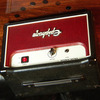
or perhaps????????????????
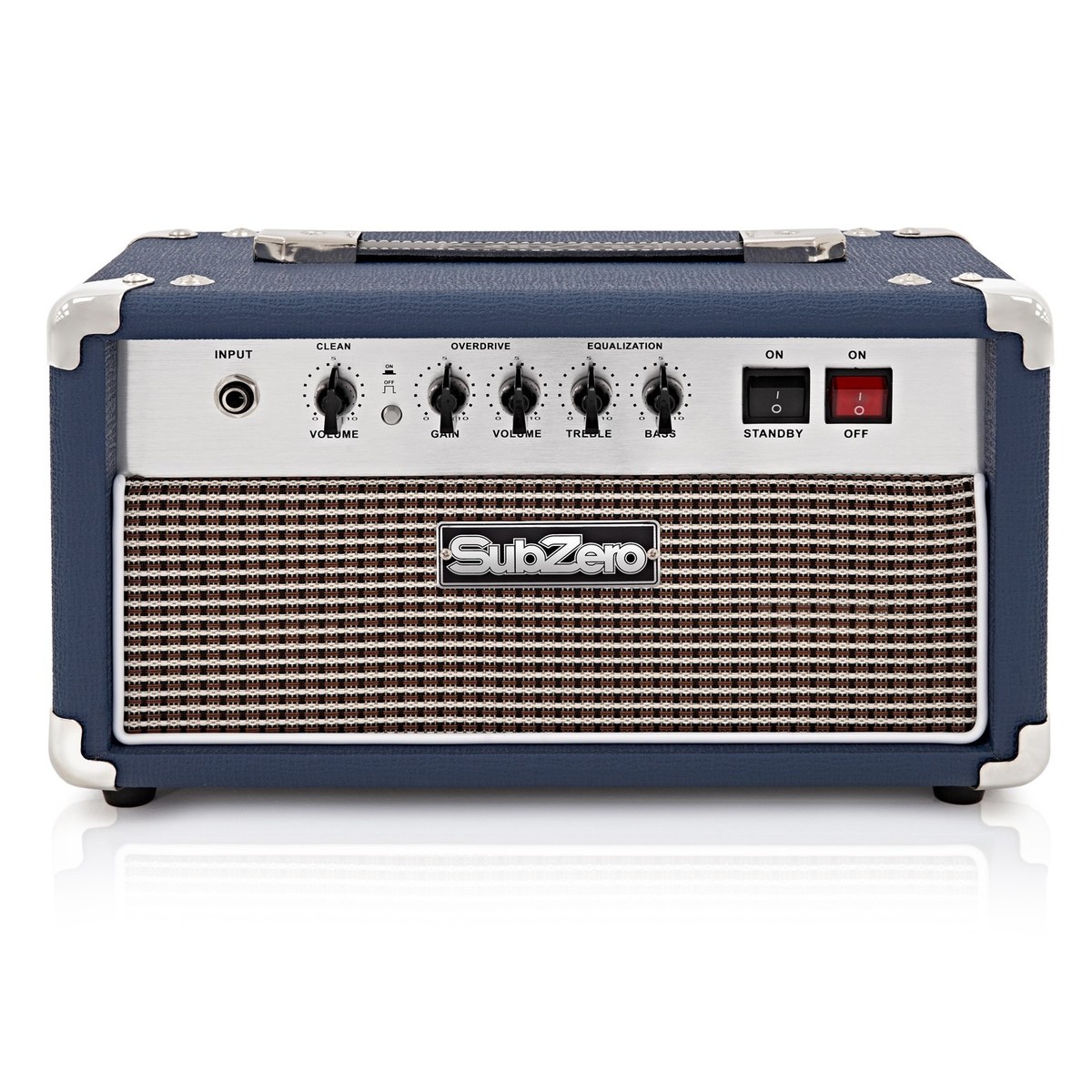
DISC SubZero Valve 5 Guitar Amp Head at Gear4music
DISC SubZero Valve 5 Guitar Amp Head at Gear4music

Clockworkmike
Ambassador of STACKS in WV SHACKS
This is Mesa/Boogie's quick explanation of Simulclass :I've not looked into the simul-class Boogie's claimed class A push pull operation (we'd need to set one up on test great to be absolutely sure), but going by the low power output figures given for this, there's a good chance that they are actually utilising class A.
Just to sum up, class A is not defined by HOW the tubes are biased, but rather WHERE they are biased. Classes A, AB & B can all be cathode biased or fixed biased. Cheers
"A technology developed by Mesa/Boogie that allows an amplifier with four power tubes to run in two power classes at once. With Simul-class, the outer pair of power tubes run in Class A and the inner pair of tubes run in Class AB simultaneously. "
The Mark 3s did this with two inner 6L6s at 15watt with the Class A Switch engaged but on AB it was the 2 inner 6L6s with two outer EL34s at 75watt. Mark IVs used all 6l6s doing the same thing for 15w Class A and 80w Class AB. Later versions of Mark 3s and 4s switched the class A from triode to pentatodes to increase from 15w to 25w Class A
The Mark 5s however go one step further with 90w AB combined mode, single AB 45watt mode ( outer pair or single ended Class A for 10w ( inner pair) . So its truly splitting the inner and outer tube pairs and then combining them, unlike its predecessors that could only use the inner pair or all 4.
Clockworkmike
Ambassador of STACKS in WV SHACKS
Theres an older Peavey ive been interested in lately, the Peavey Ultra Plus 120 circa early to mids. Visually looks somewhat like a 5150 but pretty different in sound. If i came near one for a good price id probably make a moveI dont know why but I really want one of these...........................
View attachment 51688
even though I HATE the way they sound
Peavey Class A Valve King .......................theses are tasty --if run through a larger cab..............
View attachment 51689
OP
syscokid
Ambassador of War & Peace
There's a massive underground satanic cult that worship these and brutally mod them to Hell...I dont know why but I really want one of these...........................

even though I HATE the way they sound

OP
syscokid
Ambassador of War & Peace
Ok... I would like to add to something I stated 7 posts ago... Steven Fryette AND Randall Smith is a madman. Very cool explanation, and marketing of their patented technology.This is Mesa/Boogie's quick explanation of Simulclass :
"A technology developed by Mesa/Boogie that allows an amplifier with four power tubes to run in two power classes at once. With Simul-class, the outer pair of power tubes run in Class A and the inner pair of tubes run in Class AB simultaneously. "
The Mark 3s did this with two inner 6L6s at 15watt with the Class A Switch engaged but on AB it was the 2 inner 6L6s with two outer EL34s at 75watt. Mark IVs used all 6l6s doing the same thing for 15w Class A and 80w Class AB. Later versions of Mark 3s and 4s switched the class A from triode to pentatodes to increase from 15w to 25w Class A
The Mark 5s however go one step further with 90w AB combined mode, single AB 45watt mode ( outer pair or single ended Class A for 10w ( inner pair) . So its truly splitting the inner and outer tube pairs and then combining them, unlike its predecessors that could only use the inner pair or all 4.

I have an un-modded third gen head within three feet of me right now. I may stuff it in to a non-functional combo that I have kicking around the studio. I may gut the nonfunctional chassis, and build another 18watt head from the remains...if I ever get off my as$ this winter....There's a massive underground satanic cult that worship these and brutally mod them to Hell...
OP
syscokid
Ambassador of War & Peace
I have an un-modded third gen head within three feet of me right now. I may stuff it in to a non-functional combo that I have kicking around the studio. I may gut the nonfunctional chassis, and build another 18watt head from the remains...if I ever get off my as$ this winter....

ivan H
Ambassador of Tubes & Grooves
I know that people claim to achieve a 30 watt power output from a quad of EL84's operating in pure class A push pull. We have to remember, the EL84 is a 12 watt tube. Class A operation means that the tube is biased to the center of the linear part of the characteristic curves.
For those inclined to believe the marketing "spin", read this, where Mr Aiken's proves definitively that achieving a 30 watt output in pure class A push pull from a quad of EL34's (the Vox AC30 & it's clones) is simply to HOT for the little 12 watt EL84 bottles unless the HT is kept at no more than 250VDC Is the Vox AC-30 Really Class A?
Cheers
For those inclined to believe the marketing "spin", read this, where Mr Aiken's proves definitively that achieving a 30 watt output in pure class A push pull from a quad of EL34's (the Vox AC30 & it's clones) is simply to HOT for the little 12 watt EL84 bottles unless the HT is kept at no more than 250VDC Is the Vox AC-30 Really Class A?
Cheers
Last edited:
Vox AC30
Well-Known Member
Nice link Ivan, thanks, and for the halibut no one has yet mentioned no negative feedback in the AC15's and AC30's ! And possibly that fact could of helped the sonic fallacy of the "class A " narrative ? The AC10's must have the 220K resistor changed to 67K to get them to AC15 territory, and if you do that one must be careful not to blow the two Elac 10" speakers. AC50's and AC100's are a totally different discussion although dialing down the voltage feed to 92V make the Red Top/ four Diamond inputs drive the AC50 into an animal being beat ... I wouldn't be aware of that cept for the squirrels in the attic chewing on the attic line feeds  little bastardos that they are!
little bastardos that they are!
ivan H
Ambassador of Tubes & Grooves
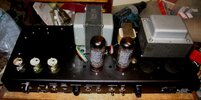
So, this morning I got an email from Amp Parts Direct (who were a Magnetic Components/Classictone stockist), basically asking what transformers, chokes etc people would like them to stock. They are winding transformers to the original manufacturers spec, & they're being made in the USA. At present they stock over 40 Heyboer transformer types, with another 8 new additions on the way. Mercury has 30 types in their line up as well. Just thought I'd let you guys know. Cheers
Last edited:


ivan H
Ambassador of Tubes & Grooves
Agreed, Heyboer products are top notch. Cheers