You are using an out of date browser. It may not display this or other websites correctly.
You should upgrade or use an alternative browser.
You should upgrade or use an alternative browser.
C0ck-Eyed Jacks-In-The-Box
- Thread starter RVA
- Start date


Thanks. I thought it was pretty smart...until I realized I just made a patchbay I could have bought for $80 ! I am pretty sure I will order one soon and use this one just for Hello Kitty stufff!
See post #7

OP

RVA
Ambassador
Although I probably should have paid closer attention, nothing was going to stop me from finishing! That said, I do not think the Hosa would work because it does not have a "pass thru" setting. i got this Berhinger PX3000See post #7
Last edited:
Although I probably should have paid closer attention, nothing was going to stop me from finishing! That said, I do not think the Hosa would work because it does not have a "pass thru" setting. i got this Berhinger PX3000
That’s a good price for that thing.
Last edited by a moderator:

Although I probably should have paid closer attention, nothing was going to stop me from finishing! That said, I do not think the Hosa would work because it does not have a "pass thru" setting. i got this Berhinger PX3000
I like the ease of switching modes on this one....
Samson S-Patch Plus
I’ve had one for many years now. Very flexible, especially when changing things up often.
Of course, mine is tucked in a rack, tightly....top access switching would be impractical for me.
OP
RVA
Ambassador
The Behringer has 3 mode selections on top, which makes labeling easier. It is also cheaper.I like the ease of switching modes on this one....
Samson S-Patch Plus
I’ve had one for many years now. Very flexible, especially when changing things up often.
Of course, mine is tucked in a rack, tightly....top access switching would be impractical for me.
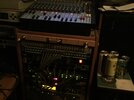
Yeah, but when it’s stuffed in to a rack you can’t get at the switches. It’s all well, and good sitting on a counter/desk top....but... actually mounted in a rack, with something above, and below, the switches are not accessible.The Behringer has 3 mode selections on top, which makes labeling easier. It is also cheaper.
Just sayin'
The Behringer is up top because of the “top switching”...the rack has pins to release, and allow access to patching...if necessary.
OP
RVA
Ambassador
See that...experience. That makes perfect sense if you tend to switch modes on the fly. (FYI - I am guilty of not fully reading your original posts)Yeah, but when it’s stuffed in to a rack you can’t get at the switches. It’s all well, and good sitting on a counter/desk top....but... actually mounted in a rack, with something above, and below, the switches are not accessible.
View attachment 15375
Just sayin'
The Behringer is up top because of the “top switching”...the rack has pins to release, and allow access to patching...if necessary.
I think like a home user, which this is really not for. In my case, I will not be switching after it is set and I do not own a rack...yet!
Oh, nice rack! I never had that that phrase enter my mind toward a male before now.
Last edited:
See that...experience. That makes perfect sense if you tend to switch modes on the fly. (FYI - I am guilty of not fully reading your original posts)
I think like a home user, which this is really not for. In my case, I will not be switching after it is set and I do not own a rack...yet!
Oh, nice rack! I never had that that phrase enter my mind toward a male before now.
No problem, for not reading.
You say you’ll not need to change it after it’s set...was that actually you, Ray, that typed that?
As to the rack compliment....thanks! I made it myself!
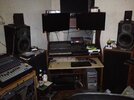
 I picked up a couple of pieces of furniture that were being discarded during an office renovation. That rack is a repurposed, rolling, eyeglass frame storage cabinet. Like I said previously, I can pull a pin from each side, grab the handle(right above the top patchbay) tip/pivot the rack frame forward and downward out of the cabinet, and it can rest on the doorstops that double as a handy spot to hang headphones.
For linking up gear that exists separately. In my set up that means linking the live mixer to external, rack mount, effects units, and back...live mixer channel direct outputs can be sent, in any combination, to an 8 channel analog to digital preamp(to adat) that runs off to another recording interface, and on in to a computer...or a stand alone recorder. Live mixer inserts have six channels of compression, and multiple noise gates available via the patchbays too.Can someone explain what these patchbays are used for? ...
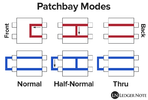
The switches on the Behringer and Samson units mentioned make the groups of jacks behave in different ways.
Here’s a big read on the subject....
How to Use a Patchbay | Ledger Note
That explains how to take advantage of the availability of these modes...
OP
RVA
Ambassador
For linking up gear that exists separately. In my set up that means linking the live mixer to external, rack mount, effects units, and back...live mixer channel direct outputs can be sent, in any combination, to an 8 channel analog to digital preamp(to adat) that runs off to another recording interface, and on in to a computer...or a stand alone recorder. Live mixer inserts have six channels of compression, and multiple noise gates available via the patchbays too.
The switches on the Behringer and Samson units mentioned make the groups of jacks behave in different ways.
Here’s a big read on the subject....
How to Use a Patchbay | Ledger Note
That explains how to take advantage of the availability of these modes...
View attachment 15376
Should this say "To 4-Bottom" ?


It works and that is what matters. You are way ahead of me in the game, I don't even know what it does and why you need to do that. I have a thing like that, I don't know how it works and it is an off and on for pedals I think. I got it to light up, a thin victory. It came with instructions that I never looked at but at the time I thought I really needed it. A some day thing.
Can someone explain what these patchbays are used for? ...
You will not get a straight answer. YouTube will help with a even more confusing video.
Alright, it’s subjective because of the sheer quantity of choice, but...are you using an example consisting of two units being fed by/feeding the same bay block(#4)?
The way I might run would be:
Pre amp out to top rear bay block #4-half normal(edit:in this mode, all three remaining jacks can serve as outputs for this preamp)
Reverb bay block #5-through...5 bottom rear to reverb unit input...5 top rear to reverb unit output.
Then- patch cable from top front of #4, to bottom front of #5.
Reverb is being fed here...
Send the wet reverb where you like(another block of the patchbay, or a mixer channel/return)
Since you have half normaled #4, you can pull the dry preamp to another channel of the mixer from the bottom front of block#4. If desired.(assuming you were using a stand alone preamp in the first place)
I’m just not sure what exactly was desired in your example.
Patchbays are freaky.
Last edited:
OP
RVA
Ambassador
Sorry, I should have specified. I was trying to understand the example from the link you included aboveAlright, it’s subjective because of the sheer quantity of choice, but...are you using an example consisting of two units being fed by/feeding the same bay block(#4)?
The way I might run would be:
Pre amp out to top rear bay block #4-half normal(edit:in this mode, all three remaining jacks can serve as outputs for this preamp)
Reverb bay block #5-through...5 bottom rear to reverb unit input...5 top rear to reverb unit output.
Then- patch cable from top front of #4, to bottom front of #5.
Reverb is being fed here...
Send the wet reverb where you like(another block of the patchbay, or a mixer channel/return)
Since you have half normaled #4, you can pull the dry preamp to another channel of the mixer from the bottom front of block#4. If desired.(assuming you were using a stand alone preamp in the first place)
I’m just not sure what exactly was desired in your example.
Patchbays are freaky.

WHERE is the FLUX CAPACITOR???????

why are their doorstops on the drawer? --- a BRUINS COASTER??????
Seriously do you know what ALL THOSE BUTTONS DO????????
just looking at it gives me a migraine........please make it go away .....
1-behind the beer
2-not a drawer. Top frame of the tip out rack. The doorstops become feet when you pull two release pins, and the whole rack frame tips out and down 90°. When it’s locked in the upright position, it’s a place to hang my headphones.
3-I see that you have an eye for greatness.
4-yes.
5-I presume is not a question, but....no.
Sorry, I only skimmed the article to verify key points were there.Sorry, I should have specified. I was trying to understand the example from the link you included above
View attachment 15380
Actually thinking about it anymore makes my head hurt.
I do have mine set up the way I like it for my rig. That doesn’t mean that I don’t patch things around though. I do, when(rarely these days) tracking on the dinosaur of a stand-alone (DPS24), occasionally re-route things. It depends on the situation.