

eclecticsynergy
Ambassador of Electric Synergy

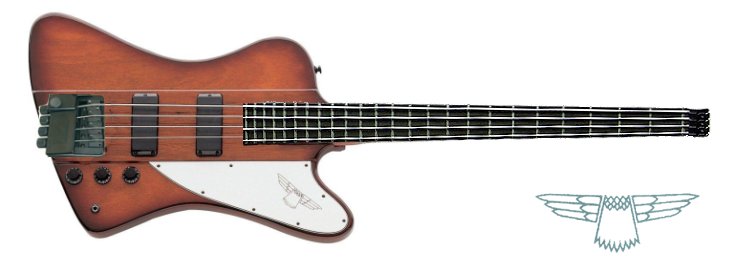
That paragraph you quoted is where I got my info about reverse vs non-reverse Firebirds as well, and it makes sense. Of course, the problem is, back in the day everybody just called the 'Bird a "Firebird" and so we called the non-reverse ones "reverse Firebirds" because they were backwards from the standard version. I understand Gibson couldn't reverse their nomenclature (pun intended), but that made it sort of inevitable that confusion would continue to this day.ECL, I can see that explanation. and I thought of that myself. But what about the Explorers? How come they don't call them Reverse Explorers? And your 2nd sentence is exactly what my brain was trained to do. Then I start seeing FB's with Necks and Headstocks oriented one way or the other with the 6th string/tuning machines in the Strat/Tele style manner, vs the Nuno Bettencourt Washburn N2 reverse neck. long Low E string style like this.
View attachment 41855
So, basically I am beginning to understand SOME versions of the Firebirds. Correct me if I am wrong, but the initial ones had the body style and neck/headstock like this...
WIKI:
Gibson had made forays into radical body shapes – the Flying V and Explorer in the 1950s – which met limited initial success. The president of Gibson, Ted McCarty, hired car designer Ray Dietrich to design a guitar that would have popular appeal. Under Dietrich, the Firebird took on the lines of mid-50s car tailfins. Dietrich took the Explorer design and rounded the edges. The most unusual aspect is that the guitar is "backward" in that the right-hand (treble) horn of the body is longer than the other. Thus, the original Firebirds were unofficially referred to as "reverse".
The Firebird is the first Gibson solid-body to use neck-through construction, wherein the neck extended to the tail end of the body. The neck itself is made up of five plies of mahogany interspersed with four narrow strips of walnut for added strength. Other features were reverse headstock (with the tuners on the treble side) and "banjo"-style planetary geared tuning keys. The special original Gibson Firebird humbucking pickup(s) – single, dual or triple – were smaller footprint versions of standard Gibson humbucking pickups, but were unique in that inside each of their smaller bobbins contained an AlNiCo bar magnet (standard humbucking pickups AND mini-humbucking pickups have one bar magnet that activates the 6 iron slug poles of one bobbin, and 6 iron screw poles of the other bobbin). Original Firebird pickups were also built without any specific bobbin fasteners – their bobbins (and possible "reflector" plate under the bobbins) were held onto the frame during both the wax potting process (to reduce/eliminate feedback and unwanted noise) and the solid metal cover that was soldered to the frame base. There are no screw poles on Firebird pickups. Some Firebirds from 1965 featured Gibson's single-coil P-90 pickup.
The Firebird line went on sale in mid-1963 with four models distinguished by pickup and tailpiece configurations (see below). Unlike the Les Paul and SG line, which used the terms "Junior", "Special", "Standard" and "Custom", the Firebird used the Roman numerals "I", "III", "V" and "VII". Gibson's line of Thunderbird basses is rooted in the design of the Firebird, and uses even Roman numerals ("II" and "IV") to distinguish it. From 1965 to 1969, Gibson introduced "non-reverse" models after failing to achieve marketing success with the unusual reverse-body design. Gibson had also received complaints from Fender that the Firebird headstock mirrored the Stratocaster and that the body violated Fender's design patents, with Fender threatening a lawsuit. The "non-reverse" body is a more standard double-cutaway design, with the bass horn being longer than the treble horn and the headstock having the tuners mounted on the bass side. It also had a standard glued-in ("set") neck rather than neck-through construction, as well as other, less noticeable changes in design and build. Pickup and tailpiece configuration for the V and VII were the same as the earlier "reverse" models, although the I- and III-models were now shipped with two or three P-90 pickups and plain vibratos. After a few years of disappointing sales, the "non-reverse" line was dropped. "Reverse" body Firebirds were first reissued in 1972, with a commemorative "Bicentennial" model released in 1976 which was made available in a variety of finishes including black, vintage white, natural, and the traditional sunburst. The bicentennial model was also distinguished by gold hardware and a red-white-blue logo on the white pickguard. The logo on most other models is red.
Myself, I feel they should've given the nonreverse model its own different name. But in the 60s, Firebird wasn't a familiar word to most, the way it is today. It was a cool and exotic word with mythic Native American connotations that was just making its way into the public consciousness - so cool in fact that Pontiac named a car the Firebird at the end of the decade too. So I understand them wanting to recycle the name. Especially because at the time nobody imagined the original 'Birds would be reissued in the 1970s. Reissues weren't a thing yet.
As for the Explorer, it wasn't considered reverse because it (along with its cousins the Flying Vee and the one now called the Moderne) was so radically different from everything else that it wasn't even considered guitar-shaped. It just was what it was. From a 50s/60s point of view that makes sense to me. Remember also that when the Firebird came out, the Explorer was a strange forgotten model from the previous decade that never caught on, something most people - even guitar players - had never seen or heard of. The guitar might have appeared in a photo or two but it was a novelty item, like Bo Diddley's box guitar. Nobody knew the name, it was "that weirdo lightning bolt guitar." You might see Flying Vees once in a while, but those original Explorers were super rare at the time. Still are. As with the Firebird, It was the reissues in the 70s that brought them more into the public eye. And the fact that rock had become more showy allowed them to become popular - wild rather than weird.
I actually kinda like the reverse Explorer. I think partly because they're rare & unusual, and partly because I love the Gumby headstock shape. Looks like it wouldn't be too comfortable to play, but I've never played one so I can't say for sure. It might be like the experience with Firebirds - odd at first but you get used to it.
As for the reverse Vee, I think if deliberately you set out to design an impractical guitar, it might look a lot like that.
The Corvus, well, the thing may be hideous but hey, it was the 80s.
Gibson may have been hoping it was ugly enough to become cool.
They were wrong.
That Firebird-headstock Les Paul just looks wrong. So does the version with an Explorer headstock.
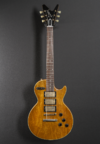
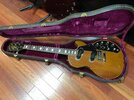
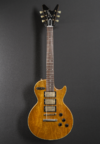
And to complete the trifecta of weird-headstock LPs, there's the korina version with three pickups and blade switch:

I actually wanted one of those for a while.
Not because I thought it was great or beautiful, just because it was unusual.
And because I just plain love korina.







![20200414_041512[1].jpg](https://www.thetonerooms.com/data/attachments/41/41902-807726ceb9a55f308d216f0737b3a14f.jpg?hash=gHcmzrmlXz "20200414_041512[1].jpg")
![20200414_033127[1].jpg](https://www.thetonerooms.com/data/attachments/41/41903-ff29e4f31e1740198f0a75f102205cbe.jpg?hash=_ynk8x4XQB "20200414_033127[1].jpg")


 now I have to have one!!!!!!