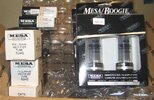
Hmmmm....


Glowing blue is OK normal.I just turned the amp on and this time I turned out the lights and can now see that one of the 6v6s is blowing blue. I couldn't see it until I shut off the lights.
Preamp tubes do not last forever, preamp tubes go stale and it's really common.Unfortunately not too specific information ... but a probabilistic argument: preamp tube tend to last "forever" - power tubes need to be changed more often. In Your case i would by a new pair of 6V6 and keep the old ones as backups.
BTW are there visible sign of tube aging in the glass?
Preamp tubes do not last forever, preamp tubes go stale and it's really common.
I change a preamp tube or 2 almost every time I work on an amp because they can get weak or noisy.
They do become microphonic and sometimes distorted...
If you have one good new 12AX7 swap it out with the old ones, one at a time.
Retest each time you swap an old tube out.
By process of elimination you can find a bad preamp tube.
No you do not really need a whole set of new tubes. Just one new one will help you find the bad one by swapping them and retesting.
But it is great to have spares if you can afford to buy them...swapping is the poor man's method and it does work for sure.


Tube testers are not entirely accurate.Greg shared with me a nearly new tube that read "worn" the tester, then "good" and shortly thereafter went microphonic...
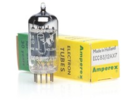
 too bad for you.
Ha ha... I absolutely hate JJ 12AX7's and JJ 12AT7's. I've had a lot of bad luck with them through the last 15 to 20 years. They're the only preamp tubes that ever pooped-out on me in a hurry!Well, this is why there are so many crap tubes that "test good."
The best tubes around today are actually made by JJ.

You’re not alone sir….but their 6V6 tubes have been surprisingly robust here.Ha ha... I absolutely hate JJ 12AX7's and JJ 12AT7's. I've had a lot of bad luck with them through the last 15 to 20 years. They're the only preamp tubes that ever pooped-out on me in a hurry!


While mercury has been used in rectifiers (like the type 83 or 866) & thyratons etc, it has not been used in audio valves. When used in rectifiers, thyratons etc, it was not used for "gettering" purposes, rather, to aid current flow from cathode to anode.Older style tubes:
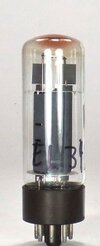
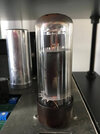
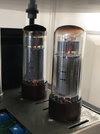
You can tell a lot by the silver inside the glass. If it's turned mostly black then it's time to replace the output tubes.
Newer style tubes:
Have no mercury, and the inside of the tube is black even when it's new.
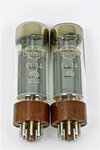
Although some do not like JJ for guitar amps, they are still very widely used.Ha ha... I absolutely hate JJ 12AX7's and JJ 12AT7's. I've had a lot of bad luck with them through the last 15 to 20 years. They're the only preamp tubes that ever pooped-out on me in a hurry!
I rarely have problems with JJ tubes. Just as often as any other brand probably...You’re not alone sir….but their 6V6 tubes have been surprisingly robust here.
Except Mesa does test them in amps and selects extra low microphonic ones as the SP tubes. Nice that they sort em and select matched pairs etc for you ahead of time. Rather than the crap shoog that is simply buying a bunch of CP tubes.Although some do not like JJ for guitar amps, they are still very widely used.
Mesa Boogie tubes are JJ, just double the price.
They pay for the label.
Of course Mesa is not superior as claimed, but just average.
If Fender and Marshall was not copied by Mesa, Mesa wouldn't exist.
I have used JJ for decades. The defects are pretty rare.
Although I admit that the Tesla JJ probably sounded better.
But I have seen Groove Tubes crap out just as often as JJ. Still not frequently.
Some of this is probably shipping damage.
I think JJ has taken some unfair criticism, based on internet rumors.
Yes most good tubes are selected and tested for microphonics and noises... I know eurotubes tests them all before shipping.Except Mesa does test them in amps and selects extra low microphonic ones as the SP tubes. Nice that they sort em and select matched pairs etc for you ahead of time. Rather than the crap shoog that is simply buying a bunch of CP tubes.
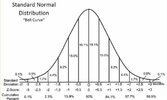
Yes, valves, or tubes of the same type can vary quite a bit characteristically. Typically, they are roughly graded at the manufacturers plant using the "bell curve" system to find which do not make the grade & which go on for further testing/grading etc. This is your typical bell curveYes most good tubes are selected and tested for microphonics and noises... I know eurotubes tests them all before shipping.
JJ tubes do have a more flat kind of response and are not like others.
Some tubes are just wild with extra sensitivity, like Sino.
Sino might be good in a guitar amp but not in a Hi Fi amp.
But people who have said JJ is unreliable: I really haven't seen that. I have seen a few defects but not a whole lot.
There are those who think that all output tubes are exactly the same, or should be.
They think the bias range will always be uniform.
But there is really a wide variation and expecting all tubes to be the same bias, etc...is really unrealistic.
There is plenty of times that I adjust the bias range, and that is expected depending on which tubes.
I expect variations and it's not so unusual. After 40 years of working on tube amps I have seen lot of variety it doesn't surprise me.
Then you have Electro Harmonix which is selling EL34 / 6CA7, which is not a EL34 at all.
But it's labeled as such....using a tetrode and calling it the same number as a pentode.
This is really causing confusion. And the bias range is wayyyy different from a real EL34. It's closer to 6L6 than it is EL34.


JJ once had problems with pins slightly too thin (measured) with ECC83 and EL34 which sometimes lead to contact problems and also reliability problems with their standard EL34 (which i am using in an old Dynacord amp, but at average voltages, not at 750V). Good sound, up to now no problems.I think JJ has taken some unfair criticism, based on internet rumors.