B Dorian mode backing track

You are indeed blessed to be able to grasp theory. It never made sense to me...and I couldn't stop playing long enough (earning a living) to devote enough time to learning it.

My Mom showed me some basic chords and gave me a Mel Bay Photo Chord Book,, but I never had any lessons. I just started out playing along to 45's and LP's.

When we started our first garage band in 1979, we would hear songs on the radio and learn them so we could set up in the quad at school and perform them the next day. Often we would play during assemblies or other school events whenever we could.

So, I would learn a solo, for example, in the song Back In Black, and I memorized it, but I couldn't tell you what scale pattern it used or even what notes were in the solo...all I knew how to do was Reigate what I heard, including vibrato, squeals, pinch harmonics, etc., so all the techniques I learned were from playing along to records.

I didn't start watching guitar lessons on You Toob until 2015.

And with all that being said,I still feel your skills are second to nobody!
 
My head hurts from all this theory :rolf:

Every time you fret a chord on a guitar you are putting theory into practice, whether you realize it or not.

The chord “shapes” are based on the intervals required to create the chord. You are placing your fingers on a location on the fretboard so as to create those intervals between the notes which comprise the chord. This was developed over centuries.

That’s how I started to take a serious interest in theory way back in the early ‘80s. I was learning guitar (on my own, at the time) and was hard at work memorizing chord shapes. At some point, it dawned on me that there had to be a reason I was contorting my hand into all these weird forms!

Well, I had already been playing flute for a couple of years and had taken just a very small amount of piano. So, I could already read music. I just got to thinking: being a musical instrument, all the frets on the fretboard must represent notes, so I began teaching myself the notes on the fretboard. Then, I borrowed a theory book and set about understanding why all the chord shapes mattered. Once I learned that there is a definite pattern to what forms chords and music, it was like the world opened up! I didn’t have to waste time memorizing “shapes”! Now that I learned how chords are made, the guitar suddenly became so much more enjoyable to discover. I began experimenting with chords in different voicings all over the neck, because now I knew how they are made and why they sound the way they do.

Keep in mind, all this was done on my own. Nobody was forcing me to do any of this.

This is why I tend to bristle when folks scoff at learning theory. To some it is a burdensome leash. To me, it was like opening a door and letting the light in.
 
Every time you fret a chord on a guitar you are putting theory into practice, whether you realize it or not.

The chord “shapes” are based on the intervals required to create the chord. You are placing your fingers on a location on the fretboard so as to create those intervals between the notes which comprise the chord. This was developed over centuries.

That’s how I started to take a serious interest in theory way back in the early ‘80s. I was learning guitar (on my own, at the time) and was hard at work memorizing chord shapes. At some point, it dawned on me that there had to be a reason I was contorting my hand into all these weird forms!

Well, I had already been playing flute for a couple of years and had taken just a very small amount of piano. So, I could already read music. I just got to thinking: being a musical instrument, all the frets on the fretboard must represent notes, so I began teaching myself the notes on the fretboard. Then, I borrowed a theory book and set about understanding why all the chord shapes mattered. Once I learned that there is a definite pattern to what forms chords and music, it was like the world opened up! I didn’t have to waste time memorizing “shapes”! Now, that I learned how chords are made, the guitar suddenly became so much more enjoyable to discover. I began experimenting with chords in different voicings all over the neck, because now I knew how they are made and why they sound the way they do.

Keep in mind, all this was done on my own. Nobody was forcing me to do any of this.

This is why I tend to bristle when folks scoff at learning theory. To some it is a burdensome leash. To me, it was like opening a door and letting the light in.

Theory is no doubt useful. If I thought I could earn more money learning it, I would do it, but I'm steadily (and happily) employed in ignorance.
 
Theory is no doubt useful. If I thought I could earn more money learning it, I would do it, but I'm steadily (and happily) employed in ignorance.

This is why I always stress the individuality of music. What you find enjoyable in music may be different from me or someone else. And, that’s okay!

I‘m not saying you need to start diving into music theory. I don’t necessarily continuously immerse myself in it either! But, there is a dimension of the theoretical side which many musicians, such as myself, actually enjoy.
 
I just got to thinking: being a musical instrument, all the frets on the fretboard must represent notes, so I began teaching myself the notes on the fretboard. Then, I borrowed a theory book and set about understanding why all the chord shapes mattered. Once I learned that there is a definite pattern to what forms chords and music, it was like the world opened up! I didn’t have to waste time memorizing “shapes”! Now, that I learned how chords are made, the guitar suddenly became so much more enjoyable to discover.

When I hear a song, I can tell you the key it is in and I can generally tell you if it's in lowered or non-standard tuning.

When I hear a solo, I can "see" the finger positions in my head.

I can play many, many chords that I cannot even name, but I can "hear the change comin" and I know that if I grab a certain chord, it will fit because I can hear the sound it (the chord) makes and I hear the place in the song where it will fit.

I have played live with guys who were monsters of theory, and when their lead sheet blew off the stand, they had to stop playing until he retrieved his sheet.

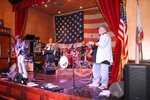
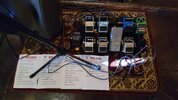
I don't use lead sheets. I play from memory. We only use a setlist sheet.

FB_IMG_1620050085040.jpg

20210320_174553.jpg
 
This is why I always stress the individuality of music. What you find enjoyable in music may be different from me or someone else. And, that’s okay!

I‘m not saying you need to start diving into music theory. I don’t necessarily continuously immerse myself in it either! But, there is a dimension of the theoretical side which many musicians, such as myself, actually enjoy.

I can dig it. I love music, but its also my job. For many, its just a hobby or pastime.

It's kina like not being able to stop the train long enough to perform maintenance on it.
 
Theory is a tool used to explain music. It is a tool you don't need because you hear music in a way most of us don't.

Honestly, I’m gonna push back on that a bit. For what Robert currently does, you are correct, he can likely continue on fine as he is. But, the issue I have is that last sentence almost sounds like theory is being characterized as a crutch that some people “need”. To me, it opens a level of understanding and I enjoy music more because of it. I’m an analytical person. The theoretical dimension appeals to that part of my psyche. I enjoy learning the explanation of music.

Now, I don’t know that you intended to characterize it as a crutch. So, I’m not overtly saying that’s what you mean. But, that caught my attention.
 
I have played live with guys who were monsters of theory, and when their lead sheet blew off the stand, they had to stop playing until he retrieved his sheet.

Well, that doesn’t make an argument for or against learning theory. That just means they should practice more and memorize their parts!

I agree with your approach. It is better to memorize the song. Aside from not fumbling with music, it just makes a stage look cleaner and the musicians look more natural. Now, for a symphony orchestra, that’s a totally different ballgame! But, in a small rock band type of ensemble, yeah, memorize the song!
 
Now, I don’t know that you intended to characterize it as a crutch. So, I’m not overtly saying that’s what you mean. But, that caught my attention.

I don't think theory is "inherently" a crutch, but there are a number of guys I work with who are brilliant musicians, but without a lead sheet/sheet music, they cannot get through a song.

However, in their world - a studio environment - that's not a problem at all.

With a bar band, that frequently takes requests that are not on the setlist, or who may have to transpose the song on the fly for a guest singer, it's a shocker.

I know guys who play for a living - as their only means of income - who can't tell you half of the chords they play, but they are working the casino circuit 6 nights a week and making great money.

Now in the studio, I am constantly amazed at how some guys can work out musical problems in their head, guys who have an advanced knowledge of theory, and in that environment, I'm the one who has to struggle to keep up, but I'm not intimidated by these musical giants.

I'm very happy and confident in my ability, however menial those attributes are and I keep our bills paid and we live most content and comfortable.
 
Well, that doesn’t make an argument for or against knowing learning theory. That just means they should practice more and memorize their parts!

I agree with your approach. It is better to memorize the song. Aside from not fumbling with music, it just makes a stage look cleaner and the musicians look more natural. Now, for a symphony orchestra, that’s a totally different ballgame! But, in a small rock band type of ensemble, yeah, memorize the song!

As a child, I struggled with learning disabilities and speech problems. I was told by a neurosurgeon as a youth that I would never be able to ride a bicycle, or walk a balance beam and my 3rd grade music teacher told me I would never play the trumpet or any other musical instrument.

I succeeded in music by the grace of God (my personal beliefs only not preaching) and sheer force of will. It's not talent, but rather perseverance.

Maybe I'm just a musical bumblebee???
 
I don't think theory is "inherently" a crutch, but there are a number of guys I work with who are brilliant musicians, but without a lead sheet/sheet music, they cannot get through a song.

That has nothing to do with theory. That is just an over-reliance on sight-reading and insufficient ear-training. Understanding theory does not mean you can’t play by ear. They are not mutually exclusive. This is a common misconception. In fact, in college, ear-training is a part of a music major’s coursework.

With a bar band, that frequently takes requests that are not on the setlist, or who may have to transpose the song on the fly for a guest singer, it's a shocker.

Again, not an argument against theory; it’s exactly the opposite. In fact, a solid understanding of theory facilitates transposition. It’s another one of those things taught in college to music students. If someone can’t transpose, it reflects a LACK of knowledge of theory.

See there…you’re using theory and didn’t even know it! I’m proud of you!
 
This is my last go at this one. I'm not happy with the track but I am very happy with the discussion it generated. The track is OK but not my best and I could never play lead to it :)

@Robert Herndon you have a gift. Don't change anything. Theory is a tool used to explain music. It is a tool you don't need because you hear music in a way most of us don't.


@Kerry Brown - Great job on this track!!!! The fluidity is really good, like a musical journey. Huge improvement over the first track!!!!!!
 
That has nothing to do with theory. That is just an over-reliance on sight-reading and insufficient ear-training. Understanding theory does not mean you can’t play by ear. They are not mutually exclusive. This is a common misconception. In fact, in college ear-training is often a part of a music major’s coursework.


Again, not an argument against theory; it’s exactly the opposite. In fact, a solid understanding of theory facilitates transposition. It’s another one of those things taught in college to music students. If someone can’t transpose, it reflects a LACK of knowledge of theory.

See there…you’re using theory and didn’t even know it! I’m proud of you!

Your wisdom is largely wasted on this Neanderthal. I most likely got lucky.
 
Honestly, I’m gonna push back on that a bit. For what Robert currently does, you are correct, he can likely continue on fine as he is. But, the issue I have is that last sentence almost sounds like theory is being characterized as a crutch that some people “need”. To me, it opens a level of understanding and I enjoy music more because of it. I’m an analytical person. The theoretical dimension appeals to that part of my psyche. I enjoy learning the explanation of music.

Now, I don’t know that you intended to characterize it as a crutch. So, I’m not overtly saying that’s what you mean. But, that caught my attention.
There are many different music theories. The music most of play uses some rules that come from western classical music. The rules give musicians some common ground. There are other musical rules that are very different from our western rules. There are Asian, African, Oriental, and probably more that have quite different rules from western music. Some people are gifted with an ear that can automatically discern the rules. They can play all the different types of rules because they hear them. Some people are tone deaf and without the rules couldn’t make any music. Most of us are somewhere in between, Me, I have a mathematical mind. I love the rules. I don’t have a great ear. Without the rules I would struggle to make any music. I stand by my statement that theory is a tool.
 
I stand by my statement that theory is a tool.

I completely agree. It is a tool. But, don’t forget, some of the greatest musical minds and ears through the centuries have expressed and contributed to it. I just don’t accept the idea that it reflects as some sort of weakness for those who choose to understand it any more than it would be a weakness for a poet to learn the alphabet and grammar. Again, it may not be your intention to say that. So, forgive me if I’m missing you on that.

And, you are correct, western music is but one musical form…certainly not the sole expression of music in the world!
 
I completely agree. It is a tool. But, don’t forget, some of the greatest musical minds and ears through the centuries have expressed and contributed to that understanding. I just don’t accept the idea that it reflects as some sort of weakness for those who choose to understand it. Again, it may not be your intention to say that. So, forgive me if I’m missing you on that.

And, you are correct, western music is but one musical form…certainly not the sole expression of music in the world!
It is not a weakness to use a tool. I look at theory, my instruments, my knowledge, my ears as tools that I use to do something I love, make music. Everyone has a different set of tools they use. I need theory in my tool chest.
 
Back
Top