Anyone Reamp ??

Ok, older thread but I have questions.
I am full blown gonzo confused about this reamping $hit.
I want to reamp my '68 Princeton to use with my tonex system.
It would seem that there are 2 ways to reamp.
1, use the speaker out of the amp
2, use a microphone
Now, if I'm using the speaker out from the amp the reamping box would have to also work as a load box since you're taking the speaker out of the equation, that I would understand a special box for.
However, with a microphone can't I just run it into my interface, adjust the levels and go?

images
 
I am full blown gonzo confused about this reamping $hit.

That may be because there are varying definitions of the term depending on context and whom you ask. Some record the final output of an amp using a mic and then push that recording through another amp/speaker (or sim). Generally a DI is captured of the instrument itself and then sent through the amp of choice.

However, with a microphone can't I just run it into my interface, adjust the levels and go?

Technically yes, you can. However, pushing amplified and mic'd signal through another amp doesn't generally sound too great unless you're after something very funky/specific. What I've done in the past is simple capture a DI 'copy' of the instrument signal (and using whatever amp I want in the room), then run that capture through other amps using a reamp box. A reamp box is basically like a reverse DI unit; it matches the impedence and levels of a line output to an instrument amp input.

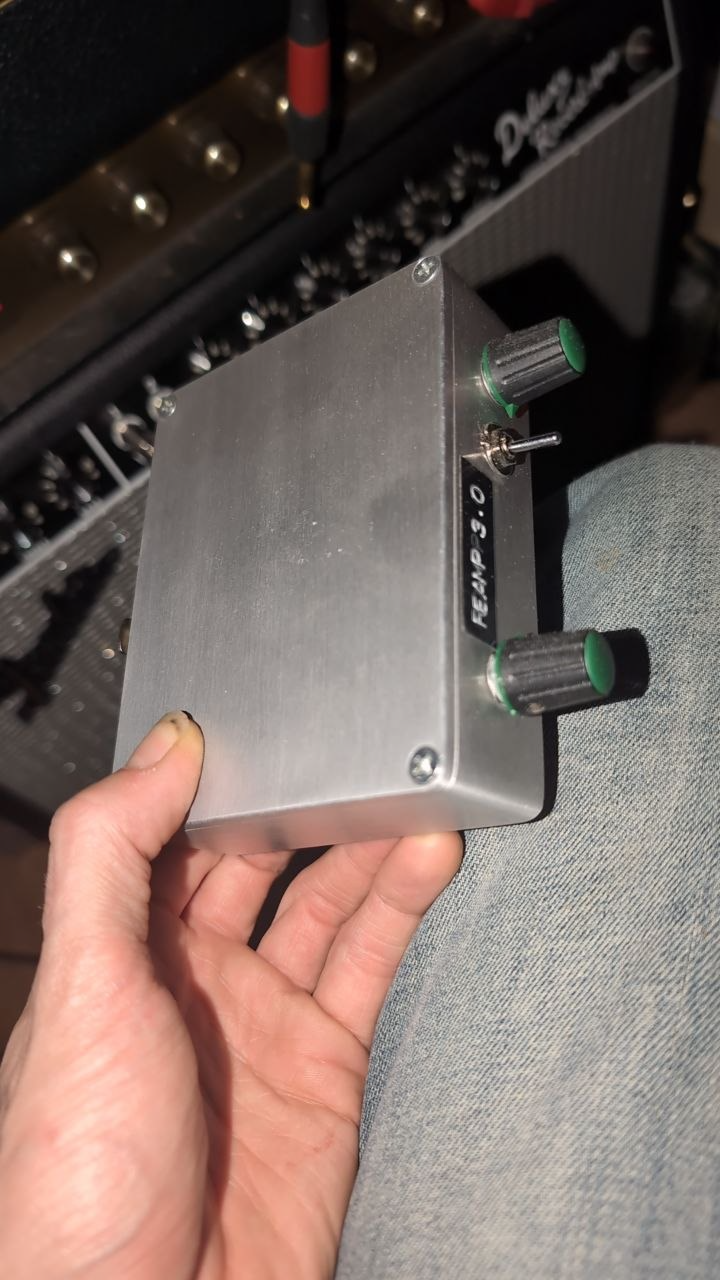
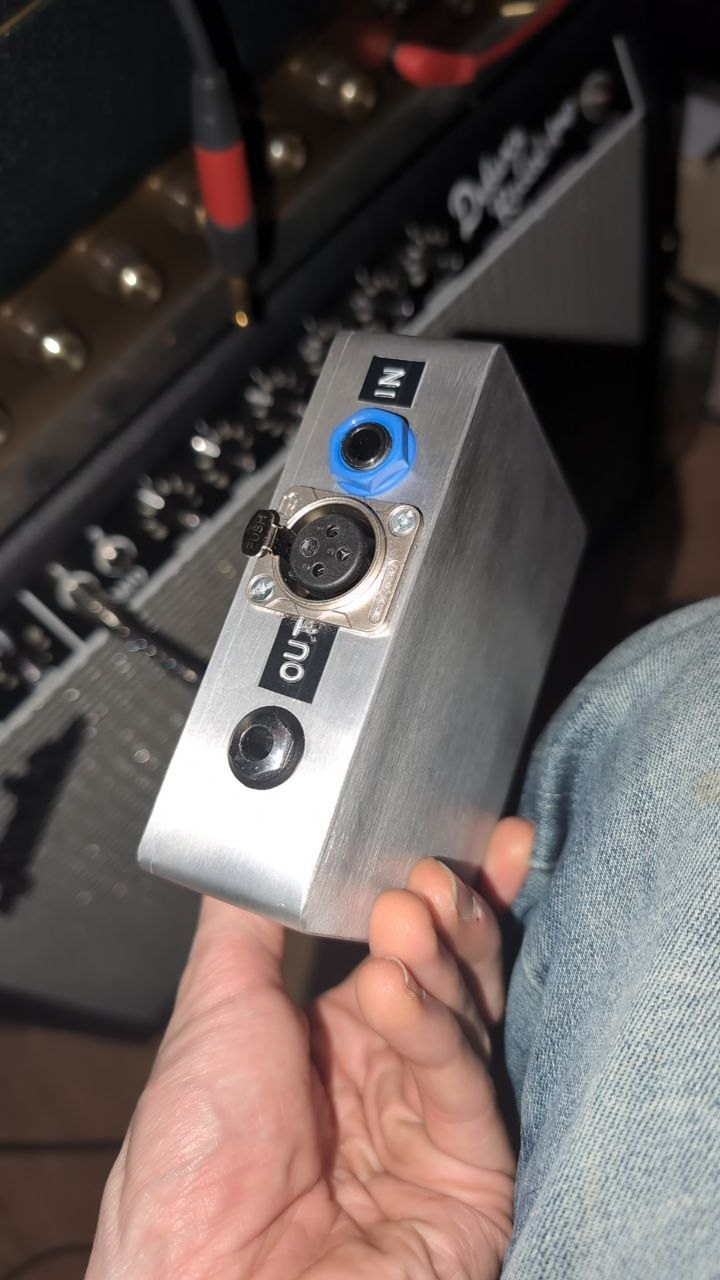
I'm not going to pretend that I invented this concept, but what most reamp devices miss is the option to fine-tune the output impedence to approximate an instrument (typically an electric guitar) better. Humbuckers, single coils - they operate differently and tend to have different electronics and pot values.

8lwTkaSdGgY8.png
Xn0GuusHUd8X.png


Here's my current "prototype" reamp box. Line level in, adjustable output level and impedence. Takes a balanced input, too, but only outputs 'normal' unbalanced signal (like a guitar).
 
Technically yes, you can. However, pushing amplified and mic'd signal through another amp doesn't generally sound too great unless you're after something very funky/specific.
Ok, still confused.
Maybe the question was wrong.
What second amp?
Real question
Can I make a capture of my amp to use as a tonex model without a reamp box and only a mic and my DAW interface?
 
What second amp?

Whichever one you want. In my use case it would generally be "I know what I want to play, but I'm not sure of the amp". Then I would capture the DI output of the guitar and run it through various chains/amps and pick what I like best, only playing it once. That allows instant A/B'ing and so on that are not practical when playing. "Oh, maybe the VOX really clean... no, wait, the DR is better for this". That sort of idea.

Can I make a capture of my amp to use as a tonex model without a reamp box and only a mic and my DAW interface?

Ah, I think I totally misunderstood your question, indeed. Which Tonex unit? Link me a manual and I'll see what I can de-jargonize. Zero experience doing this, though.
 
The only time I've done it was with vocal tracks. The studio didn't have a reverb rack that had the sound that me and the engineer were looking for. We sent the lead vocal track through a fifties Gibson Skylark amp and the spring reverb in that sounded great. I forget if we used a ribbon or condenser mic on the amp to send back to the board.
 
I think we need to define “reamping” and then understand about the standard types of signals (line level, mic level, instrument level etc.).

As @PelliX said there are many definitions of “reamping” nowadays. The video above really doesn’t explain the different audio levels between instrument, DI plugged into a mic preamp level, and +4Db balanced whether it be an XLR mic style or in a balanced 1/4” TRS style.

Back in the olden days (of 24 track 2” multitrack tape), you would always record the mic’ed up sound(s) via a microphone(s) while simultaneously using the the DI of an instrument or vocal or whatever you wanted into a separate track along with the mic’ed track. Back then as Pellix said, you would have a male XLR to male XLR turn around adapter and run the high output of the tape machine (+4 balanced) which is much higher than a guitar amp is designed to deal with. Essentially a DI box in reverse. Typically The “reamp box” takes recorded DI +4Db balanced signal from the tape machine and bumps it back down to instrument level which lets you take that DI signal and plug it into any amp and/or pedals which are also instrument level. You could use the DI to try it plugged into any amp in your collection. Back then most big studios had very talented and creative studio techs who would build an additional box that let you adjust gain and impedance to match the particular pickups and/or amps in the sweet spot.

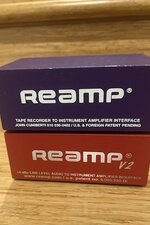
The first commercially available “reamp” box was designed, patented and sold by John Cuniberti starting in the early nineties. John recorded and produced everything from most of the Dead Kennedys records to Joe Satriani starting with Surfing With The Alien and he has done every Satch record since. He was smart enough to patent it and get a trademark for “Reamp”. After the word reamp sorta became a generic word for lots of stuff. It kind of became like calling every tissue paper regardless of brand “Kleenex”. He sold all his IP, Reamp name and trademarks to Radial Engineering in the mid 2000’s. I’ve found that a great companion to my original Cuniberti Reamp and Reamp V2 is a tiny little box Radial makes called a Dragster which does help adjust the impedance and load characteristics of whatever PU and amp combination you want to reamp.

I hope I was clear enough, but it’s basically and traditionally knocking down a high output +4 line level signal from your tape machine, interface or whatever down to instrument level which lets you experiment without committing anything permanently to the track. Once you have the amp to reamp chosen, you would typically mic the amp you’ve reamped onto a 3rd channel. It’s always a good practice to record a DI along with your amp mic’s just for good measure. If you’re on a DAW, you have unlimited tracks so there’s no penalty for always recording a dry DI of the guitar track along with a mic’ed amp.

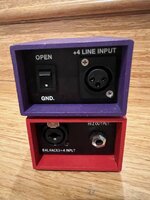
Here’s my 2 Cuniberti Reamp boxes from the 90’s. A V2 and the purple original version.
IMG_2346.jpegIMG_2348.jpeg
 
Back
Top