
You are using an out of date browser. It may not display this or other websites correctly.
You should upgrade or use an alternative browser.
You should upgrade or use an alternative browser.
Another Tele Project
- Thread starter RVA
- Start date


That's ok I got enough Tele love to cover both of us.
Awesome!
That's ok I got enough Tele love to cover both of us.
Although not on par with @RVA build, but strictly for the record, I don't mind Tele's if they are Gibson scale length, set neck and have humbuckers, although the body shape does feel very foreign to me...
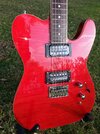
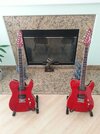
OP

RVA
Ambassador
Regarding the neck pocket. I wrote the seller as a PSA for future buyers
RVA message:
Hello. I have purchased 2 guitar bodies from you, which are now fully assembled. On each occasion, the neck pocket was a bit off so that the high E string was too close to the fretboard edge by about 3 mm. On each build, I verified that my bridge was through the center seam of the guitar, well positioned over the pickup routes and straight. It may be the pocket angle or placement. I just thought would let you know since I do not think you assemble these guitars.
----------
Seller response
Thank you for letting us know about the neck pocket. We have since switched to a different program code for carving these and I believe it has been corrected on the new bodies. Thank you again for the information and your business.
---------
I tried to sneak in a well deserved discount, so I wrote:
Great. I am already eyeing my next purchase!
Is this one of the corrected pieces, and if so, what is your best price?
SPALTED CURLY MAPLE TELE STYLE GUITAR BODY 12293 LUTHIER 5A BLACK LINE WOOD | eBay
---------
Seller response : NONE
RVA message:
Hello. I have purchased 2 guitar bodies from you, which are now fully assembled. On each occasion, the neck pocket was a bit off so that the high E string was too close to the fretboard edge by about 3 mm. On each build, I verified that my bridge was through the center seam of the guitar, well positioned over the pickup routes and straight. It may be the pocket angle or placement. I just thought would let you know since I do not think you assemble these guitars.
----------
Seller response
Thank you for letting us know about the neck pocket. We have since switched to a different program code for carving these and I believe it has been corrected on the new bodies. Thank you again for the information and your business.
---------
I tried to sneak in a well deserved discount, so I wrote:
Great. I am already eyeing my next purchase!
Is this one of the corrected pieces, and if so, what is your best price?
SPALTED CURLY MAPLE TELE STYLE GUITAR BODY 12293 LUTHIER 5A BLACK LINE WOOD | eBay
---------
Seller response : NONE

DirtySteve
Ambassador of Hold My Beer

OP
RVA
Ambassador
Thanks Wav. It is now!You already know my love for spalted maple. Gorgeous hunk of wood, i hope her neck is true for you.

syscokid
Ambassador of War & Peace
Pretty slick foreplay there, RVA. But as Shaolin Master Po would wisely say: "Patience, young Grasshopper". And if Master Po would have seen this latest spalted Tele body that you're intewested in, I believe he would say: "WTF Bro? Get that sucka and put a baritone neck on that beotch!"I tried to sneak in a well deserved discount, so I wrote:
Great. I am already eyeing my next purchase!
Is this one of the corrected pieces, and if so, what is your best price?
SPALTED CURLY MAPLE TELE STYLE GUITAR BODY 12293 LUTHIER 5A BLACK LINE WOOD | eBay
---------
Seller response : NONE
OP
RVA
Ambassador
Thank you oh wise Sense.Pretty slick foreplay there, RVA. But as Shaolin Master Po would wisely say: "Patience, young Grasshopper". And if Master Po would have seen this latest spalted Tele body that you're intewested in, I believe he would say: "WTF Bro? Get that sucka and put a baritone neck on that beotch!"
I would like to know that it is properly set neck pocket. I doubt they "changed programs" rather than just correcting the error in their original input or properly calibrating the machine. I think my last 2 builds beat that one (I am getting spoiled). They sell the uncut wood for tops and backs. I may just need to put my new bandsaw into play. But can I do it without a planer?


OP
RVA
Ambassador
Thanks Johnny!Love that Tele Ray. Nice work.
syscokid
Ambassador of War & Peace
I'm totally shocked that you don't have a planer yet!But can I do it without a planer?
OP
RVA
Ambassador
I am determined to relieve you of that feelingI'm totally shocked that you don't have a planer yet!
syscokid
Ambassador of War & Peace
Please esplane, Lucy...It appears a thickness planer is not a good choice for figured wood. Drum sanders seem to be preferred.

OP
RVA
Ambassador
Thickness planers cause chipping and tearout. It is a rather rough tool. The type with 3-4 knives are worse than the type with helical cutting heads, but both do damage. A drum sander (thickness sander), which uses sand paper, is much more gentle but is not really intended to remove large amounts of material. I believe most luthiers get as close to the thickness then need with the bandsaw, and then use a drum sander if they have one. Even if a drum sander is used, an orbital sander would still be needed to remove sanding marks and get a clean surface.Please esplane, Lucy...

I watched a few videos on the DeWalt 735 planer I have on order. One of the guys in the demo said the wood came out about the same as a 220 grit sand job??? I’ll certainly be doing a bunch of test pieces first. My first project is cutting and planing those cedar siding planks I got a few weeks ago. Going to use some of the wood for interior framing of 4 new windows we installed in the basement last month.Thickness planers cause chipping and tearout. It is a rather rough tool. The type with 3-4 knives are worse than the type with helical cutting heads, but both do damage. A drum sander (thickness sander), which uses sand paper, is much more gentle but is not really intended to remove large amounts of material. I believe most luthiers get as close to the thickness then need with the bandsaw, and then use a drum sander if they have one. Even if a drum sander is used, an orbital sander would still be needed to remove sanding marks and get a clean surface.
OP
RVA
Ambassador
My comments are strictly from a luthier standpoint. For general woodworking, it is a very useful tool. Do you have a jointer? My understanding is you need a true surface to work with when feeding the planer.I watched a few videos on the DeWalt 735 planer I have on order. One of the guys in the demo said the wood came out about the same as a 220 grit sand job??? I’ll certainly be doing a bunch of test pieces first. My first project is cutting and planing those cedar siding planks I got a few weeks ago. Going to use some of the wood for interior framing of 4 new windows we installed in the basement last month.
