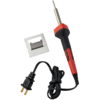
this is the evil tool of the bane of mans existence.....that I have -- (thanks Chili) and actually USED recently to swap pickups in Firebird to MUCH happiness and satisfaction of myself and Don O
You forgot the happiness for me too, ESGEEEEraffe.. I was so proud of you.
Ya see, I was once in your shoes in a similar arena. Amp diagnosis and repair. While my skills aren't quite up to being like riding a bike soldering or even reading resistor values, schematics etc, I was encouraged by none other than one of our former members here as he expressed confidence I COULD LEARN to fix my own amp. Having taken his faith in me and making it my own, I began to take the baby steps needed to fix amps.
Studying and asking questions, learning to read amp schematics and figuring out specs and what the components do, not only helped me fix amps, but when our furnace acted up, I was able to fix that too. My newly learned electronics/amp knowledge helped me diagnose the problem to a bad SOLDER connection on the control board. I was getting the expected readings and currents to parts like the inducer, igniter, blower etc, yet the thing would try to ignite and sometimes do so and other times cut off prematurely. It turns out where the buss bar the thermostat wires connected to, could either make the furnace work as it should or shut off when it should be firing up instead. I discovered if I wiggled or held it just so, I could make the furnace work 100%, or if I let go or wiggled it, the failure would occur.
SO, as you can see. not only was electronics understanding important, but SOLDERING was. All it needed to fix the issue, was to re-solder the connections tight. Much like my JMP 50 watt Marshall fooled even a pro tech to thinking it was a transformer, or like when I had the amp running 100% with Ivan and DonP's help, and yet the potential to fail at the worst time and in the worst way could happen at any time. AND IT DID happen. I could turn amp on, plug guitar in, take off standby and strum away and hear the guitar, then suddenly the signal would fizzle out and go quiet, despite the amp still running. A bad electrical connection was the culprit. LOOSE female to male connections in the OHMS selector switch was causing the amp to run and work, but then suddenly I would get no sound from the guitar. Self doubt could have defeated me but it didn't. Having gotten all good readings from the Trans's, Caps, Etc etc, I referred back to info I had learned online. Chop Stick probing tests. Amp on, guitar and speaker plugged in, it was time to see if I could touch something inside or out that would make a sound of some sort. After a bit, it happened, my chopstick wiggled one terminal on the selector and glorious crackling occurred. I manually manipulated the removable plug in selector cap, and the amp came to life. In the end, I disassembled the ohms selector and the voltage selectors to tighten up the tubular ferrules inside and thus would make proper and tight and reliable connections. The amp has not failed in over 3 years since.
Bottom line is, where once I couldn't ever imagine learning enough to understand how an amp ( or Furnace) works, I even surprised myself and now have knowledge and skills that will last a lifetime. This is also why I was so happy Adrian fixed his Firebird with the new soldering iron I sent for him. I now am the one who has confidence he can learn and can turn a once dreaded experience into a victory and skill to last him a lifetime.





 Jeez, Chili, what are you doing up this late ...