Amplifier Tone - Another Fascinating Jim Lill Video

I listened to some more of the video. Again Jim referenced an area of an amp, fixed bias versus cathode bias. On his amp that he featured showing the switch from fixed to cathode, again the values are not known. If the amp is set up to where the cathode bias is only say 10 volts less than the fixed, then yeah there will be very little difference (i.e. like the s.s. versus rectifier in a Ceriatone area 51). But you take a tweed amp with fixed bias vs a ctahode bias and the voltage difference could be as high as 40 volts difference. That accounts for not only Volume, but headroom, and the overall tone from the power tubes.
 
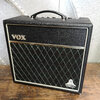
Again on the video He talks in vague general about internet descriptions of power tubes. It depends entirely on how the amp is set up on whether the tone is dark or bright . Picking an amp where the power tube switch ability could have them at them in the same voltage range is highly misleading. Take a Vox AC15 at say 310Volts vs a Fender 6V6 Deluxe at 415Volts and it's night and day. I can blow holes in this all day


But hey, "I'm just an amp builder and don't know anything about performing"
 
I listened to some more of the video. Again Jim referenced an area of an amp, fixed bias versus cathode bias. On his amp that he featured showing the switch from fixed to cathode, again the values are not known. If the amp is set up to where the cathode bias is only say 10 volts less than the fixed, then yeah there will be very little difference (i.e. like the s.s. versus rectifier in a Ceriatone area 51). But you take a tweed amp with fixed bias vs a ctahode bias and the voltage difference could be as high as 40 volts difference. That accounts for not only Volume, but headroom, and the overall tone from the power tubes.

Again on the video He talks in vague general about internet descriptions of power tubes. It depends entirely on how the amp is set up on whether the tone is dark or bright . Picking an amp where the power tube switch ability could have them at them in the same voltage range is highly misleading. Take a Vox AC15 at say 310Volts vs a Fender 6V6 Deluxe at 415Volts and it's night and day. I can blow holes in this all day


But hey, "I'm just an amp builder and don't know anything about performing"

Took me a moment to realize that you were commenting on the first video, posted a while back. I was not as enamored with that one as with the newer “sound in the room” video. I enjoyed the concept of the first, but as with any endeavor that is practiced, I feel the newer video hits a bit more solidly. I don’t know if I agree with all of it(the toboggan was a pretty sketchy venture), but it seems as though he’s putting some effort in.
 
I like this one.


maxresdefault.jpg
 
Last edited:
I can honestly say that I've played through almost everything. Guitar Rig 6 has very similar feel to a real amp, but i have no clue how they do it..

Yeah. Good observation. The newer modeling platforms and software are leaps and bounds beyond what they used to be, both in term of sound and responsiveness. And, as manufacturers are starting to incorporate AI and machine learning into the platforms, it's only going to accelerate.

Personally, although I do value the tube amplifiers that I own, I've come to the point where I don't care if a sound is being created by a tube amp or a processor. What I care about is the sound that would reach a listener's ears.
 
...(the toboggan was a pretty sketchy venture), but it seems as though he’s putting some effort in.

Yeah, that was the only part that kind of fell short to me, too. Although I do agree with his conclusion, I think it would have been more impactful if he had conducted his test indoors, not outside. Doing that outside leaves himself open to criticism about his methodology. Someone could argue that, since he was outside where the sound can disperse more, that the guitar was less impacted by the sound pressure coming from the cabinet.
 
But you can't value your own perception over someone else's. There could be a lot of people that do hear the difference in capacitor values (I sure can when I change the caps in a guitar, why not someone else in an amp?).
A client recently asked me to change a ceramic disc capacitor - that measured .047uf - for a PIO that measured .047uf. I did what he asked and he was puzzled because it made no difference at all and i told him that it absolutely could not make a discernible difference from a scientific standpoint.

You're both right.

But, these are two different ideas.

@gball is talking about values. @Inspector #20 is talking about composition.

Changing the VALUE of a capacitor (i.e., .047 mFd to .015 mFd, etc.) can certainly result in a tonal shift as it affects the resonant frequency of a circuit. This is testable reality - it could be confirmed on an oscilloscope - and can be demonstrated mathematically, as well.

But, changing the COMPOSITION of a capacitor of the same VALUE (i.e., a paper-in-oil .047 capacitor vs. a polypropylene .047 capacitor) is of dubious significance when it comes to tone in a guitar circuit. However, composition can have relevance to other issues, such as power handling, tolerance, and long-term stability.
 
Now, we often have Saturday Jam Sessions at our music academy and on those days, i bring out the full monty and i really enjoy it...

20211229_205927.jpg

20220108_113000.jpg

Summarily, i can be equally at home using Guitar Rig 6 in my home studio....
 
Back
Top