Amek Power Supply repair?

Jon Snell

Member
England
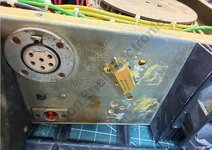
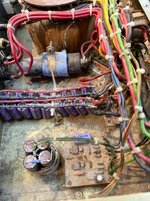
This chassis was sent in for repair. Comes from an Amek Rembrandt from 1978 ish.
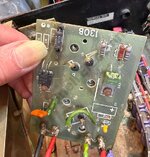
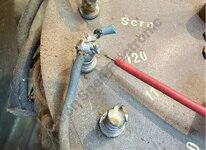
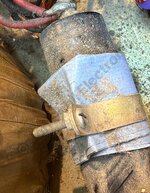
Someone has had a good go at it, transistors missing, cut out and the smoothing capacitors have to be seen to be believed!
I will refurbish it, because that is what I do, but there is no service information available, so the fun has started.

To the last guy who looked at this I give the 'Spot the Brain Cell" award.
 

Attachments

This chassis was sent in for repair. Comes from an Amek Rembrandt from 1978 ish.
Someone has had a good go at it, transistors missing, cut out and the smoothing capacitors have to be seen to be believed!
I will refurbish it, because that is what I do, but there is no service information available, so the fun has started.

To the last guy who looked at this I give the 'Spot the Brain Cell" award.
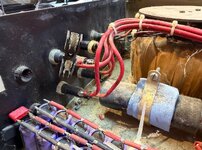
Looks like fun, now that the damage was already done.
 
To the last guy who looked at this I give the 'Spot the Brain Cell" award.
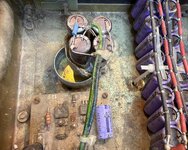
Ouch, there's so much wrong there... a little knowledge can be a dangerous thing, eh.

screenshot-2026-07-04-at-12-55-25-jpg.111594


^^ I've been guilty of this on occasion in a pinch, though I didn't use woodscrews. :celebrate2:
 
We have progress.
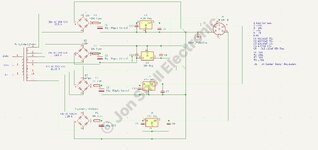
After copious amounts of Speckled Hen, (A fine English Ale with no nasty additives), here is the schematic I made for the resurrection of this power supply.
Building the regulators tomorrow, in between repair jobs that come into my workshop of course.
 

Attachments

Just curious, what about the inside of the chassis, are you actually going to clean/polish/restore that, too, or is this only a 'functional' repair? If the former, I'd be interested to know how you go about it.
 
Hi @PelliX
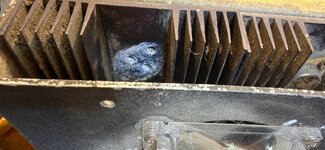
It is a rack mounted power supply and only the front panel is on display. The chassis is made of anodised, 16SWG sheet steel and has a small amount rust or corrosion on it, mainly just 60 years of dust and grime, from being on the floor of a 19" rack case. Once upon a time the fans actually worked and blew the carpet fluff everywhere.
I shall vacuum, with a dry paint brush the internals, and make good the connections to the chassis as and if required.
It is a functional repair as opposed to a refurbishment. If it was a refurbishment, all would be removed from the chassis and be sent to an anodising shop for acid treatment and fresh anodising. That would add another £100 - £150 to the cost.
The mains input socket does not comply with modern standards, but retrofitting is not required under the regulations. The insulated connector is what we used for a short while for loudspeakers, before Speakons became the norm. It is rated at 250 volts 10 Amps. So adequate.
The old regulators are not only missing but obsolete.

It's getting there.
 

Attachments

I shall vacuum, with a dry paint brush the internals, and make good the connections to the chassis as and if required.
It is a functional repair as opposed to a refurbishment. If it was a refurbishment, all would be removed from the chassis and be sent to an anodising shop for acid treatment and fresh anodising. That would add another £100 - £150 to the cost.

Exactly what I was thinking; I recently dusted off an old 25A power supply of mine that may have spent many, many years of its life in a cellar before I got it. I managed to get the heatsink on the back for the pass transistors shiny and new with Peek and elbow grease, but the inside of the chassis I opted to leave alone apart from the actual work I needed to do in there.

1783246169069.png

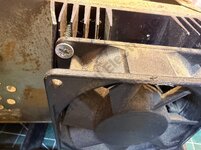
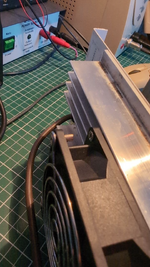
Test fitting the fan while taking a little break from scrubbing.
 
It was suggested that for ease, switch mode power supplies could be used. I replied, we didn't use those in 1976, in fact they were not commercially available.
NO! Keep it original.

Analogue through and through, the engineering studio foots the cost to run the electricity that powers it.
A lightweight power supply means lots of possible interference, from the switching chip/transistor/MosFets, not to mention mains borne that is there before you start. Not good when mixing at low levels.
 
To be fair, lots of switched mode power supplied are used in all kinds of studio equipment. If implemented correctly with the necessary precautions they can perform just fine. I'd have to agree, unless there's some incredibly compelling reason not to restore it as it was intended, I'd avoid the SMPS route. Equally, transformers and their magnetic fields can also be problematic and placement has to be done carefully in some cases.

Keep us posted!
 
To be fair, lots of switched mode power supplied are used in all kinds of studio equipment. If implemented correctly with the necessary precautions they can perform just fine. I'd have to agree, unless there's some incredibly compelling reason not to restore it as it was intended, I'd avoid the SMPS route. Equally, transformers and their magnetic fields can also be problematic and placement has to be done carefully in some cases.

Keep us posted!
It employs a 1kV/A Torrid so minimal magnetic radiation.

More to follow ...
 
Back
Top