A Question Of Brightness:

Inspector #20

Ambassador of Tone
Fallen Star
Country flag
Curious...

I've always had a bit darker tone in the bridge of my double neck (even with a 1 megaΩ pot and 0.01uf capacitor) due largely to the position of the bridge pickup, which is moved slightly towrads the nut. I would like the brighten the tone here a bit. pickup adjustments are not doing it, so a swap is in order.

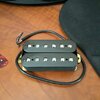
I have a very nice Artec PAf with wood spacers, AlNico 4 magnet, #42 plain enamel wire and putting out 8.2k

I also have some hybrids I built from several old sets of pickups.

These both have ceramic magnets. The neck is 10kΩ with 43 gauge wire and the bridge is wound to 17kΩ with 44 gauge wire.

Which of these do you think would be the brighter - not necessarily hotter - bridge pickup???
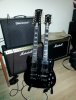
Doubleneck New Pickups - Small.jpg
 
Curious...

I've always had a bit darker tone in the bridge of my double neck (even with a 1 megaΩ pot and 0.01uf capacitor) due largely to the position of the bridge pickup, which is moved slightly towrads the nut. I would like the brighten the tone here a bit. pickup adjustments are not doing it, so a swap is in order.

I have a very nice Artec PAf with wood spacers, AlNico 4 magnet, #42 plain enamel wire and putting out 8.2k

I also have some hybrids I built from several old sets of pickups.

These both have ceramic magnets. The neck is 10kΩ with 43 gauge wire and the bridge is wound to 17kΩ with 44 gauge wire.

Which of these do you think would be the brighter - not necessarily hotter - bridge pickup???

Generally, a higher resistance pickup will be darker, assuming the same wire gauge and magnet. This is because the higher resistance is due to a greater number of turns, which increases inductance. This will tend to reduce highs.

Another thing that will increase resistance is wire gauge. Thinner wire will have a higher resistance than thicker wire. So, two pickups with the same number of turns but with different wire gauges will have have different resistances. The pickup with thinner wire will show a higher resistance, but will not have any more output - again, assuming the same magnet. (This is another reason why it is incorrect to refer to the resistance of a pickup as its “output”). However, some sources suggest the pickup with the thinner wire will be voiced with more mids, with a little less emphasis on lows and highs. It’s worth pointing out that more mids may seem louder because our ears tend to be more sensitive to that, but it doesn’t necessarily mean the output has actually increased.

In the case of your pickups, it’s hard to tell. Your 17k pickup has thinner wire than the 10 k pickup. So, it’s hard to tell how much of the greater resistance is due to the gauge of the wire itself, or the number of turns, or a combination of both. In short, in your situation it’s hard to make a prediction.

Time to experiment!
 
Last edited:
Generally, a higher resistance pickup will be darker, assuming the same wire gauge and magnet. This is because the higher resistance is due to a greater number of turns, which increases inductance. This will tend to reduce highs.

Another thing that will increase resistance is wire gauge. Thinner wire will have a higher resistance than thicker wire. So, two pickups with the same number of turns but with different wire gauges will have have different resistances. The pickup with thinner wire will show a higher resistance, but will not have any more output - again, assuming the same magnet. (This is another reason why it is incorrect to refer to the resistance of a pickup as its “output”). However, some sources suggest the pickup with the thinner wire will be voiced with more mids, with a little less emphasis on lows and highs. It’s worth pointing out that more mids may seem louder because our ears tend to be more sensitive to that, but it doesn’t necessarily mean the output has actually increased.

In the case of your pickups, it’s hard to tell. Your 17k pickup has thinner wire than the 10 k pickup. So, it’s hard to tell how much of the greater resistance is due to the gauge of the wire itself, or the number of turns, or a combination of both. In short, in your situation it’s hard to make a prediction.

Time to experiment!
wow -- that was an intelligent-- helpful -- well versed, punctuated, and thought out response------------

I dont even KNOW YOU ANY MORE!
 
This morning, I woke up at 3:30 and started my daily ritual of running go through our setlist.

Then, I decided to change the pickup on my Von Herndon double neck.

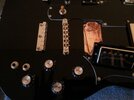
Pickup Cavity.jpg

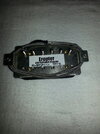
Currently, I've been using a hand-signed Kevin Taylor Eruptor - spec'ing out at 9.45k - which is a clone of EVH's hand-made PAF.

Erupter Pickup.jpg

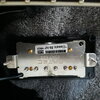
I pulled a nice Artec Vintage '59 out of my used take-out stock for the neck.

20190611_074208.jpg

Because of the forward placement of my bridge pickup, I had to run the Erupter had to be very close to the strings to get a decent rhythm tone. But then, the 'g' string had this jangle, sitar-esque quality to it - which is caused when a pickup is so close to the strings that magnetic pull affects the vibration of the string.

The Von Herndon MotherBuckers we created were super hot at 17k in the bridge and 10k in the neck. These have adjustable bobbins on both sides and triple ceramic magnets, pirated from non-functional Gibson 500T's.

These pickups were just overkill in my Les Paul and I pulled them in favor of Epiphone H8BN/HB6N Ceramic 8 combo.

So, I thought that the 10k (9.45k measured this morning at 76°F) neck pickup might be a sound choice in the bridge.

I installed it this morning and was literally blown away by the tone.

This pickup is incredibly loud in the bridge, yet balances well with the 8.5k Artec Vintage 59. The punch is crisp and sharp with tons of top end bite, which was sorely needed in this guitar.

I ended up setting the bridge MotherBucker at 12/32" from the strings (depressed at the last fret) and then balanced string-to-string volume by raising the E/A/D/ to match the 12" radius, and sinking the g/b/e/ until the waveform from every string matched.

No 'sitar-esque' tone, very loud, authoritative tone, with good string-to-string volume and note bloom on open chords.

Setting the Artec Vintage 59 humbucker 8/32" from the strings, resulted in a perfectly balanced pair.

The 1- megaohm volume pot and 0.01 K40Y tone capacitor gives useable tone even with the tone knob rolled to zero.

Wire Harness.jpg

The Motherbucker also hits a tube amp super hard, resulting in a very rich overdrive tone.

Two pickups - both measuring 9.45k - and one of them - the one with the triple ceramic magnets - is tremendously louder and incredibly clearer.

More to follow...
 
Last edited:
I just keep thinking about your DSL40C .. Assuming the Red channel treble bleed cap is still the stock 470pF .. it's a "Brite" amp already..especially using single coils.. Most times guys are trying to get that puppy darkened down a scosh..
 
I just keep thinking about your DSL40C .. Assuming the Red channel treble bleed cap is still the stock 470pF .. it's a "Brite" amp already..especially using single coils.. Most times guys are trying to get that puppy darkened down a scosh..

Oh, No!!!! No problems here whatsoever. That only seems to plague bedroom players...

I euthanize single coils by unwinding them, so they cannot reproduce.
 
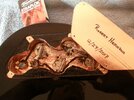
The Von Herndon MotherBucker - Built from a shoebox full of old/junk pickups. Triple ceramic magnets, 9.45K.

Installed with the strongest magnet pull towards the bridge

20190608_085622.jpg
 
Back
Top