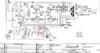
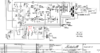
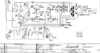
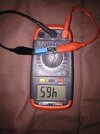
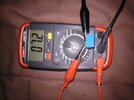
Tomorrow I will do more tests. I tryed 4K on R213. Just -46v dc.
Thanks a lot AMS!
Aquest amplificador 6100 té una història de dificultat de biaix. Sí, crec que és un error de fabricació en el disseny. Tothom que va intentar esbiaixar-los: els tubs surten calents. Però hi ha almenys 2 maneres de corregir els problemes de tensió de biaix.
Podeu canviar R213. Feu més petita la resistència. Podeu canviar C211 i C 212. Aquests condensadors d’acoblament alternatiu són originàriament de 47 N, però es poden canviar a 68N o 100N. Aquest canvi de condensador també augmentarà la tensió de biaix per fer que l’amplificador sigui més fresc.
R214, R215 es pot canviar de 56K a 82K, que també ajudaria a augmentar el voltatge per parcialitat ... només una idea.
O, l’ampliador es pot canviar a EL34, que requereix 10 volts menys de biaix. Però no estic segur que EL34 s’ajusti a l’armari. EL34 pot ser massa alt per adaptar-se a la caixa.
Es requereix temps i esforç per obtenir una tensió de biaix de 50 volts de corrent continu en el pin 5, però crec que podeu tenir èxit si ho intenteu.
Anglès
This amplifier 6100 has a history of bias difficulty.
Yes I think it is a factory mistake in the design.
Everybody who tried to bias it - the tubes come out hot.
But there are at least 2 ways to correct the bias voltage problems.
You can change R213. Make the resistor smaller.
You can change C211 and C 212. These AC coupling capacitors are originally 47N but they can be changed to 68N or 100N.
This capacitor change will also increase the bias voltage to make the amp cooler.
R214, R215 could be changed from 56K to 82K which would also help increase the voltage for bias....just an idea.
Or, the amp can be changed to EL34, which requires 10 volts less bias.
But I'm not sure that EL34 will fit inside the cabinet. EL34 may be too tall to fit inside the box.
It is some time and effort to get -50 volt DC bias voltage on pin 5, but I think you can succeed if you keep trying.