

I have had a part in framing at least 20 of them. Outback Steakhouse’s , here in SoCal, from Frisco to San Diego.Outback still exists? Where are they? What about Hooters.

I have had a part in framing at least 20 of them. Outback Steakhouse’s , here in SoCal, from Frisco to San Diego.Outback still exists? Where are they? What about Hooters.

Me: "Wow, that's a lot of money...I need to buy food..."
Adrian: "You only live once. Homeless shelters offer free meals..."
Me: "Gee whiz, Man...I don't know..."
Adrian: "Listen to Big Balls by AC/DC..."
(Pause)
Adrian: "you gonna let a little thing like food stop you from having the balls of a sonic moose???"
Me: "Ok...I ordered the 50 watt..."
Adrian: "Awesome!!! Send me your DSL.."
 I think I just pist my pants...
I know the feeling there, my problem was during the winter with the garage door closed and my wife’s car in the garage..I keep the drum kit behind me at all times and I try to keep at least 6 feet away from the kit if at all possible.
I stick close to my floor (vocal) monitor. My amp is elevated about 4-6 feet behind me running wide open. You can feel the palm muted sections punching you in the back, but my amp doesn't hurt your ears...
Nothing (IMHO) beats that feeling....

Congratulations brother, your pedal board is going to make that amp a part of you, you have to remember I bought 2 of themHonestly, I think the shift towards a more traditional tone will work good in my current band....
I know a few guys with the old Plexi and they get tremendous chug from a TS-9

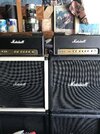
Congratulations brother, your pedal board is going to make that amp a part of you, you have to remember I bought 2 of them
They also keep your old paint nice and shaken-up... :dood:Congratulations brother, your pedal board is going to make that amp a part of you, you have to remember I bought 2 of them

yep----- now when do I get the dsl???? --- look Ill take a 1 watt dsl as penance --- its o.k.Me: "Wow, that's a lot of money...I need to buy food..."
Adrian: "You only live once. Homeless shelters offer free meals..."
Me: "Gee whiz, Man...I don't know..."
Adrian: "Listen to Big Balls by AC/DC..."
(Pause)
Adrian: "you gonna let a little thing like food stop you from having the balls of a sonic moose???"
Me: "Ok...I ordered the 50 watt..."
Adrian: "Awesome!!! Send me your DSL.."

yep----- now when do I get the dsl???? --- look Ill take a 1 watt dsl as penance --- its o.k.

This is a family siteWhat about Hooters.
. There are “other” sites that would answer that question, complete with videos


I had intended to comment on this when it was first posted, but have been so damn busy I haven't had time for forum activity. Nevertheless, I feel this needs addressing.The huge 250µF (often 330µF) cathode bypass cap on the 1st tube in the JTM45....
The 250uF cap extends the frequency response down to subsonic frequencies.
The subsonic, in turn overloads the next stage (V2 compression stage) resulting in a muddy sort of farting sound quality.
Changing this cap to .68uF or 1 uF (for example) rolls off the subsonic overload.
* If you like to see the frequency response based on the bypass cap, and compare different bypass caps, use this calculator:
This calculator does not require deep technical knowledge. It's simplified.Cathode Bypass Capacitor Calculator
www.ampbooks.com
- The 1987 adds a 0.68µF bypass cap to the 1st gain stage of V2. This has the effect of boosting gain of this stage compared to the JTM45, but again focuses the extra signal gain towards the mids/highs.
V2: is not a gain stage.
It is a compression stage.
The sensitivity is boosted, but the gain is not increased, it's decreased.
The output gain of V2 is always LESS than the input of V2. This is because the output of V2 is a cathode follower.
There is a difference between "sensitivity" and "gain." This is really important.
Although people frequently mix the 2 terms up.
More explanation of this to follow.
Adding the bypass cap to V2A increases the frequency response in a certain range. It also causes more subsonic lows to be rolled off.
Again, use the calculator to see this - on a graph:
Cathode Bypass Capacitor Calculator
A "gain" stage works like this:
Input = s
Output = S
The stage added gain.
---------------------------------------------------------
But, the V2 stage in a Marshall adds only sensitivity and compression, not gain. The cahode follower subtracts gain.
Like this:
input = S
output = s
Compression: the input reaches a certain level, then the output is limited to a certain level. It cannot go any further.
No matter how hard the input is pushed, the output does not increase.
input is this = s
Or, input is this = S
But, the V2 output is always this: S
No matter how hard or soft the input of V2 stage is pushed,
the output can only be this = S
It never increases beyond that level.
This is "limiting." Just like a compressor / limiter in a recording studio.
The result:
loud passages or soft passages come out at the same level. That constant audio level is maintained.
It makes very soft passages louder.
It keeps very loud passages from exceeding that same certain limit.
The output of the preamp is "smoothed." Loud and soft comes out at a uniform audio level which never increases or decreases.
You can also call this type of circuit "a compander."
It is a expander, compressor, and a limiter, all at the same time.
A. This is why a Marshall amp is always loud ------ no matter how hard- or soft - you are playing.
B. It makes soft passages louder.
C. It limits loud passages to the same limit as the soft passages.
D. The dynamic range is removed.
Loud and soft come out at ==== the same level.
 out of the same chord. Did the two come out at the same companded volume? Of course not, the soft & gently strummed chord came out at a lower volume than "belted the out of" chord which roared out.
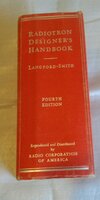 covers the design of & the operational characteristics of most every type of "tube" application you could think of. It has been one of my main sources of reference for over 30 yrs. Do yourself a favour & obtain a copy.
I had intended to comment on this when it was first posted, but have been so damn busy I haven't had time for forum activity. Nevertheless, I feel this needs addressing.
Robert is 100% correct in calling V2a a gain stage because that is exactly what V2a is. The term "gain stage" is a coined one, used to describe a "voltage amplifier." Whether the cathode is bypassed or not, V2a is amplifying voltage, no doubt about it. That bypassing the cathode with a 0.68uf cap allows the stage at full design amplification above about 720hz while the effect of cathode degeneration rolls off the frequency response below about 720hz to a lesser amount of amplification shows that the stage is acting as a voltage amplifier. If you have access to a function/signal generator & 'scope you can easily prove that V2a IS amplifying voltage.
As it's simpler to refer to a voltage amplifier as a "gain stage" & voltage amplification as "gain", we'll use those terms from here on.
A gain stage can produce greater than unity gain, unity gain or less than unity gain & still be a "gain stage".
The V2b DC coupled cathode follower falls into the last category in that it is a gain stage (voltage amplifier) that produces less than unity gain (roughly > 0.7 in this case). See the very knowledgeable Mr Aiken's site to find the cathode follower described exactly as such.
Put simply, the cathode follower is a gain stage, or voltage amplifier whose load is in the cathode (rather than the anode). It is called a cathode follower because the output signal at the cathode "follows" the input signal at the control grid. What is put into the cathode follower at the grid is outputed by it at the cathode, in phase with the input signal & all (a plate loaded gain stage inverts the output signal).
The cathode follower in this application is being used as an impedance buffer (convert high impedance to low impedance) & a current source to drive the tone stack.
Being that the load is in the cathode & the output signal taken off the cathode, use of a cathode bypass isn't possible as this effectively shunts AC on the cathode to ground. As such, the cathode follower suffers from cathode degeneration, a form of "local" negative feedback. Does this mean the cathode follower "removes all dynamic range" from the signal, compands it so that loud & soft come out at a uniform, always loud level etc etc (essentially, automatic volume control)?? Of course not & this is sooo easily proven with nothing more than our ears.
Members here have 4 hole Marshalls or clones of them & these low gain type amps will most noticeabley show this not to be true (though other types also effectively will).
Plug into them guys, turn the amp volume up around 4 or 5, turn your guitar volume right up if you want. Now, very softly & gently strum a chord (say for instance an open G5 chord). Mentally note the volume, then belt the
Did the inclusion of a gain stage followed by a DC coupled cathode follower into the old Vox AC30/6 amplifiers to create the AC30/6 Top Boost model remove all dynamic range from the amps, compand the signal into an always uniform level that never increases or decreases?? Of course not.
Did the inclusion of a cathode follower into the Hughes & Kettner Tubemeister Deluxe 20 remove all dynamic range etc when compared to the previous 18 W that didn't feature the cathode follower?? Of course not.
Does the cathodyne type phase inverter used in Orange amps, some Fender amps & many other amps remove all dynamic range & compand the drive signal to the output stage to a uniform level the never increases or decreases?? Of course not.
So yes, the cathode follower (& the cathodyne phase inverter) suffers from the effects cathode degeneration (again, a form of "local" negative feedback), but to the extent that it removes all dynamic range from the signal & compands it so that loud & soft (large & small amplitudes) come out at a uniform level that never increases or decreases,,, most definitely not.
AMS, if you open the (very useful) "ampbooks cathode bypass capacitor calculator" that you linked in the quoted post & scroll down to the bottom of the page, you will see that the calculations used are accredited to Langford Smith's Radiotron Designers Handbook, fourth edition.
Aussie Fritz Langford Smith was an engineer at the first valve manufacturing plant in Australia, "Radiotron," a subsidiary of RCA.
The Radiotron Designers Handbook that he penned (reproduced & distributed by RCA) went on to be widely regarded the world over as the definitive "tube Bible". This tome View attachment 48474covers the design of & the operational characteristics of most every type of "tube" application you could think of. It has been one of my main sources of reference for over 30 yrs. Do yourself a favour & obtain a copy.
Ok, rant over. Cheers
