Ok, well I was hoping by now everybody would be in with the main idea, but like all organizational things here on TTR....
An oldie but a goodie!
So my Creative Maestros... do not despair. Still plenty of time, but don't fall back too far!
Please drop in your elevator pitch as soon as you can.
OMG! Don't find yourself stuck here!
If you cannot do this small part, it's likely:
1. In a minor creative miracle your project *may* come together as you go
2. You're gonna end up with a loose collection of... something!
As your "tour guide" helping you stay on track to get things done proper, the show must move on.
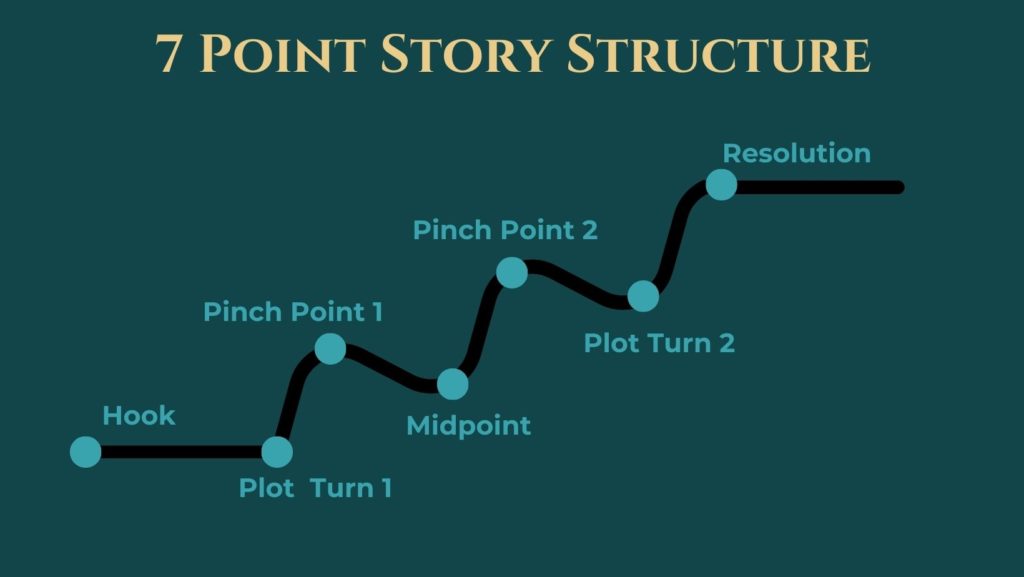
Remember that last graphic I posted around week 2 With all your sparks beginning to get organized into a somewhat linear story?
That's where we are right now.
The entire universe was created in 7 days, so it is written! You too are now tasked with creating your own small
world which YOU will be the omnipotent ruler of, hopefully not starting from scratch!
And, you get TWO full weeks!
Now, turning a pile of random idea sparks (scenes, characters, images, lines of dialogue, themes, “what-if” questions) into a logical/coherent plot is ABSOLUTELY one of the most common stuck points for creatives. Some of you will find it easy and very natural. Others? Not so much. If you feel you are having trouble, here's various tried and true methods to help you cross that chasm. It may seem like a LOT of work, but I promise you will find it worth it, and propel you forward as you progress along in coming months, and your final product will thank you later.
1. Brain Dump
- Put every single spark on its own sticky note, index card, or line in a Scrivener/Milanote/Notion page.
- No filtering yet. Even “this random image of a red shoe in the rain” goes in.
- Goal: get it out of your head so you can see the raw material.
2. Look for Natural Magnets (Clustering)
Spread the cards on a table or use a digital corkboard and ask:
- Which ideas emotionally pull toward each other?
- Which characters/ideas keep showing up in multiple sparks?
- Which images or moments feel like they belong to the same world?
- Which lines of dialogue feel like they’re being said by the same person or in the same scene?
Let clusters form organically. You’ll usually end up with 4–12 piles. These are your future acts, sequences, or subplots.
3. Identify the Emotional Core / Central Question.
Among all your sparks, which one gives you the strongest gut punch or that “ OMG I
have to write this” feeling?
That’s usually a GREAT place for the very core of your story. Examples:
- “What if a man realized the love of his life was actually his stalker?”
- “A society where memories are currency.”
- “Someone has to kill the child who will grow up to destroy the world.”
Write that central question or emotional premise in big on a card and pin it in the center.
Everything else should eventually serve that idea or orbit it in some logical way.
4. Every good story has a "Bad Guy" or "protagonistic/antagonistic" entity/situation. Feel Their Want vs Need.
Look through your sparks for a possible character/creation who:
- Appears most often
- Changes the most in your imagination
- Has the strongest internal contradiction
That person is almost always your protagonist. Now ask:
- What do they desperately want? (external goal)
- What do they actually need? (internal growth/truth)
The entire plot is likely how the gap between those two things are discovered, then your imagination can find ways close that gap.
5. Use a “Story Spine” or Minimal "skeleton" structure to Force Connections between your sparks.
Try this exercise - it's known to work for almost anything!
- Once upon a time… (world + protagonist’s normal)
- And every day…
- Until one day… (inciting incident)
- Because of that… (chain of escalating consequences)
- Because of that…
- Until finally… (climax)
- And ever since then… (new normal/resolution)
Or you can try the “But / Therefore” rule the South Park creators are known to use. They write every scene beat on a card.
No two cards can be connected by “and then.” They must be “but” or “therefore.” This forces cause-and-effect and is a useful way to kill off boring filler.
6. Reverse-Engineer from the End Trick
Pick the spark that feels the most climactic or heartbreaking (often the one you thought of first).
That’s probably your ending or Act III turning point. Now work backwards:
- What had to happen right before this moment to make it inevitable?
- What had to happen before that?Do the same forward from the inciting incident.
7. The “Yes, but / No, and” Game (fast iteration)
Take two random sparks and force them to collide:
Spark A: A priest who lost his faith VS Spark B: A time-travel agency for tourists
→ “Yes, the priest books a trip to witness the Resurrection… but he arrives three days late and sees the empty tomb with no explanation.”
→ “No, he didn’t witness it, and now he’s stuck in 33 AD with no way back.”
Keep smashing ideas together until that friction creates new sparks.
8. Three Practical Tools People Swear By
- The “Snowflake Method” starting from a one-sentence summary and expanding
- Save the Cat beat sheet (very commercial but great for seeing gaps)
- Dan Wells’ 7-Point Story Structure (especially good for discovery writers).
9. When You’re Still Stuck try the “Private Detective” method:
Pretend someone else wrote those crazy sparks and you got hired to figure out what story they were trying to tell!
Writing a neutral case report: (“Subject appears obsessed with lighthouses and betrayal…”) often reveals the hidden thread.
The moment it clicks You’ll feel it physically — a sudden “Ohhh, of course these belong together.”
That’s the signal you’ve found the story that was hiding inside the chaos all along. You’re not inventing the plot from nothing. You’re excavating the plot that was already secretly connecting all your sparks. You just need to dig 'til you see the shape.
One last thing. As if all the above wasn't enough LOL!
Since we are making a collection of music to tell a story, I hope you will see the logic in using light and shade in your creative endeavors.
I
suggest it may be a wrong choice to make your concept album ten songs at similar BPMs which are all in a similar say, "heavy rock style."
Variety is the spice of life. I learned this as a TV cameraman years ago. Keep it interesting. Tight shots, wide shots, medium shots. low or high angle power shots. mix it up and keep the viewer guessing. Want a boring TV news story? Shoot it all with the same kind of shot, same talking heads and no natural sound. UGH!
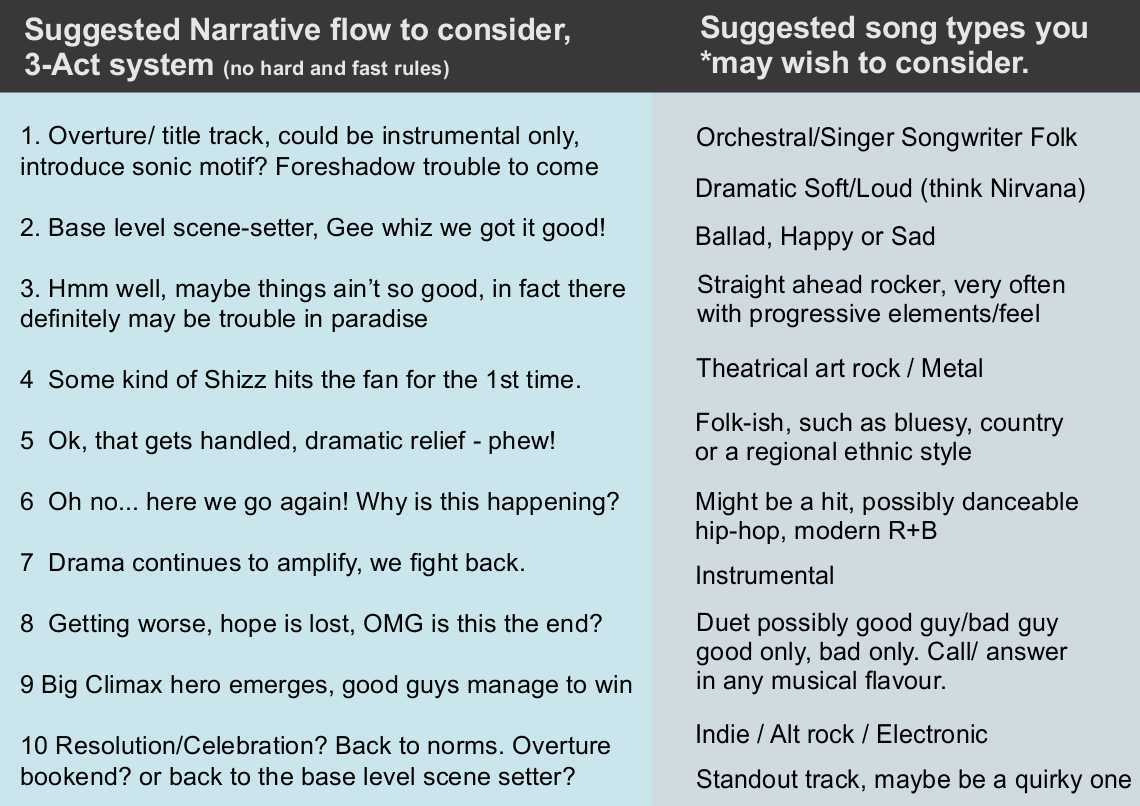
So, try NOT be a ONE TRICK PONY. When you are considering dividing up your plot points, even if YOU only like one type of music, consider telling your story with different types of music. I made this chart for myself. With it I can draw lines from my plot points to different flavours of songs on the left - and of course the are NOT to be taken as some sort of prescribed order. You also may not want to use this many, you may even think of others I've not thought of, but I urge you to use variation in your collection, if not for yourself, for others who you will be sharing with.
You may, or may NOT want to plan it all out this way now, but variation will absolutely make a better, much more interesting concept album.