You are using an out of date browser. It may not display this or other websites correctly.
You should upgrade or use an alternative browser.
You should upgrade or use an alternative browser.
NAD - Peavey ValveKing MH20
- Thread starter RVA
- Start date


jtcnj
Ambassador of the Crossroad

Happy new amp day, glad I could help in the process with funding via relieving you of the Orange MT.
Sorry to hear of a bit rocky start to your relationship.
Kind of like the first date or two with a new hottie and things didnt go well, but you still want to hit it real bad so you hang in there.
Damn that seems like 100 years ago.
Assuming you bought used, maybe or maybe not the failed tube is a symptom, not the problem's cause.
Keep the back off, work up to pushing the amp hard and watch those power tubes for red plating.
A little variation between valves on bias is not uncommon.
When you say, 27/30 is that in mv at a 1Ω test point?
How does that work out in plate dissipation, or do they give you a chart for where to read, interpret, and set it?
High plate voltages (at around 100% plate dissipation) are fairly common for push pull EL84 cathode biased circuits, so shorter tube life is expected, but I dont know what is typical in fixed bias.
EDIT: I know 70% is the usual base line, I meant I dont know if it is common to run fixed bias EL84s on the hot side.
Sorry to hear of a bit rocky start to your relationship.
Kind of like the first date or two with a new hottie and things didnt go well, but you still want to hit it real bad so you hang in there.
Damn that seems like 100 years ago.
Assuming you bought used, maybe or maybe not the failed tube is a symptom, not the problem's cause.
Keep the back off, work up to pushing the amp hard and watch those power tubes for red plating.
A little variation between valves on bias is not uncommon.
When you say, 27/30 is that in mv at a 1Ω test point?
How does that work out in plate dissipation, or do they give you a chart for where to read, interpret, and set it?
High plate voltages (at around 100% plate dissipation) are fairly common for push pull EL84 cathode biased circuits, so shorter tube life is expected, but I dont know what is typical in fixed bias.
EDIT: I know 70% is the usual base line, I meant I dont know if it is common to run fixed bias EL84s on the hot side.
Last edited:
OP

RVA
Ambassador
Thanks and goo analogy!
Yes it is. That is the readings at either socket. It only has one bias pot so you must split the difference.A little variation between valves on bias is not uncommon.
When you say, 27/30 is that in mv at a 1Ω test point?
I do not understand this. Please explainHow does that work out in plate dissipation, or do they give you a chart for where to read, interpret, and set it?
High plate voltages (at around 100% plate dissipation) are fairly common for push pull EL84 cathode biased circuits, so shorter tube life is expected, but I dont know what is typical in fixed bias.
EDIT: I know 70% is the usual base line, I meant I dont know if it is common to run fixed bias EL84s on the hot side.
jtcnj
Ambassador of the Crossroad
cathode vs fixed bias, is just the characteristic inherent to those designs.
Generally speaking, you check or set the bias in fixed bias amps, not in cathode biased (but it can be done to tweak the circuit - just not part of typical tube change service procedure).
What do the numbers 27/30 come from?
You measure something, then compare it to an intended target value, and adjust toward the target.
Where do the target values come from?
Plate dissipation in watts is the current through the tube (cathode to plate, not counting screen current) x the plate voltage, so each circuit will be different- based primarily on the plate voltage for that circuit design, and the variation in tolerance of the components.
It is based on the wattage the tube is rated for, 12w for EL84.
so, if the target is 70% or 8.4w, dividing that wattage by the plate voltage for that amp, will yield the current that should be flowing, which you measure by one of several methods.
The builder has done the above math for you and given you a test point and a target range to adjust to.
That number is a guideline, use your ears and watch the plates at higher settings.
I dont hear any difference +- 5% or so.
I may be off on explaining the math on the fly but the interaction between target wattage, circuit plate voltage and the current to obtain that wattage is the point.
Generally speaking, you check or set the bias in fixed bias amps, not in cathode biased (but it can be done to tweak the circuit - just not part of typical tube change service procedure).
What do the numbers 27/30 come from?
You measure something, then compare it to an intended target value, and adjust toward the target.
Where do the target values come from?
Plate dissipation in watts is the current through the tube (cathode to plate, not counting screen current) x the plate voltage, so each circuit will be different- based primarily on the plate voltage for that circuit design, and the variation in tolerance of the components.
It is based on the wattage the tube is rated for, 12w for EL84.
so, if the target is 70% or 8.4w, dividing that wattage by the plate voltage for that amp, will yield the current that should be flowing, which you measure by one of several methods.
The builder has done the above math for you and given you a test point and a target range to adjust to.
That number is a guideline, use your ears and watch the plates at higher settings.
I dont hear any difference +- 5% or so.
I may be off on explaining the math on the fly but the interaction between target wattage, circuit plate voltage and the current to obtain that wattage is the point.

syscokid
Ambassador of War & Peace
So, all you did so far is replace the pair of EL84's?Playing beautifully and flawlessly for 2 hours now. Also, I ordered new sockets from Peavey for next time I go in there for only $ 1.99 each.
"loose power socket": Are those sockets mounted to the chassis, or the pcb?
OP
RVA
Ambassador
So, all you did so far is replace the pair of EL84's?
"loose power socket": Are those sockets mounted to the chassis, or the pcb?
Loose power socket was a poor description. I re-tentioned the spring contacts by closing them up a bit. The sockets themselves are not loose. They are pcb mounted. I also replaced the tubes. It was working well yesterday.
I do notice that the 5w setting on the Peavey is not as loud as the 3w setting on the Blackheart, but it may be comparable to the 15w Panama. I guess amp output varies
Last edited:
syscokid
Ambassador of War & Peace
That's good news.I also replaced the tubes. It was working well yesterday.
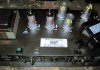
For a "piece of mind", I would replace the phase inverter tube, too. Or at least, have all the preamp tubes checked out properly.
OP
RVA
Ambassador
Thanks. Which one is the inverter?That's good news.
For a "piece of mind", I would replace the phase inverter tube, too. Or at least, have all the preamp tubes checked out properly.
syscokid
Ambassador of War & Peace
If those are numbered correctly, then it would be V3. The one that's marked V3, also looks like the logical location for the P.I. tube judging by the layout. Verify with a manual?
OP
RVA
Ambassador
The manual has nothing about the inside of this thing. I had to watch someone bias a classic 30 to get the idea of how to do the bias on this. While it has a bias pot, it does not have a defined probe pointIf those are numbered correctly, then it would be V3. The one that's marked V3, also looks like the logical location for the P.I. tube judging by the layout. Verify with a manual?