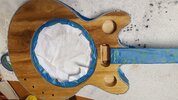
New Kit

Love the headstock overlay.
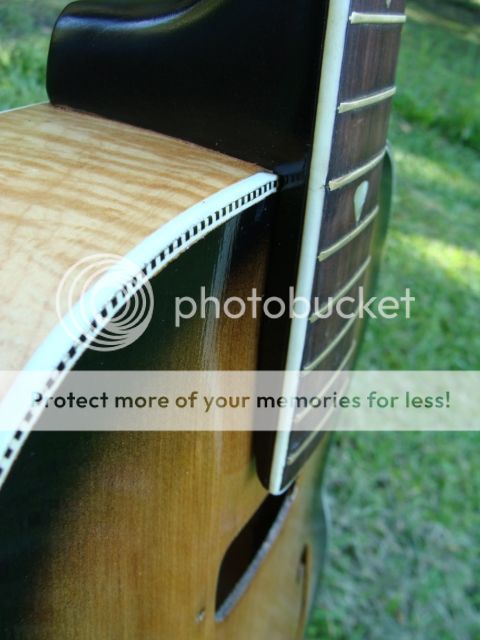
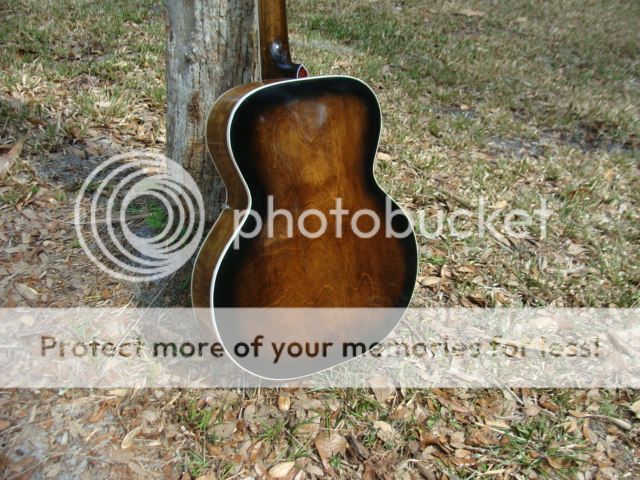
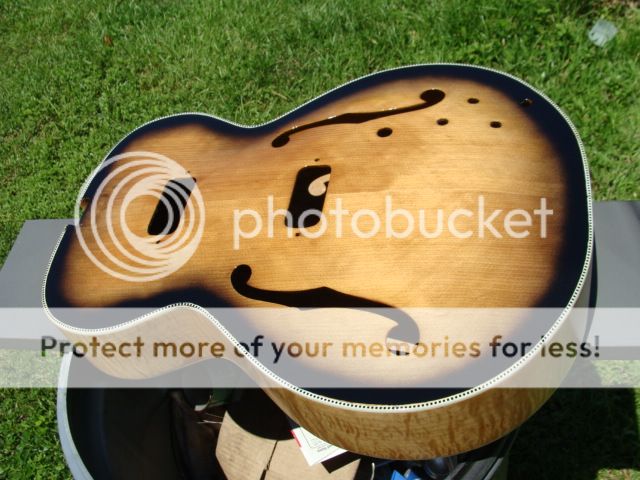
Not sure how you intend to do the finish but here's a black edge burst that I did a while back in spray can lacquer.

DSC02816_zpssph40nyt.jpg

I just spray color over the binding, then carefully scrape the paint off after it's cured.

DSC02853_zpsoztsmu3o.jpg


The black edgeburst would be a nice contrast with the chrome accents.
You do such nice work. Cheers!
 
Is there any reason you have it in front of the heater? Attempts to speed the dryimg process can lead to bad results, and as you said, this is not a race

Yep I understand that.
It's early winter here. Just cool enough at night to push a little WARM (not hot) air around the house, the garage / workshop is somewhat cooler.
The paint used dries crazy fast and was very much touch dry before it came inside, it's the air movement (fan) I'm after.
BTW this is nothing more than an undercoat in correct colour.
 
The black sides & neck look great, I have no doubt the back will be just as nice.
If your going to attempt an edgeburst, I'd stain the top a medium brown let the stain sit for a day or two, then clear the whole top.
Just a couple of light coats, were just looking to seal the stain.

Next take the guitar body and using the outline of body transfer the shape to a piece of heavy cardboard.
If all went right you now have a cutout the exact size & shape as the guitar top.
Now you need about a dozen plastic handled 1/2" push pins. That would be about 13mm for you more sensible metric folks.
565308_p

Measure in about 4 to 5 inches in and draw a line approximating the body shape, just smaller, and start sticking the pins into the cardboard in roughly the shape of the guitar.
This will hold the mask an even distance off the body.
Position the mask directly over the body and spray the top all the way around the edge, holding the can at about a 30 degree angle.
If this angle isn't giving you enough color on the guitar face change the angle a bit. Just make sure that you consistantly hold the can the same way.
The closer the can is to being straight up & down will determine the width of the burst.
This should give you a nice seamless dark edge, the idea is to have heavy solid color around the outside edge, while the inside edge
has a controlled fade into the brown stain.
DSC05521_zpsyetl8qjv.jpg

I recommend doing a few test bursts with a mask on some scrap first, just to get a feel of what's happening as you go.
I saw a tutorial years ago that outlined this and it has changed my life forever.
However I looked and couldn't find it. Wish I had bookmarked it.
 
If your going to attempt an edgeburst .....

It's very late Saturday evening here just now. I've read that and THINK I have it but crashing out now and will digest in the morning.
Thanks for the previous help and ongoing interest.
ZZZzzzzzzz ........
 
The black sides & neck look great, I have no doubt the back will be just as nice.
If your going to attempt an edgeburst, I'd stain the top a medium brown let the stain sit for a day or two, then clear the whole top.
Just a couple of light coats, were just looking to seal the stain.

Next take the guitar body and using the outline of body transfer the shape to a piece of heavy cardboard.
If all went right you now have a cutout the exact size & shape as the guitar top.
Now you need about a dozen plastic handled 1/2" push pins. That would be about 13mm for you more sensible metric folks.
565308_p

Measure in about 4 to 5 inches in and draw a line approximating the body shape, just smaller, and start sticking the pins into the cardboard in roughly the shape of the guitar.
This will hold the mask an even distance off the body.
Position the mask directly over the body and spray the top all the way around the edge, holding the can at about a 30 degree angle.
If this angle isn't giving you enough color on the guitar face change the angle a bit. Just make sure that you consistantly hold the can the same way.
The closer the can is to being straight up & down will determine the width of the burst.
This should give you a nice seamless dark edge, the idea is to have heavy solid color around the outside edge, while the inside edge
has a controlled fade into the brown stain.
DSC05521_zpsyetl8qjv.jpg

I recommend doing a few test bursts with a mask on some scrap first, just to get a feel of what's happening as you go.
I saw a tutorial years ago that outlined this and it has changed my life forever.
However I looked and couldn't find it. Wish I had bookmarked it.

When you place the mark with push pins on the body, it is standing up? (this is what I surmise from the angles you mention and so the rattle can works properly. If so, how do you secure the mask in place?
 
When you place the mark with push pins on the body, it is standing up? (this is what I surmise from the angles you mention and so the rattle can works properly. If so, how do you secure the mask in place?
Ray, I do it with the guitar body laying flat on a work surface that I can get all the way around it in one pass.
An old Lazy Susan table top carousel would be ideal for this use.
Gravity holds the mask in place.
The trick is to just make sure the push pins are far enough in on the mask, so there isn't little ghost dots in the fade.
 
Ray, I do it with the guitar body laying flat on a work surface that I can get all the way around it in one pass.
An old Lazy Susan table top carousel would be ideal for this use.
Gravity holds the mask in place.
The trick is to just make sure the push pins are far enough in on the mask, so there isn't little ghost dots in the fade.
Got it. Do you ever have trouble firing the rattle can downward? Some do not perform well in this position.
 
Got it. Do you ever have trouble firing the rattle can downward? Some do not perform well in this position.
The fuller the can the better.
I cooler weather I warm the paint can in warm water, but here in the swamp, it's usually mid 80's or better.
So good old sunshine warms the cans nicely. Warming the paint helps the spray pattern and keeps fallout blobs to a minimum.
 
Last edited:
The fuller then can the better.
I cooler weather I warm the paint can in warm water, but here in the swamp, it's usually mid 80's or better.
So good old sunshine warms the cans nicely. Warming the paint helps the spray pattern and keeps fallout blobs to a minimum.
I have been using the warm water method for poly. Works great! Thanks for the tips!
 
The black sides & neck look great, I have no doubt the back will be just as nice.
If your going to attempt an edgeburst, I'd stain the top a medium brown let the stain sit for a day or two, then clear the whole top.
Just a couple of light coats, were just looking to seal the stain.

Next take the guitar body and using the outline of body transfer the shape to a piece of heavy cardboard.
If all went right you now have a cutout the exact size & shape as the guitar top.
Now you need about a dozen plastic handled 1/2" push pins. That would be about 13mm for you more sensible metric folks.
565308_p

Measure in about 4 to 5 inches in and draw a line approximating the body shape, just smaller, and start sticking the pins into the cardboard in roughly the shape of the guitar.
This will hold the mask an even distance off the body.
Position the mask directly over the body and spray the top all the way around the edge, holding the can at about a 30 degree angle.
If this angle isn't giving you enough color on the guitar face change the angle a bit. Just make sure that you consistantly hold the can the same way.
The closer the can is to being straight up & down will determine the width of the burst.
This should give you a nice seamless dark edge, the idea is to have heavy solid color around the outside edge, while the inside edge
has a controlled fade into the brown stain.
DSC05521_zpsyetl8qjv.jpg

I recommend doing a few test bursts with a mask on some scrap first, just to get a feel of what's happening as you go.
I saw a tutorial years ago that outlined this and it has changed my life forever.
However I looked and couldn't find it. Wish I had bookmarked it.
Brilliant... :cheers:
 
All of the above 'burst" advice digested and will be tested on some scrap next week.
Thanks!
 
  • Like
Reactions: RVA
Saved it, I'm a little happier now.
Still a LOT of work cleaning up the binding and I must decide if the polished black enamel is good enough.
If not happy in tomorrows daylight ... it will be rub down, one more coat of black, rub back with 1,200 grit and finish with poly.

No longer the pink quilted look, sorry Don :-)

20180519_091654.jpg

Now more conservative!

20180521_160438.jpg

Still thinking about the front, simple poly or poly over a burst.
Just now I'm a thinking with the large chrome cone cover etc there may not be a lot of timber showing and a burst may not look so good.
 
Saved it, I'm a little happier now.
Still a LOT of work cleaning up the binding and I must decide if the polished black enamel is good enough.
If not happy in tomorrows daylight ... it will be rub down, one more coat of black, rub back with 1,200 grit and finish with poly.

No longer the pink quilted look, sorry Don :)

View attachment 15201

Now more conservative!

View attachment 15202

Still thinking about the front, simple poly or poly over a burst.
Just now I'm a thinking with the large chrome cone cover etc there may not be a lot of timber showing and a burst may not look so good.
Beautiful!
 
Beautiful!

Looking good there Mr. G.

Cheers.
I just took it into the early morning light and made the call ...
The paint is just that little too thin in a couple of areas BUT it's more than OK for a guitar in regular use. I'm going to leave it as is and continue on. When finished if disappointed or even a year up the road I can disassemble, resurface and turn it into a show piece.
Stay tuned for the next thrilling episode ...
 
We have amp builders---electronics wizards-- wood workers-- true luthiers --tuners--tweakers-- noodlers ---pro musicians-- weekend warriors-- basement bashers--- and party crashers---

ITs like this
-----only online
 
Back
Top