Fabricating Nuts

RVA

Ambassador
I attempted to fabricate a nut from a complete blank tonight. While doing so, I realized that my methods could use some work, mostly in the angle determination and shaping area. That said, there is a lot that goes into this and was wondering if anyone has some tried and tested techniques.
-------------
On this occasion, I traced the old nut on the blank and did the bulk sanding on a bench grinder.

Then, I shaped the downward angle toward the headstock with 150 grit paper on a flat surface. This is the first area where I could use some improvement.

I then cut my slots.

Then, I began to sand at the bottom to get the right 1st fret action. This is where I get off track sometimes and could use work. I sometimes apply uneven pressure sue to the uneven top and get an angled bottom. I have learned to grab the nut by the sides when sanding the bottom, but it still happens, and happened tonight.

Then I use coarse cord to smooth the slots.
----------
So what are your methods?
 
I make nuts and acoustic guitar saddles all the time from bone.
Usually from raw blanks, but I've cut up the larger commercial dog bones as well, in a pinch.
All my shaping is done with a belt sander. I have an assortment of gauged "nut files" (StewMac) for the slots.
First I go for a nice tight interference fit to the guitar, then I measure & mark the slots.
I rough the slots in with the proper size nut files, paying attention to get a proper fall away for the string, then use a feeler gauge between the fretboard and the string to get the depth.
Then I play the guitar to feel the action at the first fret.

If the action feels good, I'm done and can glue the nut in place with a drop of super glue. If any of the open strings have a sitar like buzz, an improper fall away at the nut is to blame. If any open strings buzz against the first fret the slot is to deep, start over.

Strat nuts present a bit more challenge, they're much thinner and the bottom is usually curved, but once they're fit to the groove, the same process applies.

All in all it's usually about a half hour operation to make & fit a nut.
 
Make jigs, is my advice. I make holders from odd bits of wood that hold the nut at the right angle for whatever part I'm doing. I cut and sand to a perfect fit in the slot. Then with the nut in place I use a pencil split in half and sanded flat to mark the top contour by laying the pencil along the neck on top of the first few frets and marking the face of the nut. Then on my disc sander I remove top material to about 1mm above that line. Finally I shape the top bevel and cut the slots. Then comes polishing and final depth setting. The result looks like this one I make for my Strat from a piece of cow bone.

strat-nut.jpg
 
When you sanded the bottom, did you put the sandpaper on a flat surface (table) and move the nut back and forth? (sorry if it's obvious). It usually works for me. Then again, I hate touchings nuts or frets. They scare me.
 
  • Like
Reactions: RVA
I put the sandpaper flat on the table. Then I got some inch square wood and held the nut flat against it while I sanded. That guaranteed that the bottom of the nut was dead square to the sides as well as properly flat.
 
When you sanded the bottom, did you put the sandpaper on a flat surface (table) and move the nut back and forth? (sorry if it's obvious). It usually works for me. Then again, I hate touchings nuts or frets. They scare me.
Yes, just unequal pressure on occassion. I will follow Don's advice with the wood from now on!
 
Great advice gentlemen. It is much appreciated.

Don, can you elaborate on the jigs you devised, or if it is not too much trouble, a pic when you have the opportunity?
 
I make nuts and acoustic guitar saddles all the time from bone.
Usually from raw blanks, but I've cut up the larger commercial dog bones as well, in a pinch.
All my shaping is done with a belt sander. I have an assortment of gauged "nut files" (StewMac) for the slots.
First I go for a nice tight interference fit to the guitar, then I measure & mark the slots.
I rough the slots in with the proper size nut files, paying attention to get a proper fall away for the string, then use a feeler gauge between the fretboard and the string to get the depth.
Then I play the guitar to feel the action at the first fret.

If the action feels good, I'm done and can glue the nut in place with a drop of super glue. If any of the open strings have a sitar like buzz, an improper fall away at the nut is to blame. If any open strings buzz against the first fret the slot is to deep, start over.

Strat nuts present a bit more challenge, they're much thinner and the bottom is usually curved, but once they're fit to the groove, the same process applies.

All in all it's usually about a half hour operation to make & fit a nut.
Hack, what is an optimal fallaway? Do you follow the angle of the headstock?
 
Great advice gentlemen. It is much appreciated.

Don, can you elaborate on the jigs you devised, or if it is not too much trouble, a pic when you have the opportunity?

Nothing around for pics - I just bodge what I need together as I need it. My main piece comprises two pieces of wood held together with screws and wing nuts. The nut goes between with the right spot lined up with the wood edge. The nuts get tightened and I start stroking on coarse, then fine paper. I do something similar for the ends with vertical guide strips included.
 
  • Like
Reactions: RVA
For me, I try to confine all sanding to the top contour. I try to leave the bottom of a nut blank alone, as it is the factory edge and is (usually) already quite flat. If I need to smooth out the bottom for some reason, I'll lay sandpaper on a granite tile. Granite tiles are made to be quite flat and make a nice bearing surface for sanding.

Don's jig idea is pretty cool.
 
For me, I try to confine all sanding to the top contour. I try to leave the bottom of a nut blank alone, as it is the factory edge and is (usually) already quite flat. If I need to smooth out the bottom for some reason, I'll lay sandpaper on a granite tile. Granite tiles are made to be quite flat and make a nice bearing surface for sanding.

Don's jig idea is pretty cool.
How do you do the fine adjustments once the slots are cut?
 
I get the slots close the where I want them, then install the nut and string up the guitar. I then take more out of the slots in minute stages as I play the guitar. The slot ends up being based on how I play and how it sounds. I try to get it as low as I can without the strings buzzing. The real test for me is if I can fret at the first fret or two without pulling the notes sharp.
 
I get the slots close the where I want them, then install the nut and string up the guitar. I then take more out of the slots in minute stages as I play the guitar. The slot ends up being based on how I play and how it sounds. I try to get it as low as I can without the strings buzzing. The real test for me is if I can fret at the first fret or two without pulling the notes sharp.
After cutting the slots deeper, do you then re-sand the top at all?
 
I am glad this came up----

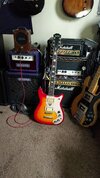
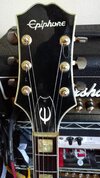
I have an 70s era Epiphone Japanese ET-290
et-290.jpg et-290a.jpg
et-290a.jpg


that NEEDS a new nut---bad....(like REAL BAD) ...its an ODD width and I cant find ANY stock TUSQ or or other brand nuts that will fit........I ordered said bone blanks....well over 2 months ago----and they are sitting taunting me......frankly......I do not even know where to begin ---I have "adjusted" other premiad or TUSQ brands to fit but not CREATED a whole nut (I havent been a WHOLE nut since birth---er wait maybe its a hole nut???on no I have been that) .....anyway ----oh a squirrel!.....

what was I saying ......yes right

ER HELP.
 
How does everyone determine their string spacing?

Do you determine the distance from each edge you with to have and then space the strings evenly from there? I note that there are String Spacing Rulers available.
 
How does everyone determine their string spacing?

Do you determine the distance from each edge you with to have and then space the strings evenly from there? I note that there are String Spacing Rulers available.
Both. A string spacing ruler gets wider towards the bass end, which is no bad thing. But I always start with plenty of clearance from the treble edge. The bass side is less important.
 
Back
Top