Gibson T-tops - $999

I had my neck pickup on my SG go microphonic a few years back. The squeal was pretty uncontrollable at all but the tamest amount of gain and volume

I wax potted it and the problem was solved.
Did you notice any differences after potting, other than no more squealing? Cheers
 
I had my neck pickup on my SG go microphonic a few years back. The squeal was pretty uncontrollable at all but the tamest amount of gain and volume

I wax potted it and the problem was solved.

Well, I am hoping for good results from these Thro-baks......without having to pot them.
 
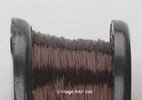
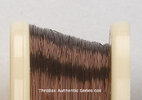
Vintage PAF.jpg Thro Bak.jpg

Over the years many myths have grown along with the legend of vintage Patent Applied For pcikups. Perhaps the largest myth is that 50's vintage P.A.F. coils or the "best" 50's vintage P.A.F. coils were hand wound. In fact all production vintage P.A.F. coils were machine wound on a very small number of machines. The few machines that wound these coils each put their own tonal signature on the classic Patent Applied For humbucker. A tonal signature that is the result of winding patterns and coil shapes that can only be accurately reproduced by machine. These machines made a wide variety of coil shapes and as a result produced the wide variety tonal colors that we associate with vintage 50's P.A.F.'s. These shapes varied with the machine model and with small differences in operator set-up. At ThroBak we take all the tonal possibilities that these machines are capable of and combine them to produce the ThroBak Maximum Vintage line of pickups.

Above are photos of original Patent Applied For coils and coils made on the vintage ThroBak Leesona 102 and Slug 101 50's vintage P.A.F. pickup winder models. All are very tightly wound solid coils. They are just a small sample of the variety of coil shapes that can be made on these two 50's vintage Patent Applied For winder models. Click the thumbnails and look closely at the variations in winding pattern. The turn per layer count for each machine has not changed but the coil shapes and wire scatter differ radically. Contrary to machine winding critics, coils wound on these vintage machines show a complex wire scatter driven by the quirks unique to these machines. They do not show the orderly distribution of wire exhibited by modern computer controlled winders. None of these winding patterns can be accurately duplicated by hand. Some of these shapes can be approximated by hand winding but the internal wire distribution of the hand wound coil will be radically different from the correct machine wound Patent Applied For coil. Differences that effect the final tone of the assembled Patent Applied For pickup. These machine wound coil shapes are in fact the signature winding patterns and tonal signatures of the vintage machines that were put to use in winding vintage Patent Applied For humbuckers.
 
Last edited:
There was no automatic stop (stops the wind after a certain number of turns) on the machines when the PAF's were wound, rather, a stop was set to engage when the wind reached a certain thickness. As the wind is not even, coils ended up with a lot of variation, which in turn meant even more variation when two coils were put together. Throw different magnets into the equation & they really are all over the place. Cheers
 
There are so many great pickup winders out there making so many great pickups that, for me at least, it only boils down to one single question: Do they sound good to me?

If yes: I want them.
If no: Someone else probably loves them.
 
Did you notice any differences after potting, other than no more squealing? Cheers
To be honest, yes. The pickup did lose a little liveliness. I do play clean and enjoy a modestly lively pickup for those situations. But, the inability to apply any appreciable degree of crunch without squealing became too much of an issue. I don't even mean some over-the-top modern metal type of distortion. Even just a classic rock kind of crunch with reasonable volume would create issues.
 
Last edited:
View attachment 9287 View attachment 9288

Over the years many myths have grown along with the legend of vintage Patent Applied For pcikups. Perhaps the largest myth is that 50's vintage P.A.F. coils or the "best" 50's vintage P.A.F. coils were hand wound. In fact all production vintage P.A.F. coils were machine wound on a very small number of machines. The few machines that wound these coils each put their own tonal signature on the classic Patent Applied For humbucker. A tonal signature that is the result of winding patterns and coil shapes that can only be accurately reproduced by machine. These machines made a wide variety of coil shapes and as a result produced the wide variety tonal colors that we associate with vintage 50's P.A.F.'s. These shapes varied with the machine model and with small differences in operator set-up. At ThroBak we take all the tonal possibilities that these machines are capable of and combine them to produce the ThroBak Maximum Vintage line of pickups.

Above are photos of original Patent Applied For coils and coils made on the vintage ThroBak Leesona 102 and Slug 101 50's vintage P.A.F. pickup winder models. All are very tightly wound solid coils. They are just a small sample of the variety of coil shapes that can be made on these two 50's vintage Patent Applied For winder models. Click the thumbnails and look closely at the variations in winding pattern. The turn per layer count for each machine has not changed but the coil shapes and wire scatter differ radically. Contrary to machine winding critics, coils wound on these vintage machines show a complex wire scatter driven by the quirks unique to these machines. They do not show the orderly distribution of wire exhibited by modern computer controlled winders. None of these winding patterns can be accurately duplicated by hand. Some of these shapes can be approximated by hand winding but the internal wire distribution of the hand wound coil will be radically different from the correct machine wound Patent Applied For coil. Differences that effect the final tone of the assembled Patent Applied For pickup. These machine wound coil shapes are in fact the signature winding patterns and tonal signatures of the vintage machines that were put to use in winding vintage Patent Applied For humbuckers.

Interesting.

Where did you find that information?
 
So, I've got a question for those the T-tops experts. Did Gibson make a "bridge" and a "neck" version of the T-top? Or, was it like their original PAFs, where they just made the one pickup that was used in both the bridge and neck positions?
 
To be honest, yes. The pickup did lose a little liveliness. I do play clean and enjoy a modestly lively pickup for those situations. But, the inability to apply any appreciable degree of crunch without squealing became too much of an issue. I don't even mean some over-the-top modern metal type of distortion. Even just a classic rock kind of crunch with reasonable volume would create issues.

Wow! That sux!
 
There are so many great pickup winders out there making so many great pickups that, for me at least, it only boils down to one single question: Do they sound good to me?

If yes: I want them.
If no: Someone else probably loves them.

Exactly....and at this stage of the build, I have only numbers and data to try and arrive at what hopefully sounds good!!!!
 
Wow! That sux!

Yeah...it did (I assume you mean the microphonic issue). Oddly, my bridge pickup is fine. I only potted the neck pickup. I tend to use my neck pickups for leads. The issue was that with any amount of real gain to give it that nice singing quality, it would start to squeal. It didn't always do that. So, I researched and came to the opinion that it was microphonic and could benefit from potting. Well, I gave it a try and the problem was solved.

Any loss in liveliness was minimal compared to the usability I recovered from the pickup.
 
Cool. Thanks.

Vintage Gibson Humbuckers Specs:
1956 – 1957 (“PAF”): Long (2.5”) Alnico 2, 3, 4 and 5 magnets used randomly, brushed stainless steel cover, *no* PAF sticker, automatic traverse wound with manual-stop (until bobbin was “full”), #42 plain enamel wire (purple/maroon), individual coil ohm differences, black leads on coils, ohms vary from low 7k to high 9k, black PAF-style bobbins (“square in circle” with holes). PAFs first installed on Gibson lap-steels in ‘56 and then guitars in ‘57.


1957 – 1961 (“PAF”): Long Alnico 2, 3, 4 and 5 used randomly (A2 most common), nickel cover, “Patent Applied For” sticker, automatic traverse-wound with manual-stop, #42 plain enamel wire (purple/maroon), individual coil ohm differences, black leads on both coils, ohms vary greatly – generally between 7k and 10k, black and cream (early-’59 thru mid-‘60), all bobbins black again by late ’60, PAF-style pickup bobbins.

1961 – 1962 (Late “PAF”): Smaller (2.37”) Alnico 5 magnet used for remaining production (all transitioned by July ’61), nickel cover, PAF sticker, automatic traverse-wound with manual-stop, #42 plain enamel wire (purple/maroon), black leads on both coils, individual coil ohm differences, ohms averaged 8.0k by ‘62, PAF-style bobbins.

1962 – 1964 (“Patent number”): Alnico 5, nickel cover, “patent no.” sticker (mid-’62), polyurethane wire (starting ‘63), black/white lead wires, “auto-stop” winding starts circa-’62, PAF-style bobbins, usually 7.6k – 8.0k ohm.

1965 – 1967 (Late “Patent number”): Alnico 5, polyurethane wire, “patent no.” sticker, bobbin wires white, Chrome cover (starts mid-’65), more durable and flatter bobbins with no “square in circle” hole circa-‘65, ohms usually between 7.4k – 8.0k. Gold-plated PAFs used in arch-top electrics as late as 1965 – “Varitone” guitars had gold-plated pickups with one pickup having a reversed magnet. This pickup style was used far less than nickel-plated pickups, thus inventory lasted thru 1965.


1967 – 1980 (“T-top”): “T” on bobbin top, Chrome cover, Alnico 5, polyurethane wire, automated winding begins ‘65 – ‘68, some ’69 – ’73 pickup covers embossed “Gibson”, “patent no.” sticker on baseplate ’67 – ’74, (patent number metal-stamped beginning 1974), ink stamp with date ’77 – ’80, ohms average 7.5k – consistently reading between 7.3k – 8.0k.
 
Yeah...it did (I assume you mean the microphonic issue). Oddly, my bridge pickup is fine. I only potted the neck pickup. I tend to use my neck pickups for leads. The issue was that with any amount of real gain to give it that nice singing quality, it would start to squeal. It didn't always do that. So, I researched and came to the opinion that it was microphonic and could benefit from potting. Well, I gave it a try and the problem was solved.

Any loss in liveliness was minimal compared to the usability I recovered from the pickup.

I must admit, I am nervous to use non-potted pickups in my doubleneck build, but Thro-Bak tells me they have methods to make their pickups "squeal resistant" that do not require encasing them in a solid block of wax, and thusly, improving the natural tones of the pickup...
 
Back
Top