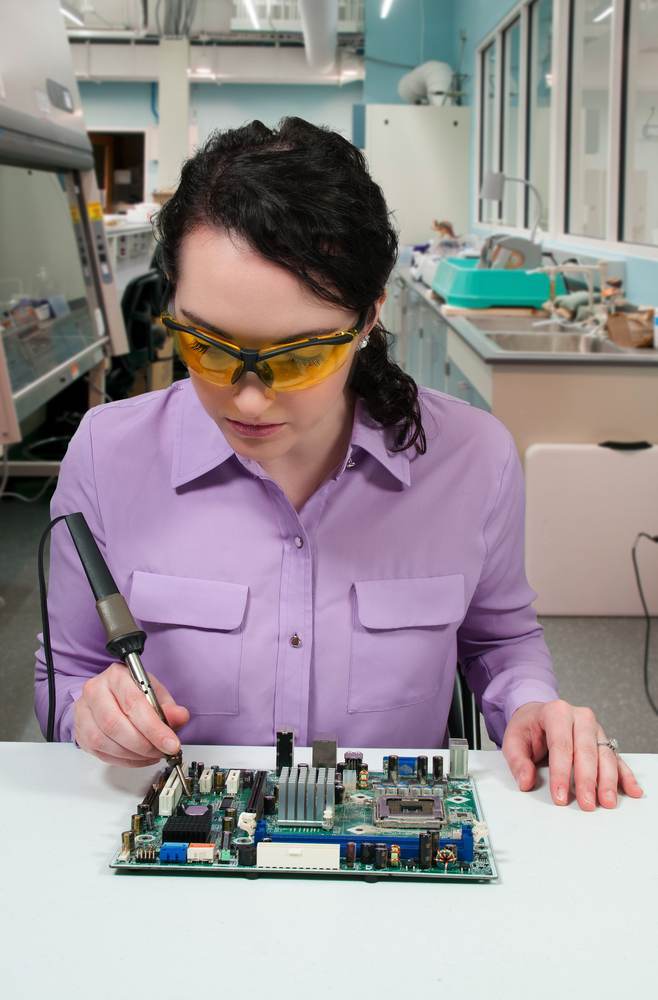
Soldering assistance

beautifulwomansoldering.jpg
I'm not always the sharpest tack in the drawer.... but I know which end of a soldering iron gets hot. :pound-hand:
 
You know, there's a (joke) hypothesis floating around that over the next few million years, human babies will evolve to be able to deal with being left in a hot car in summer. I wonder if we will eventually evolve to the point that can do away with the handle on soldering irons...
 
You know, there's a (joke) hypothesis floating around that over the next few million years, human babies will evolve to be able to deal with being left in a hot car in summer. I wonder if we will eventually evolve to the point that can do away with the handle on soldering irons...
Won’t need to. We’ll be soldering telepathically.
 
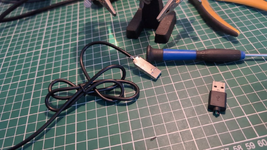
Speaking of soldering, it seems to be the season for USB connectors. Bought myself another bunch as my stock was running low.

1786798711215.png

Crappy cheap Chinese plugs (that spells "CCCP"). Replacing them bit by bit with solid metal versions with more protection and strain relief.
 
This is the one that I have used on building dozens of amps. Yes I know its a stock photo because I'm too lazy to get the station of mine out for a photo. I use the wet sponge, get fully wet and squeeze out the excess. Mine is set at 730 degrees with Kessler solder

If one must solder to a potentiometer, I have found the edge of the pot on the back takes far less heat to flow, as trying to solder to the center is ughhh.

I ruined a couple of pots (own that dang tee shirt ) by trying to center solder on the back and too much heat ruined the trace inside of the pot.

 
If one must solder to a potentiometer, I have found the edge of the pot on the back takes far less heat to flow, as trying to solder to the center is ughhh.

If you do however want to solder to the center (for a buss bar ground arrangement in an amp or whatever) two things that help are A) not just a station with enough oomph to keep the temperature of the tip up but also a spade tip with enough contact surface. The faster you can work, the less the heat will spread and risk the carbon track. B) a little sanding on the back of the pot and a drop of flux.
 
If you do however want to solder to the center (for a buss bar ground arrangement in an amp or whatever) two things that help are A) not just a station with enough oomph to keep the temperature of the tip up but also a spade tip with enough contact surface. The faster you can work, the less the heat will spread and risk the carbon track. B) a little sanding on the back of the pot and a drop of flux.
Guess I've been lucky. While I haven't done a lot of electrical work on amps or guitars.... I do only have 4 electric guitars and 2 amps...... I haven't "cooked" a pot yet. So must be doing something right.
 
Lucky, or you just tend to back off before you cause any damage. I'm very good overall at not damaging things, but if you spend decades fixing stuff up there will be some casualties along the way. I've also used a LOT of scrap material for practicing which helps. Learning to deal with surface mount stuff certainly cost some parts, but if the board is going in the bin anyway - who cares.
 
Lucky, or you just tend to back off before you cause any damage. I'm very good overall at not damaging things, but if you spend decades fixing stuff up there will be some casualties along the way. I've also used a LOT of scrap material for practicing which helps. Learning to deal with surface mount stuff certainly cost some parts, but if the board is going in the bin anyway - who cares.
My dad taught me how to solder with a Weller Soldering gun. Building Heath kits projects.... for those that might remember those. That was way back in the 60s. So I guess the transition to an iron for me was relatively easy.
 
My dad taught me how to solder with a Weller Soldering gun.

My dad taught me a lot about tools, but never soldering because he wasn't very good at it. Well, actually, he was extremely good at it, but not electronics; stained glass, making tiffany stuff and so on. Using those irons (of which I still have one) is like spotwelding when it comes to normal components. I sort of learned to solder using cheap 25W-ish thingies, no regulation. Then I eventually did a stint at a place that had a couple of Ersa's and Weller's - the top notch gear. While I knew it all my life, it clicked - the *right* tool for the job. I dutifully bought myself a half-decent station and even calibrated it using their calibration unit. Over the years (and countless pieces of kit on my bench) I became very proficient at it and expanded my tools and methods. Hand vacuum pumps, vacuum desoldering station, different types and sizes of braid, different types and sizes, compositions of solder, flux, varying tips, hot air stations, etc. I do have an old Weller soldering gun but never got on with them, I've always been an 'iron' man.

Building Heath kits projects.... for those that might remember those.
Oh, you mean like these?

1787495418009.png

1787495451244.png

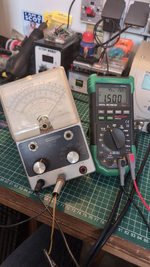
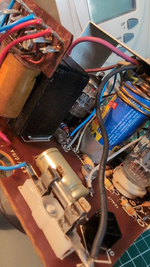
Picked that VTVM up cheap a few years ago, serviced and calibrated it. Doesn't get much use but sometimes an analog needle is easier. The Varta battery in there is the original and still holds a full charge since 196x. It incidentally became even more a piece of history a few months ago when the disaster of the German economy finally struck Varta and they announced the end of their operations.
 
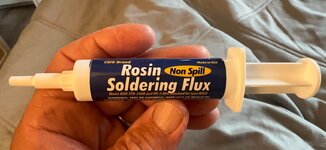
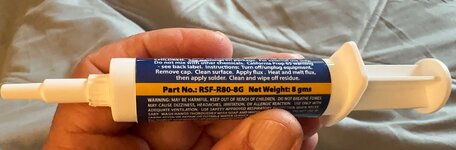
I've never tried the CAIG stuff, though I'm an avid fan of their Deoxit D5 and F5. I recently bought a tube of their fader grease and ... well, let's say I'm not that impressed, but I haven't had a lot of opportunities to test it so far. I haven't reached a verdict on that stuff yet.

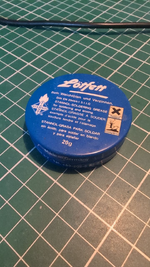
I used to use this a lot:

1787496661932.png

Not sure if it's still made. My tin says Made in Germany. Either they've moved production or that's the end of that, too.

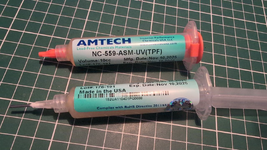
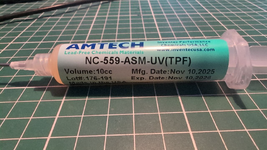
Now this is basically all I use:

1787496726224.png

1787496741344.png

Don't believe the 'Made in the USA' thing on there, I've been ordering it from Aliexpress before the EU implemented their new draconian legislation around imports. Despite the hologram sticker of authenticity, I'm pretty sure it's a knock-off. Works really, really well, though. Great for desoldering surface mount stuff and BGA's, etc, too. Would recommend.
 
Effectively, you want to transfer the heat into all involved parts as fast as possible. Flux does just that; it transfers heat. I often apply fresh solder to components before desoldering them, too - if you're using rosin core solder, that's the bit that's actually doing most of the work for you.

It can't be said often enough; practice makes perfect. If you see some scrap electronics in a bin or next to the road, take it home and desolder, re-solder everything. Even though it may not work due to other reasons, it's a great (and very cheap) way of getting a feel for things. While doing so, you often find at least a few salvageable parts. An AC inlet, fuse holder, some LEDs, whatever.
 
I think once you get that much solder on the pot it's a challenge.
If you can find a spot that's metal, sand it a little. Prepare your removal of the solder by having a copper solder soaker. I know pro's use conventional tools but copper braid wire works fine. Get as much of the solder off as you can. Its actually quite soft. You can scrape off with a knife but highly caution that method. It could have a painful result.sand it off when it's thin works but you only need a small spot clean.
 
I know pro's use conventional tools but copper braid wire works fine.

Plenty of pro's swear by desoldering braid, myself included. Well, I'm not a pro anymore technically, but I do still earn a bit on the side fixing electronics. I do it for pleasure rather than profit, though. What I learned is that Chemwik is *the* brand for that, accept no imitations. The right braid makes a huge difference. What you can also do to make things even easier is add a drop of flux to the braid for faster action.

I use braid, a desoldering station, manual pump (though I'm not a big fan of those overall) and just 'scooping and pulling' it off with a regular iron. It depends on the job, there's no one-size-fits-all solution, IMHO.
 
Plenty of pro's swear by desoldering braid, myself included. Well, I'm not a pro anymore technically, but I do still earn a bit on the side fixing electronics. I do it for pleasure rather than profit, though. What I learned is that Chemwik is *the* brand for that, accept no imitations. The right braid makes a huge difference. What you can also do to make things even easier is add a drop of flux to the braid for faster action.

I use braid, a desoldering station, manual pump (though I'm not a big fan of those overall) and just 'scooping and pulling' it off with a regular iron. It depends on the job, there's no one-size-fits-all solution, IMHO.
Good to know , I'm not to far off. lol
I don't even make money soldering, wish I did but it could become tedious if you do it all day long everyday.
 
Back
Top