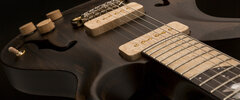
Ziricote?

I posted on the Anderson forum as well. Let's see if Tom will chime in with some additional information.

Update: found this info on the Anderson site...

Pronounced: siri-co-tayLook closely at its beautiful fingerboard. This is Ziricote—an exotic Mexican/Central American hardwood. Gorgeous in its appearance. Dark and lush, it can also be visually invigorated by fiery highlights at times.Sonically, it seems to support and announce its presence with a very rosewood-like aura—full round bottom, articulated with smooth highs—very sweet.Now we are not saying that our select Ziricote comes to us especially from remote regions surrounding the ancient Mayan pyramid of the serpent at the Temple of Kukulcan. Nope, not saying that at all. Are we?
 
You should see the first one they did with ziricote

10-25-16N_f_Angel_Sat+Nat+Black+Br.jpg


it even levitates!
 
What else about the wood do you want to know? Please do not say how it sounds. Fretboards do not get into the pickups as far as I can tell. You see, pickups are magnetic and wood....oh, never mind
 
What else about the wood do you want to know? Please do not say how it sounds. Fretboards do not get into the pickups as far as I can tell. You see, pickups are magnetic and wood....oh, never mind
OK, but...


Tone Qualities: Well known as a tonewood, Ziricote is highly esteemed for instrument making. Many Luthiers repeatedly comment that Ziricote provides and experience identical to the finest rosewood. Others take note of its Ebony-like crispness. One guitarist described his experience as “not quite as deep as EIR, but with a sharper attack and a bit more note separation”.
 
OK, but...


Tone Qualities: Well known as a tonewood, Ziricote is highly esteemed for instrument making. Many Luthiers repeatedly comment that Ziricote provides and experience identical to the finest rosewood. Others take note of its Ebony-like crispness. One guitarist described his experience as “not quite as deep as EIR, but with a sharper attack and a bit more note separation”.
I don't know man. If it was so great, why hadn't we heard about it before. Just sayin. I totally get the desire to try and switch over to more sustainable woods but I think the industry is also hyping this up quite a bit for better or worse. Look at all the new stuff we are seeing in the last few years...roasted maple, caramel maple, grenadillo, Richlite, etc etc. Think it is a concerted marketing effort by all the manufacturers? The description above doesn't mention anything about sustainability (in fact I think it implies it is even more rare than it's couterparts) but I only just noticed a emblem supporting responsible forresting on his website.

Again, no problem with the intent at all, I am just wondering if the buying public has been so adamantly against conversion, that they realize they need another approach to sell us on alternatives as the so called traditional woods might very well soon become unavailable and we need to adjust for both parties sakes.

I don't even want to talk about the PITA that is CITES. Maybe they see the writing on the wall.
 
Last edited:
What else about the wood do you want to know? Please do not say how it sounds. Fretboards do not get into the pickups as far as I can tell. You see, pickups are magnetic and wood....oh, never mind
Maybe not just how it sounds but a first hand report if someone has experience with it. Did it hold up, did it look good etc. Per my post above, I have a feeling these "new" woods are going to start popping up more and more so it would be good to build a thread with some info in case they become less "optional." Oh and feel that is important to me.

I have come to realize living here in a constantly dry climate, my ebony fretboard guitars, especially the thin necked ones, tend to develop underbow regularly. So much so I keep them in their cases now. I actually prefer higher action so don't mind the playability but always wonder the long term effect on the guitar.

I have come to realize rosewood is a much better option for me and I also prefer the dustier feel. That's why this CITES thing has me worried.

By the way on my KH-3 I dyed the rosewood fretboard which now looks ebony (will post pics if anyone is interested). So for me that is like the best of both worlds. Looks like nice dark ebony but I get the resilience and feel of rosewood. I also have a couple of maple boards. They don't seem to troublesome either.
 
Last edited:
Maybe not just how it sounds but a first hand report if someone has experience with it. Did it hold up, did it look good etc. Per my post above, I have a feeling these "new" woods are going to start popping up more and more so it would be good to build a thread with some info in case they become less "optional." Oh and feel that is important to me.

I have come to realize living here in a constantly dry climate, my ebony fretboard guitars, especially the thin necked ones, tend to develop underbow regularly. So much so I keep them in their cases now. I actually prefer higher action so don't mind the playability but always wonder the long term effect on the guitar.

I have come to realize rosewood is a much better option for me and I also prefer the dustier feel. That's why this CITES thing has me worried.

By the way on my KH-3 I dyed the rosewood fretboard which now looks ebony (will post pics if anyone is interested). So for me that is like the best of both worlds. Looks like nice dark ebony but I get the resilience and feel of rosewood. I also have a couple of maple boards. They don't seem to troublesome either.
PRS has been using it for at last 6-8 years that I recall, mostly on Private Stock models. I never heard any complaints on the forums. As you know, I was a big PRS guy for a while and frequented PRS forums daily
 
Back
Top