
You are using an out of date browser. It may not display this or other websites correctly.
You should upgrade or use an alternative browser.
You should upgrade or use an alternative browser.
Capos
- Thread starter Session 5
- Start date

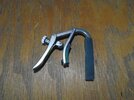


I do use mine. Primarily on my acoustic. Used it quite a bit while on worship team…. But not always to put me in an easier key to play. There was usually two of us playing acoustic. The other guy liked to use a capo even more than I did. So what I’d do…. If he capo’d fifth fret I’d do third. If he’d do 3 I’d go without. Etc….. Just seemed to take our two acoustics and give them a slightly different sound from each other.
While I have used one on the electrics, just not very often.
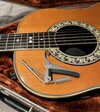
While I have used one on the electrics, just not very often.

I don't often use one, but I wouldn't hesitate to use one in the right context.
Too often capos get a bad rap as a "cheating" tool. This is absolutely false.
The main benefit of a capo is to preserve the chord voicing in a different key. Sometimes, those who misunderstand the purpose of a capo will think you can just use barre chords instead. But, depending on the context, a barre chord may alter the chord voicing, which can negatively affect voice leading and the underlying harmony of a piece.
When I use a capo, I most often use it with acoustic, but I have occasionally employed one for electric.
I don't like the kind with the spring, though. They run the risk of pulling the strings sharp because they clamp pretty tightly. They are also fairly bulky. I do have one of those, but I use it to hold strings in place when I restring a guitar with a Bigsby!
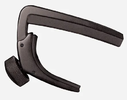
I use the kind shown below. This kind is better because you can adjust the tension with the thumb screw. This allows you to adjust it just as tightly as you need it, without clamping too tightly. It also is less obtrusive and weighs a lot less. It's less likely to get in the way of your fretting hand.
Too often capos get a bad rap as a "cheating" tool. This is absolutely false.
The main benefit of a capo is to preserve the chord voicing in a different key. Sometimes, those who misunderstand the purpose of a capo will think you can just use barre chords instead. But, depending on the context, a barre chord may alter the chord voicing, which can negatively affect voice leading and the underlying harmony of a piece.
When I use a capo, I most often use it with acoustic, but I have occasionally employed one for electric.
I don't like the kind with the spring, though. They run the risk of pulling the strings sharp because they clamp pretty tightly. They are also fairly bulky. I do have one of those, but I use it to hold strings in place when I restring a guitar with a Bigsby!
I use the kind shown below. This kind is better because you can adjust the tension with the thumb screw. This allows you to adjust it just as tightly as you need it, without clamping too tightly. It also is less obtrusive and weighs a lot less. It's less likely to get in the way of your fretting hand.
Last edited:
OP

Session 5
Ambassador of Strings & Wings

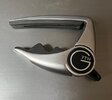
Also another problem using spring loaded capos which is even worse, is that they can cause fret damage. That is why I use the Shubb with an adjustable wheel for pressure applied to the strings. Another reason I like the Shubb in particular , it is narrow and compact, giving less chance of interfering with finger placement.
It might cost a little more than other brands, but is well made.
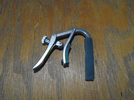
It might cost a little more than other brands, but is well made.

Jethro Rocker
Ambassador of Live & Loud Action
Only as absolutely necessary on the acoustic for voicing reasons or slide key changes, which is extremely rare.
On an electric?
Once again, eeeww!!
On an electric?
Once again, eeeww!!

gball
Ambassador of Boogie
Only as absolutely necessary on the acoustic for voicing reasons or slide key changes, which is extremely rare.
On an electric?
Once again, eeeww!!
Right. Never had a need for one. I'm not a cowboy-chord kind of player to start with, and I have always been able to accomplish all of the voicings I need without one. I think it could be cool for droning (isn't that what Johnny Marr uses it for?) but not much else.
Yeah….. I am sort of a cowboy chord kinda guy. Especially having played acoustic only forever. Got my first electric in 2009. In the beginning on electric I really had to unlearn some bad habits I’d picked up playing acoustic. Still seem to be working on that.Right. Never had a need for one. I'm not a cowboy-chord kind of player to start with, and I have always been able to accomplish all of the voicings I need without one. I think it could be cool for droning (isn't that what Johnny Marr uses it for?) but not much else.
Jethro Rocker
Ambassador of Live & Loud Action
Yep. I noodle on slide once in a few years on the resonator and a capo can get a different key for open tuning. But again, very rare. I don't do cowboy chords normally although some songs use root chords for sure, just not up the neck with a .. "capo" (shudder)....Right. Never had a need for one. I'm not a cowboy-chord kind of player to start with, and I have always been able to accomplish all of the voicings I need without one. I think it could be cool for droning (isn't that what Johnny Marr uses it for?) but not much else.

Jethro Rocker
Ambassador of Live & Loud Action
Obviously it is song dependent. I don't play any songs that require one nor does the music I listen to or my influences when I learned.
They are cowboy things...
They are cowboy things...

DirtySteve
Ambassador of Hold My Beer
A Capo is a must have item, even if all you use it for is to set up your guitar.
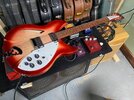
This is the oldest piece of gear I still have and I would be heart broken if I lost it, it's been with me since day one when I bought my first POS guitar in 1982. I don't use it for playing much, only a few acoustic things, but I'd be lost without it for setting up a guitar.

This is the oldest piece of gear I still have and I would be heart broken if I lost it, it's been with me since day one when I bought my first POS guitar in 1982. I don't use it for playing much, only a few acoustic things, but I'd be lost without it for setting up a guitar.
Last edited:
OP
Session 5
Ambassador of Strings & Wings
This is what one guy said on a different forum.
[/HEADING][/HEADING]
Cheater bar haha yeah that's just macho BS. Sure, I have big manly hands and can play barre chords all day long. But the capo is all about getting your jangle on. Someone mentioned Ryan Adams - great example. If you want to nail the sound of some of his songs, you gotta use the cap
[/HEADING][/HEADING]
[HEADING=3][HEADING=3]goonie
Friend of Leo's
JoinedDec 20, 2011Posts2,969LocationAustraliaCheater bar haha yeah that's just macho BS. Sure, I have big manly hands and can play barre chords all day long. But the capo is all about getting your jangle on. Someone mentioned Ryan Adams - great example. If you want to nail the sound of some of his songs, you gotta use the cap
DirtySteve
Ambassador of Hold My Beer
Same thing with Tom Petty, several songs require one.This is what one guy said on a different forum.
[/HEADING][/HEADING][/HEADING]
[HEADING=3][HEADING=3][HEADING=3]goonieFriend of Leo's
JoinedDec 20, 2011Posts2,969LocationAustralia
Cheater bar haha yeah that's just macho BS. Sure, I have big manly hands and can play barre chords all day long. But the capo is all about getting your jangle on. Someone mentioned Ryan Adams - great example. If you want to nail the sound of some of his songs, you gotta use the cap
Another example of a need for one is Mike Ness (Social Distortion). He injured his hand and he can't play at full string tension so he tunes down a half step and capos the first fret to get back to standard tuning with a softer feel.
OP
Session 5
Ambassador of Strings & Wings
Same thing with Tom Petty, several songs require one.
Another example of a need for one is Mike Ness (Social Distortion). He injured his hand and he can't play at full string tension so he tunes down a half step and capos the first fret to get back to standard tuning with a softer feel.
I use one for a Bryan Adams song run to you. And can't get enough of your love Bad Company..
DirtySteve
Ambassador of Hold My Beer
Free falling by TP is the first song that comes to mind, but there are many. I think most people would be surprised how many well known songs used a capo.I use one for a Bryan Adams song run to you. And can't get enough of your love Bad Company..