Charvel

Session 5

Ambassador of Strings & Wings
Country flag
I played this guitar yesterday at my local shop $1,399CDN. This one made in Mexico, neck and body finish was good, other than that definately not a winner for me, you here say from some Charvel make a descent guitar, hmm this one not good, had all the quality control tags on it. Scary to think on a $1400 guitar this made it through quality control.

Things I didn't like

1. Five way switch was a bit sloppy and the odd time on occasion cutting volume off and on.
2. The tone dial was really stiff, hard to move, felt like partially seized.
3 Volume control moved way to easy. Had no stability what so ever
4. And of course, the volume control is placed in that most terrible spot like Fender puts them.
5. Everytime almost when I would strum my pinky was tapping that volume control cap turning down the volume.
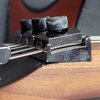
6. I don't know what kind of tuning pegs they had on there. The strings would just barely go through the eye of the tuning peg, you could not wrap the string around the post, there is no room to do that, weird setup. I want to be able to wrap my strings around the post.
7. Had to retune several times while playing.

This is my worse experience I have ever witnessed on any guitar, can't believe this on a $1400 guitar.
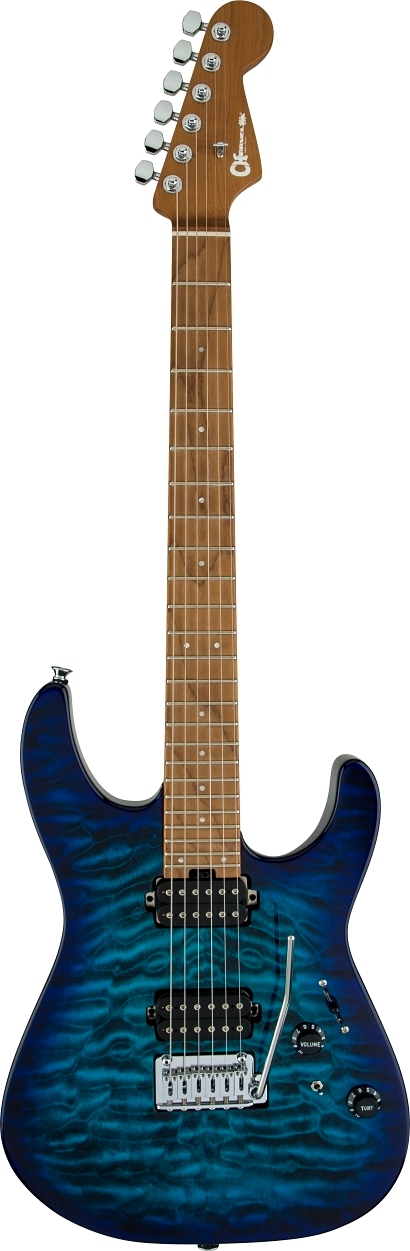

2969411521_gtr_frt_001_rr.jpg
 
Last edited:
I played this guitar yesterday at my local shop $1,399CDN. This one made in Mexico, neck and body finish was good, other than that definately not a winner for me, you here say from some Charvel make a descent guitar, hmm this one not good, had all the quality control tags on it. Scary to think on a $1400 guitar this made it through quality control.

Things I didn't like

1. Five way switch was a bit sloppy and the odd time on occasion cutting volume off and on.
2. The tone dial was really stiff, hard to move, felt like partially seized.
3 Volume control moved way to easy. Had no stability what so ever
4. And of course, the volume control is placed in that most terrible spot like Fender puts them.
5. Everytime almost when I would strum my pinky was tapping that volume control cap turning down the volume.
6. I don't know what kind of tuning pegs they had on there. The strings would just barely go through the eye of the tuning peg, you could not wrap the string around the post, there is no room to do that, weird setup. I want to be able to wrap my strings around the post.
7. Had to retune several times while playing.

This is my worse experience I have ever witnessed on any guitar, can't believe this on a $1400 guitar.


2969411521_gtr_frt_001_rr.jpg
They also call it "jackson," "suhr," and several other names, it's from Indonesia I'm fairly certain.
They are being sold under a plethora of brand names.
Of course it's not a real Charvel.
A few years back it was being sold for $349.00
The ones I played had a pretty screwy fret position error. I got sick of it and dumped it for $175.
I didn't think it was that great.

I'm sticking with Gibson. Guitars made in USA make me happier.
 
The headstock said made in Mexico..not Indonesia, And I have played guitars from Indonesia that were much better made than this one from Mexico..
 
Not familiar with Charvel guitars. Never played one. Too bad the quality seemed poor.

While I’m sure there are naysayers. Gotta say with the exception of the electronics, my MIM Strat is a solid guitar. Decent quality. Feel corners were probably cut on the pups and pots as I had one of each die on me. Well after warranty. I sighed and used that as an excuse to upgrade. I was happy with the guitar as it came out of the box. Absolutely love it now. Tuners are Fender Locking tuners. I don’t wrap the post. Lock that string down. Snip the end. Tune it. Stays in tune even when I play with the whammy bar.
 
Not familiar with Charvel guitars. Never played one. Too bad the quality seemed poor.

While I’m sure there are naysayers. Gotta say with the exception of the electronics, my MIM Strat is a solid guitar. Decent quality. Feel corners were probably cut on the pups and pots as I had one of each die on me. Well after warranty. I sighed and used that as an excuse to upgrade. I was happy with the guitar as it came out of the box. Absolutely love it now. Tuners are Fender Locking tuners. I don’t wrap the post. Lock that string down. Snip the end. Tune it. Stays in tune even when I play with the whammy bar.
I also have phenomenal MIMSTRAT.

The only Charvels I ever played were the stripped down 1 pickup 1 volume knob from the very early 80’s .
And always wanted one back then.
But I never came up with the money to snag one.

Sorry your trial guitar was not as you expected Norm but these days nothing ever seems to be.
 
I played this guitar yesterday at my local shop $1,399CDN. This one made in Mexico, neck and body finish was good, other than that definately not a winner for me, you here say from some Charvel make a descent guitar, hmm this one not good, had all the quality control tags on it. Scary to think on a $1400 guitar this made it through quality control.

Things I didn't like

1. Five way switch was a bit sloppy and the odd time on occasion cutting volume off and on.
2. The tone dial was really stiff, hard to move, felt like partially seized.
3 Volume control moved way to easy. Had no stability what so ever
4. And of course, the volume control is placed in that most terrible spot like Fender puts them.
5. Everytime almost when I would strum my pinky was tapping that volume control cap turning down the volume.
6. I don't know what kind of tuning pegs they had on there. The strings would just barely go through the eye of the tuning peg, you could not wrap the string around the post, there is no room to do that, weird setup. I want to be able to wrap my strings around the post.
7. Had to retune several times while playing.

This is my worse experience I have ever witnessed on any guitar, can't believe this on a $1400 guitar.


2969411521_gtr_frt_001_rr.jpg

I had something like that shortly and it was sky blue. It's probably still around selling well but I forget the name.

Like you're saying, some real poop-froth of a guitar though. I remember most specifically that the neck was really pitted and NOT as nice and smooth as indicated in pics. I think I returned it the day I got it. I hated it but there is not the complete recollection as to why exactly. The pits were bad enough.

The MIA Charvels are still nice and tasty. I got one new a couple years ago that is pictured here somewhere that I also returned. This was because I wanted another guitar a bit more. You've seen that one too ...it's the white Strat looking PRS Signature model with the PRS neck. Fargin' sweet.

Anyway, back to this one ...yes these are quite frothy on various accounts.
 
I also have phenomenal MIMSTRAT.

The only Charvels I ever played were the stripped down 1 pickup 1 volume knob from the very early 80’s .
And always wanted one back then.
But I never came up with the money to snag one.

Sorry your trial guitar was not as you expected Norm but these days nothing ever seems to be.

No biggie Mitch, just thought i would give a rundown, as I alway's like to go play different guitars and amps , and visit my buds down at my local shop. Also like to see if there are any new gear or gizmos, if you know what i mean..:)(y)
 
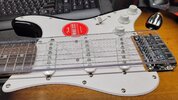
I thought that was a new type of wammy system requiring the neck to be pressed forward. ??

Some people are sooooooooo closed minded. :rolleyes:
 
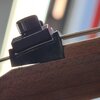
Look closely at how the nuts are fitted. The Charvel reject rate is 25%, but we only inspect roughy 7% to 10% of the guitars that go.out to the public...

So, of all the Fender guitars that go out, QC is only done to about 7% to 10%? Or is the inspection different from QC?
 
So, of all the Fender guitars that go out, QC is only done to about 7% to 10%? Or is the inspection different from QC?

Yes.

Q.C. Inspection is:

1. Visual Inspection (paint, logos, cracks)
2. Tune & Neck Adjustment
3. Verifying Electronics Work Correctly
4. Set String Height at 12th Fret
5. Play Scales and Listen For "Dead Spots"

That's it.

Inspection Lot Example:

Out of a shipment of 1,000 guitars, we would pull 7% (70) units and inspect them.

If the problems found could be corrected by a setup tech - within the (6) minutes per unit alotted - then those individual guitars would get a passing grade, even if the errors are beyond what the player could fix at home, and the entire 1,000 units would be shipped out.

If more than 50% of those (70) guitars inspected failed ("failed" means work required beyond the six minutes alloted) then the inspection amount would be increased to 10% of those 1,000 units and re-evaluated.

If another 50% failure rate was encountered, we would notify the builder of the lot numbers affected and the problem(s) we encountered, then those 10% (100) guitars would be sent to in-house repairs, which is given (20) minutes alloted per guitar.

However...

The entire remaining 80% of those 1,000 guitars that were not inspected get shipped out anyways for the retailers or customers to deal with.

The only time we "killed" (stopped shipment) on an entire lot was when there was something amiss, such as:

1. Missing or Backwards Headstock Logos
2. Missing Fret Position Markers
3. Color Differing From Catalog Illustration
4. Configuration Defect (HSS instead of HH)

NOTE: Intonation is NOT in the inspection protocol. We only measure scale length on the low and high 'e' strings to determine bridge placement.

Tuning Stability is NOT tested or inspected, except on the "Special Project Line."

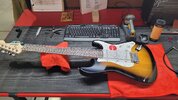
In the image below, orange tagged guitars are wsiting to be RTV'd (Returned to Vendor) because of serious defects outside the scope of in-house repairs.

20220524_092204.jpg

This could be cracks/splits, scale length issues, loose frets, stripped/broken truss rods, warpage, paint blistered/peeling, wrong color, incorrect equipment, wrong hardware, etc.
 
Last edited:
Yes.

Q.C. Inspection is:

1. Visual Inspection (paint, logos, cracks)
2. Tune & Neck Adjustment
3. Verifying Electronics Work Correctly
4. Set String Height at 12th Fret
5. Play Scales and Listen For "Dead Spots"

That's it.

Inspection Lot Example:

Out of a shipment of 1,000 guitars, we would pull 7% (70) units and inspect them.

If the problems found could be corrected by a setup tech - within the (6) minutes per unit alotted - then those individual guitars would get a passing grade, even if the errors are beyond what the player could fix at home, and the entire 1,000 units would be shipped out.

If more than 50% of those (70) guitars inspected failed ("failed" means work required beyond the six minutes alloted) then the inspection amount would be increased to 10% of those 1,000 units and re-evaluated.

If another 50% failure rate was encountered, we would notify the builder of the lot numbers affected and the problem(s) we encountered, then those 10% (100) guitars would be sent to in-house repairs, which is given (20) minutes alloted per guitar.

However...

The entire remaining 80% of those 1,000 guitars that were not inspected get shipped out anyways for the retailers or customers to deal with.

The only time we "killed" (stopped shipment) on an entire lot was when there was something amiss, such as:

1. Missing or Backwards Headstock Logos
2. Missing Fret Position Markers
3. Color Differing From Catalog Illustration
4. Configuration Defect (HSS instead of HH)

NOTE: Intonation is NOT in the inspection protocol. We only measure scale length on the low and high 'e' strings to determine bridge placement.

Tuning Stability is NOT tested or inspected, except on the "Special Project Line."

In the image below, orange tagged guitars are wsiting to be RTV'd (Returned to Vendor) because of serious defects outside the scope of in-house repairs.


This could be cracks/splits, scale length issues, loose frets, stripped/broken truss rods, warpage, paint blistered/peeling, wrong color, incorrect equipment, wrong hardware, etc.

So, what do the signed ”Passed Quality Control” tags (my term) that come with a new guitar indicate? Only about 7% have them?
 
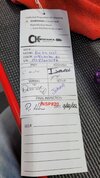
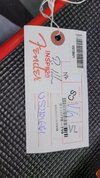
All the marks in the boxes shown relate to factory assembly. Each station is certifying there are no missing parts and the guitar basically functions.

20220322_100837.jpg

If you see a "INSP" stamp, then that unit was in the 7% to 10%
 
Back
Top