Connecting a reverb tank

RVA

Ambassador
I have decided to place a proper back and front on the Peavey combo remnants so it can be more of a proper "cab" - thank you for making that point "Thatbastarddon".

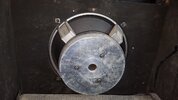
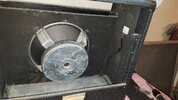
The cab has a rather nice sounding reverb tank. How cab I best make this available for use, if possible at all? I also included some speaker pics since I was taking photos.
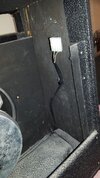
20170702_164547.jpg

20170702_164550.jpg

20170702_164614.jpg

20170702_164622.jpg
 
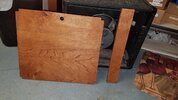
back and front - first coat of stain. Note that there is no access hole for the reverb tank - help!


20170702_193214.jpg
 
back and front - first coat of stain. Note that there is no access hole for the reverb tank - help!


View attachment 6277


Typically, you want the reverb tank parallel to the bottom of the box...away from the amp transformer and the speaker magnet. I have seen some bags that cover the tank to avoid magnetic interference and that is an option. I have never tried mounting one on the "wall" so to speak, but you might be able to do it....
 
  • Like
Reactions: RVA
Typically, you want the reverb tank parallel to the bottom of the box...away from the amp transformer and the speaker magnet. I have seen some bags that cover the tank to avoid magnetic interference and that is an option. I have never tried mounting one on the "wall" so to speak, but you might be able to do it....
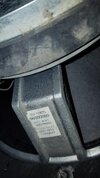
The tank is in there with a 4-prong connector (see first 2 photos). Now what?
 
From what I can see, there are two wires in each larger black cable. Peavey used an unusual coupling to go to the amp originally, by the looks.
I'd wager one black cable(with its positive and negative wires) is a send, and the other is a return.
Tanks like that are fed a bit differently than just plugging in to a standard effects loop...but similarly. If you have an amp with a reverb send/return that's doing nothing, then you could probably rig it to work. Otherwise...you've got a lovely spring-in-a-box.
I wish I could be more helpful, but as a studio guy, I've never been in to on-board reverb. I like to mix it in later...then when the drummer points out how cheezy it sounds, I can get rid of it. I can't do that to a track with on-board reverb(or whatever effect) printed to it...without butchering it sonically into a useless waste of time.:cool:
 
  • Like
Reactions: RVA
From what I can see, there are two wires in each larger black cable. Peavey used an unusual coupling to go to the amp originally, by the looks.
I'd wager one black cable(with its positive and negative wires) is a send, and the other is a return.
Tanks like that are fed a bit differently than just plugging in to a standard effects loop...but similarly. If you have an amp with a reverb send/return that's doing nothing, then you could probably rig it to work. Otherwise...you've got a lovely spring-in-a-box.
I wish I could be more helpful, but as a studio guy, I've never been in to on-board reverb. I like to mix it in later...then when the drummer points out how cheezy it sounds, I can get rid of it. I can't do that to a track with on-board reverb(or whatever effect) printed to it...without butchering it sonically into a useless waste of time.:cool:
OK, I will forget about it. I have reverb pedals. Thanks!
 
A spring reverb is usually m in something like an effects loop, that has a preamp on the send, and a mix control on the return. Tube amps usually use all or half of a 12ax(or t)7 to drive the reverb circuit. Some folks do mods to add a reverb to a head without one. The stand alone boxes contain the needed circuitry, transformer, etc.
 
  • Like
Reactions: RVA
The reason I asked that silly question is that I'm not sure if you understood that, that reverb tank is just a mechanical component that needs a coupling circuit to accomplish the reverb effect. Reverb tanks are very inexpensive compared to the rest of the circuit and it's components to accomplish the whole product.

I would suggest removing it entirely, and keeping it for spare parts. Seems like your leaning that way, anyways.
 
The reason I asked that silly question is that I'm not sure if you understood that, that reverb tank is just a mechanical component that needs a coupling circuit to accomplish the reverb effect. Reverb tanks are very inexpensive compared to the rest of the circuit and it's components to accomplish the whole product.

I would suggest removing it entirely, and keeping it for spare parts. Seems like your leaning that way, anyways.
Ok. Out is goes. Thank you (or is it "tank you")
 
I know little about reverb tanks. My friend had one. We beat the hell out of that old Ampeg. I'm just trying to help. The video uses an Peavey.

Thanks! I did not want the existing one to go to waste, but I am not hunting for one.
 
Last edited:
Back
Top