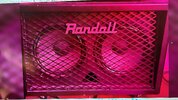
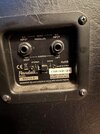
@Thatbastarddon got it before me lol but here's a quick reminder for most setups
- Two 4 ohm cabs connected to your amp will present a 2 ohm load
- Two 8 ohm cabs connected to your amp will present a 4 ohm load
- Two 16 ohm cabs connected to your amp will present an 8ohm load
If you have two cabs of the same impedance value, remember a quick formula
impedance of single cab / number of cabs = total impedance
In your case? This is the formula and you're 100% correct
If you find yourself one day with a mixmatch setup of impedances and cabs, it's not going to blow up your amp as long as you get your math right. In that case it's sometimes refered to as a "safe-mismatch".
That formula is:
(impedance of cab 1 X impedance of cab 2) / (impedance of cab 1 + impedance of cab 2)
I use this setup myself with the JCM2000 DSL 50
As the MF400B cab on the bottom is 8ohm and the JCM900 1960A cab on top is set at 16 ohm. This works out as 16x8=128
16+8=24
128/24=5.333ohms
So using the 4ohm switch setting, that means I have 1.333 ohms OVER than the rating of each output, which is considered "safe" as long as you don't go UNDER the rating. This protects your valves, transformers and grid resistors as it's not sending excessive current back rather extra resistance. In that case, all that happens is you aren't working the speakers as hard as they should and will suffer some volume loss but you won't endanger the amplifier itself.
NEVER go UNDER the rating though because that's a recipe for disaster and will fry your amp. Fast way to come up with this one would be like having an 8ohm cab and a 4 ohm cab which produces about 2.667 ohms. It is extremely rare to have an amp that can handle less than 4ohms
Sorry this was so long winded, but I hope it helps!