How to Spot a Made in USA Fender:


Well, I would say yes, based on this:

California MIA law
SECTION 1.
Section 17533.7 of the Business and Professions Code is amended to read:


17533.7.
(a) It is unlawful for any person, firm, corporation, or association to sell or offer for sale in this state any merchandise on which merchandise or on its container there appears the words “Made in U.S.A.,” “Made in America,” or similar words if the merchandise or any article, unit, or part thereof, has been entirely or substantially made, manufactured, or produced outside of the United States.
(b) This section shall not apply to merchandise made, manufactured, or produced in the United States that has one or more articles, units, or parts from outside of the United States, if all of the articles, units, or parts of the merchandise obtained from outside the United States constitute not more than 5 percent of the final wholesale value of the manufactured product.
(c) (1) This section shall not apply to merchandise made, manufactured, or produced in the United States that has one or more articles, units, or parts from outside of the United States, if both of the following apply:
(A) The manufacturer of the merchandise shows that it can neither produce the article, unit, or part within the United States nor obtain the article, unit, or part of the merchandise from a domestic source.
(B) All of the articles, units, or parts of the merchandise obtained from outside the United States constitute not more than 10 percent of the final wholesale value of the manufactured product.
(2) The determination that the article, unit, or part of the merchandise cannot be made, manufactured, produced, or obtained within the United States from a domestic source shall not be based on the cost of the article, unit, or part.
(d) This section shall not apply to merchandise sold for resale to consumers outside of California.
(e) For purposes of this section, merchandise sold or offered for sale outside of California shall not be deemed mislabeled if the label conforms to the law of the forum state or country within which they are sold or offered for sale.

But, I know guys who have paid $7,000 for a CS Strat that says 'Corona California.'

See why this is so frustrating and misleading???
 
what I really want to know is:

HOW DO THESE EXPENSIVE GUITARS SOUND AND FEEL...
...does a $5000 Custom Shop Tele sound any better or feel any better than
my 2006 MIM Tele Deluxe replica, which I bought used and had set up by Dave Collins so
that it's almost a dream guitar.

Because in the end, they are guitars. Personally I would never buy something
from the Fender Custom Shop or from the Gibson Custom Shop either.
I believe that they are charging too much for the same durn thing
we all have already. I believe there's too much hype and spin going on.

A guitar is a musical instrument. What matters is the music you (or I) can play on one.
IMHO nothing else matters. Decorations, paint job, special ultra cool pickups, hand made wiring
... all these things are cool maybe, but are they worth the insane prices? No.

Really, it's setup that matters too. IMHO of course.
In my long and checkered life (and career) I've done really well with moderately priced instruments
that were set up by real experts. Many of my guitars I bought used. I couldn't afford the prices of new
Gibsons or Fenders, so I found what I needed by buying somebody else's guitar, and then making it
my own. I'm sure I made hundreds of dollars playing them, in 44 years on the road.
That's a factor I'm sure... how much does the guitarist expect to make while playing
his new dream custom guitar? ...
The world wonders.

So I don't really get it about fancy instruments that sound the same as my well worn
war horses. I do get it about G.A.S.... I've bought guitars solely because of G.A.S.
But I have NEVER spent so much as what is discussed here. And I've had great service from
all of the instruments I picked out. So I'm happy, and I've got more money in my savings...
But I read a thread like t his and wonder: Have I missed something?
Or have I been sensible and bought and used instruments that were appropriate for the level
I was at... and used those instruments to great effect over a long and fun (but not rich) career...
 
what I really want to know is:

HOW DO THESE EXPENSIVE GUITARS SOUND AND FEEL...
...does a $5000 Custom Shop Tele sound any better or feel any better than
my 2006 MIM Tele Deluxe replica, which I bought used and had set up by Dave Collins so
that it's almost a dream guitar.

Because in the end, they are guitars. Personally I would never buy something
from the Fender Custom Shop or from the Gibson Custom Shop either.
I believe that they are charging too much for the same durn thing
we all have already. I believe there's too much hype and spin going on.

A guitar is a musical instrument. What matters is the music you (or I) can play on one.
IMHO nothing else matters. Decorations, paint job, special ultra cool pickups, hand made wiring
... all these things are cool maybe, but are they worth the insane prices? No.

Really, it's setup that matters too. IMHO of course.
In my long and checkered life (and career) I've done really well with moderately priced instruments
that were set up by real experts. Many of my guitars I bought used. I couldn't afford the prices of new
Gibsons or Fenders, so I found what I needed by buying somebody else's guitar, and then making it
my own. I'm sure I made hundreds of dollars playing them, in 44 years on the road.
That's a factor I'm sure... how much does the guitarist expect to make while playing
his new dream custom guitar? ...
The world wonders.

So I don't really get it about fancy instruments that sound the same as my well worn
war horses. I do get it about G.A.S.... I've bought guitars solely because of G.A.S.
But I have NEVER spent so much as what is discussed here. And I've had great service from
all of the instruments I picked out. So I'm happy, and I've got more money in my savings...
But I read a thread like t his and wonder: Have I missed something?
Or have I been sensible and bought and used instruments that were appropriate for the level
I was at... and used those instruments to great effect over a long and fun (but not rich) career...

This is a subject of much debate.

After working for Fender, i had to realize that the Fender name is simply applied to any and everything and that Fender products are in no way connected with Fender’s past to any degree whatsoever.

For me personally, I would never buy an instrument not made 100% in the USA.
 
This is a subject of much debate.

After working for Fender, i had to realize that the Fender name is simply applied to any and everything and that Fender products are in no way connected with Fender’s past to any degree whatsoever.

For me personally, I would never buy an instrument not made 100% in the USA.

Just curious, would you buy a guitar whose core materials are not from the US?

Mahogany, ebony, and rosewood aren't United States woods.

Not trying to play a "Gotcha Game". I'm just curious.

I am sensitive to supporting local, domestic production so I am generally supportive of buying in the USA. I make that my general goal regardless of what I purchase. Now, if I lived in Japan, I'd likely choose Ibanez over a Fender or Gibson, because that would be supporting domestic industry in that location.

Of course, I realize "Made in USA" refers to the actual manufacturing location of the product, not necessarily sourcing raw materials. But, when I consider that the very core material from which an instrument is constructed - the wood - is often not even sourced in the USA, the lines get a little fuzzy to me and I tend to feel a little less dogmatic about it.

A Les Paul may be made in the USA, but it was grown in Africa, South America, and India, to name a few.
 
Just curious, would you buy a guitar whose core materials are not from the US?

Mahogany, ebony, and rosewood aren't United States woods.

Not trying to play a "Gotcha Game". I'm just curious.

I am sensitive to supporting local, domestic production so I am generally supportive of buying in the USA. I make that my general goal regardless of what I purchase. Now, if I lived in Japan, I'd likely choose Ibanez over a Fender or Gibson, because that would be supporting domestic industry in that location.

Of course, I realize "Made in USA" refers to the actual manufacturing location of the product, not necessarily sourcing raw materials. But, when I consider that the very core material from which an instrument is constructed - the wood - is often not even sourced in the USA, the lines get a little fuzzy to me and I tend to feel a little less dogmatic about it.

A Les Paul may be made in the USA, but it was grown in Africa, South America, and India, to name a few.

I think Gibson is one of the last American guitars. It was cool that i was able to actually call and speak to the guy who set up my 2021 Les Paul 50's Standard Gold Top.

Obviously, im the minority here and im not going against opinions solidified by a multi-million dollar campaign to legitimize Chinese guitars.

Perhaps this is just a personal preference to prefer an American product built with American labor???

Traditionally, the woods you mention are the woods that were used in the early guitars, and these species tend to be favored in guitar construction. Fender tired to use American-sourced pine as a sustainable alternative, but it was not well received by the tonewood purists.

Fender is a guitar made in China or Indonesia. It has no Fender heritage whatsoever. Zero.

The lengths that Fender goes to, in an effort to conceal where a guitar is actually made, really opened my eyes to how deception plays a such huge role in the music marketplace.

Where Gibson sources wood from foreign sources - which Taylor also does - both builders do all the machining and woodworking in the USA with American labor. (This does not include Taylor guitars made in Tecate, Mexico)

The FTC guidelines for a USA made product involve where the machining of a foreign raw material takes place. It would seem that the concept involves a statement of how a particular material is vital to the finished product and a declaration that said product cannot be obtained domestically.

Fender has bodies woodworked and painted by Zunyi Shenqu Musical Instruments Manufacturing in China. Some of these bodies end up being used in higher end Fenders. (Zunyi also has an Ali Express store and they are the builder behind 'rareelectricguitar.com')

Subsequently, I've opened up "American Professional Stratocasters' to perform service and found Chinese characters stamped/written inside the guitar.

I've seen bills of lading for pallets of foreign products going to the CS. I think you can figure the rest out.

In 2016, Fender and Taylor both quietly lobbied for California Senate Bill SB-633, which "redefines" how much foreign content can be in a product and still be called 'Made in USA,' but Fender's foreign content is still too high to qualify as a USA product.

Sweetwater penned an extensive web article, in October 2017, filled with interviews from guitar makers, legitimizing foreign sourced guitars.

Its like 'Hand Wired 1964 Princetons,' commanding well over $2,000, filled with Chinese parts.

I sold or gave away all my foreign guitars. I still have a very old Ibanez import bass on my wall, but i have plans to replace it soon.

I've been deep enough inside the machine too see the truth. Some people would be 'ok' with the shell game, even if they saw it from the inside. I was not 'ok' with it.

There is zero difference between a guitar made by Zunyi Shenqu Musical Instruments Manufacturing and a Fender. The only thing that makes it a Fender is the decal.
 
Obviously, im the minority here and im not going against opinions solidified by a multi-million dollar campaign to legitimize Chinese guitars.

I'm not trying to get you to like Chinese guitars....just let me get that on the table.

But, let me ask...what is the reason you dislike them? You have mentioned a preference for supporting American labor. I, too, feel some of that same motivation. Is that the biggest thing? Or, do you think the Chinese products are inherently inferior? Is it the shell game you've noted? Some other issue?

What if China made a really good guitar marketed as a Chinese product, similar to how Ibanez is a Japanese brand and also has some very good products? In that case, there would be no shell game.

Again, I'm not trying to defend Chinese guitars, nor am I trying to get you to change your mind. I'm just exploring your thoughts.
 
I'm not trying to get you to like Chinese guitars....just let me get that on the table.

But, let me ask...what is the reason you dislike them? You have mentioned a preference for supporting American labor. I, too, feel some of that same motivation. Is that the biggest thing? Or, do you think the Chinese products are inherently inferior? Is it the shell game you've noted? Some other issue?

What if China made a really good guitar marketed as a Chinese product, similar to how Ibanez is a Japanese brand and also has some very good products? In that case, there would be no shell game.

Again, I'm not trying to defend Chinese guitars, nor am I trying to get you to change your mind. I'm just exploring your thoughts.

The shell game and deception is something i do not believe in. Fender is not a brand anymore. Its just a decal applied to foreign goods. Deceiving the public to make a sale is their guiding principle...make people think they are getting part of the Fender legacy.

It no longer exists...but the fallacy sells.

My Schecter Hellraiser C1FR was a great playing guitar made in Korea by World Musical Instruments. I sold it and my Indonesian Jackson San Dimas to a Fender coworker.

Why?

I just wanted to separate myself from the foerign made guitars altogether. A Korean Schecter is nowhere near as well made as the ones built in the USA, but very good - maybe even outstanding - at the price point.

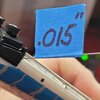
The Jackson??? A very good guitar at its price point, even thought the neck had a radial twist, several frets were higher than the others, there were cracks opening up in the body where multiple sections were glued together - all these are acceptable to Fender/Jackson standards, as long as the cracks or gaps do not exceed .015" and even right at .015" with the gaps filled with wax, we were told to let them pass.

Here's one example on a Jackson. Note the wax filling applied to the gap atcthe factory:

20220527_082521.jpg

And here's similar examples of "acceptable" gaps on EVH Wolfgangs.

20220425_124109.jpg

20220520_120628.jpg

20220520_073914.jpg

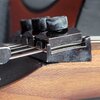
In each of these instances, the gap between the nut and its shelf affected tuning stability, but tuning stability is not evaluated during an inspection.

Maybe im traditional to a fault, but this bothers me.

I had always wanted a Gibson growing up because my music idols played them. But, not all Gibsons are great guitars. I bought (5) entry level Gibsons (between 2016 and 2017) that were very substandard (IMHO) but when re-judging them through Fender's lens of "variable quality based on price point," (an actual, documented evaluation standard) they were actually very good guitars for their price point.

The Fender errors and specifications are variable based on price point. Humps in the fretboard, neck twist, poor fretwork, neck radius variations, finish problems are all acceptable on the lower-end guitars (and even on American Professional series to a slightly tighter tolerance) and this is actually spelled out (in writing) in their inspection criteria checklist.

The guitar is divided into (4) quadrants and errors are acceptable if onlyba certain number appear in a given quadrant.

The difference in quality between my 2016 Gibson Les Paul Studio T-Series ($1,100) and my 2021 Gibson Les Paul 50's Standard Gold Top ($2,900) are night and day different.
 
Last edited:
The shell game and deception is something i do not believe in. Fender is not a brand anymore. Its just a decal applied to foreign goods. Deceiving the public to maje a sale is their guiding principle...nake people think they are getting part of the Fender legacy.

It no longer exists...but the fallacy sells.

My Schecter Hellraiser C1FR was a great playing guitar made in Korea by World Musical Instruments. I sold it and my Indonesian Jackson San Dimas to a Fender coworker.

Why?

I just wanted to separate myself from the foerign made guitars altogether. A Korean Schecter is nowhere near as well made as the ones built in the USA, but very good - maybe even outstanding - at the price point.

The Jackson??? A very good guitar at its price point, even thought the neck had a radial twist, several frets were higher than the others, there were cracks opening up in the body where multiple sections were glued together - all these are acceptable to Fender/Jackson standards, as long as the cracks or gaps do not exceed .015" and even right at .015" and with the gaps filled with wax, we were told to let them pass.

Here's one example on a Jackson:

View attachment 86561

And here's similar examples of "acceptable" gaps on EVH Wolfgangs.

View attachment 86564

View attachment 86562

View attachment 86563

In each of these instances, the gap between the nut and its shelf affected tuning stability, but tuning stability is not evaluated during an inspection.

Maybe im traditional to a fault, but this bothers me.

I had always wanted a Gibson growing up because my music idols played them. But, not all Gibsons are great guitars. I bought (5) entry level Gibsons (between 2016 and 2017) that were very substandard (IMHO) but when re-judging them through Fender's lens of "variable quality based on price point," (an actual, documented evaluation standard) they were actually very good guitars for their price point.

The Fender errors and specifications are variable based on price point. Humps in the fretboard, neck twist, poor fretwork, neck radius variations, finish problems are all acceptable on the lower-end guitars (and even on American Professional series to a slightly tighter tolerance) and this is actually spelled out (in writing) in their inspection criteria checklist.

The guitar is divided into (4) quadrants and errors are acceptable if onlyba certain number appear in a given quadrant.

The difference in quality between my 2016 Gibson Les Paul Studio T-Series ($1,100) and my 2021 Gibson Les Paul 50's Standard Gold Top ($2,900) are night and day different.

Thanks, Robert. I appreciate you taking the time to answer.
 
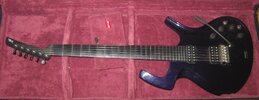
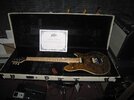
On stage I play the P guitars Parker and Peavey they stay in tune and don't brake strings
Parker USA carbon fiber skin 4 pounds Peavey HP2 made from 30 year old USA wood made by Spector Czech Republic
top of the line hardware on both guitars.

View attachment 86559

View attachment 86560

Now, ive seen very high quality come out of Europe, especially the former eastern block nations.
 
You welcome. Im just kinda bummed by my experiences. No reason to change your preferences based on my feelings.

Totally cool.

I think I get a little more where you’re coming from. In some ways, I feel similarly to you on the issue, in other ways I feel a little differently.

Like I said…not trying to change your mind. Just enjoying the conversation!
 
The best "Strats" I have owned were G&L's. I had three of them at various times, as well as an ASAT. They blew any Fender I have ever played or owned out of the water: new, old, custom shop - you name it, the G&Ls were better in every way.

No doubt.
 
Back
Top