
You are using an out of date browser. It may not display this or other websites correctly.
You should upgrade or use an alternative browser.
You should upgrade or use an alternative browser.
Marshall Valvestate Bi-Chorus 8200 Resource Thread:
- Thread starter Inspector #20
- Start date

OP


Robert now i feel all warm and fuzzy seeing that pic. Simple ear blistering gear.Perfect.Love that Goldtop.Sweet set up.The chorus does sound great on that amp.
Thanks, Goo!!!!
OP
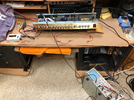
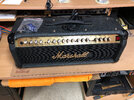
The 8200 is in surgery....
OP

syscokid
Ambassador of War & Peace
Good Lord! There's an O-Scope in the room...
 WhereTF is @Amp Mad Scientist ? I think he's going to gave an orgasm when he sees this! Beware of the fallout...

Amp Mad Scientist
Ambassador of Heresy
Isn't that funny?Good Lord! There's an O-Scope in the room...
I use a scope on every amp I work on.
OP
@Don O is a wizard when it comes to electrical components. He graciously offered to take a look at this amp when I started having problems.
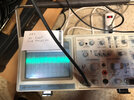
Here's the noise that recently appeared out of nowhere:
Don began his investigation...
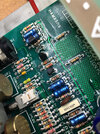
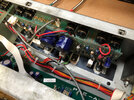
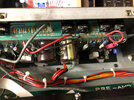
The noise seemed to be coming from these components
Done replaced them and the noise disappeared...
But that's not all...
Here's the noise that recently appeared out of nowhere:
Don began his investigation...
The noise seemed to be coming from these components
Done replaced them and the noise disappeared...
But that's not all...
OP
This amp also picked up a local radio station - 95.1FM - and produced a loud "thump" every time it was switched on, regardless of the volume knob setting....
Here's a short video. You can hear a song playing and the station ID is announced around 26 seconds.
Don experimented with a lot of different methods in an effort to quell the startup thump, including creating a soft-start bleed arrangement...
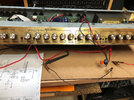
Interestingly, none of those methods reduced the startup thump.
So, Don went back to the schematic, which looks like a NYC subway map
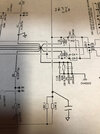
Don did some more experimenting and general theorizing of the circuitry.
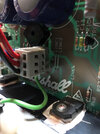
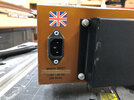
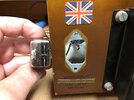
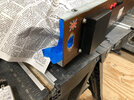
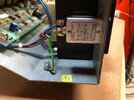
Since the 1993 Valvestate Bi-Chorus 200 has a ton of room inside, Don opted for a commercially made EMI/RFI filter.
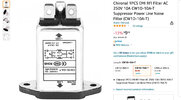
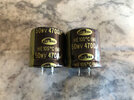
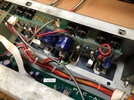
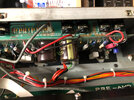
He also suspected the 29 year old filter caps may be charging at different rates, so he opted to change those too...
Although this saga is still unfolding, I wanted to include at least some of this information here so that others with these amps (it's internally identical to the 8280 combo) could perhaps find these 'bread crumbs' as a helpful resource.
Special thanks to Doc (@Don O) and his skill and generosity because this is way outside my skill level to figure out.
This amp would be a parts donor without his help.
More to come...
Here's a short video. You can hear a song playing and the station ID is announced around 26 seconds.
Don experimented with a lot of different methods in an effort to quell the startup thump, including creating a soft-start bleed arrangement...
Interestingly, none of those methods reduced the startup thump.
So, Don went back to the schematic, which looks like a NYC subway map
Don did some more experimenting and general theorizing of the circuitry.
Since the 1993 Valvestate Bi-Chorus 200 has a ton of room inside, Don opted for a commercially made EMI/RFI filter.
He also suspected the 29 year old filter caps may be charging at different rates, so he opted to change those too...
Although this saga is still unfolding, I wanted to include at least some of this information here so that others with these amps (it's internally identical to the 8280 combo) could perhaps find these 'bread crumbs' as a helpful resource.
Special thanks to Doc (@Don O) and his skill and generosity because this is way outside my skill level to figure out.
This amp would be a parts donor without his help.
More to come...
Last edited:

@Don O is a wizard when it comes to electrical components. He graciously offered to take a look at this amp when I started having problems.
Here's the noise that recently appeared out of nowhere:
Don began his investigation...
View attachment 83634
The noise seemed to be coming from these components
View attachment 83635
Done replaced them and the noise disappeared...
View attachment 83636
But that's not all...
Thanks for the kind words Robert.

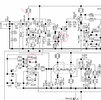
And a slight update on the schematic. The signal comes in through the input Jack in the upper left, following the green lines, is the clean channel. The variable resistor VR1 is the clean channel gain control and VRs 2,3,4 are the bass, mid and treble for the clean channel. After the signal is amplified by the first transistor, TR1 it feeds the clean channel and also goes to TR2 (and follow the red lines) which starts the the signal path for the red channel.
Given the white noise was on both channels, the only common active component in both channels is TR1. When I looked at the output of TR1 with no signal input (but an open plug in the input Jack to lift the grounding pin) the white noise was right there. Hence I suspected TR1 had been zapped but not killed (technical electronic terms
 ). I replaced TR1, seen in the board pic above, and bingo, no more white noise.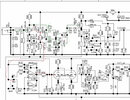
OP
Thanks for the kind words Robert.
View attachment 83694
And a slight update on the schematic. The signal comes in through the input Jack in the upper left, following the green lines, is the clean channel. The variable resistor VR1 is the clean channel gain control and VRs 2,3,4 are the bass, mid and treble for the clean channel. After the signal is amplified by the first transistor, TR1 it feeds the clean channel and also goes to TR2 (and follow the red lines) which starts the the signal path for the red channel.
Given the white noise was on both channels, the only common active component in both channels is TR1. When I looked at the output of TR1 with no signal input (but an open plug in the input Jack to lift the grounding pin) the white noise was right there. Hence I suspected TR1 had been zapped but not killed (technical electronic terms
View attachment 83696
It's really fascinating to me how you can make sense of this. I'm trying to teach myself - and you and Greg are helping - but it's intimidating!!@@!!
I gotta say that despite being super old, these Valvestates are such great amps for live shows.
You just set it down and plug it in. You got chorus and reverb without any pedalboard.
You can quickly switch between clean and dirty with the simple, 2 button footswitch.
OP
OP
OP
Don's work is just unreal. His generosity and sharp mind kept this relic out of the recycling bin.
OP
Of interesting note, the original, 29 year old filter caps are made by SAMWHA and the brand new 2022 filter caps are also made by SAMWHA!!!!
OP
Robert now i feel all warm and fuzzy seeing that pic. Simple ear blistering gear.Perfect.Love that Goldtop.Sweet set up.The chorus does sound great on that amp.
Gonna use that setup on our May 21st live show for the music academy.
OP
Well, guys....let me tell you that @Don O has done some incredible work on this amp.
I just got it back.
The startup thump is at least 70% less than it was. White noise almost non-existent. Zero radio frequency interference. The gain structure has also changed to a much smoother, rounder tone and every control on the amp seems to be much more "reactive" or sensitive.
I've evaluated it against my old videos of the amp prior to the repairs. Its a night and day difference.
Really cannot say enough to express not on my gratitude, but my awe in how he can make sense of the schematic and repair a 30 year old, archaic piece of music history.
Thanks, Doc!!!!!

I just got it back.
The startup thump is at least 70% less than it was. White noise almost non-existent. Zero radio frequency interference. The gain structure has also changed to a much smoother, rounder tone and every control on the amp seems to be much more "reactive" or sensitive.
I've evaluated it against my old videos of the amp prior to the repairs. Its a night and day difference.
Really cannot say enough to express not on my gratitude, but my awe in how he can make sense of the schematic and repair a 30 year old, archaic piece of music history.
Thanks, Doc!!!!!
OP
I let a guy play the 8200 last night, through my 2x12 with 250 watt Celestion Copperbacks and he offered to trade me his 20 watt JCM 800 Studio Head for it.
I never knew they made such a thing. Nothing I would want to own. I played through it last night. Very bland IMHO.
I never knew they made such a thing. Nothing I would want to own. I played through it last night. Very bland IMHO.
OP
I can't get over how much better everything on this 8200 Valvestate is since @Don O worked it over.
I mean the quietness of the amp...I thought it was turned off at one point, but it was just sitting there at idle.
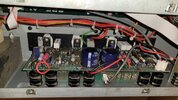
These relatively small changes - a transistor (TR1 - VN2410L,) 2 Filter Caps (Original/ 29 year old Samhwa 4700uf x 50WV x 85°C - were Upgraded/Replaced with 105°C Samhwa 4700uf x 50WV variants) and the addition of a induction-type EMI/RFI filter at the mains input has totally changed the voicing of this amp.
Overall, the gain structure is far more balanced and all controls seem "smoother" in how they alter their respective signals.
The floor noise the amp makes at idle is almost zero. I literally thought it had shut off a few times.
Radio frequency interference from the local 50,000 watt FM transmitter (1.5 miles away and 1,500 ft/asl up the hill from us) is also zero.
These amps are known for a startup "thump" even with the volumes all dialed down to zero. This thump was softened to such a degree by the visit with @Don O that it's nothing short of remarkable.
Also, keep in mind that very few techs will even attempt to work on these old Valvestate amps. They are very complicated and the internal components are delicate after almost 30 years of time passage.
I'd venture to say that this amp is better than it was brand new.
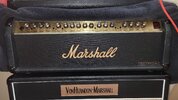
I mean the quietness of the amp...I thought it was turned off at one point, but it was just sitting there at idle.
These relatively small changes - a transistor (TR1 - VN2410L,) 2 Filter Caps (Original/ 29 year old Samhwa 4700uf x 50WV x 85°C - were Upgraded/Replaced with 105°C Samhwa 4700uf x 50WV variants) and the addition of a induction-type EMI/RFI filter at the mains input has totally changed the voicing of this amp.
Overall, the gain structure is far more balanced and all controls seem "smoother" in how they alter their respective signals.
The floor noise the amp makes at idle is almost zero. I literally thought it had shut off a few times.
Radio frequency interference from the local 50,000 watt FM transmitter (1.5 miles away and 1,500 ft/asl up the hill from us) is also zero.
These amps are known for a startup "thump" even with the volumes all dialed down to zero. This thump was softened to such a degree by the visit with @Don O that it's nothing short of remarkable.
Also, keep in mind that very few techs will even attempt to work on these old Valvestate amps. They are very complicated and the internal components are delicate after almost 30 years of time passage.
I'd venture to say that this amp is better than it was brand new.
OP
Saw this on a cabinet a while back down at Capitol.
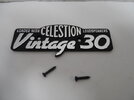
Decided to have a chum make me one for my 2x12, keeping with my Gold/Black theme....
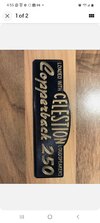
Here you can see the raised effect...
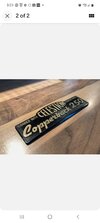
I really like these little touches....
Decided to have a chum make me one for my 2x12, keeping with my Gold/Black theme....
Here you can see the raised effect...
I really like these little touches....
Amp Mad Scientist
Ambassador of Heresy
Should have changed all electrolytic caps, preamp and power amp.I can't get over how much better everything on this 8200 Valvestate is since @Don O worked it over.
I mean the quietness of the amp...I thought it was turned off at one point, but it was just sitting there at idle.
These relatively small changes - a transistor (TR1 - VN2410L,) 2 Filter Caps (Original/ 29 year old Samhwa 4700uf x 50WV x 85°C - were Upgraded/Replaced with 105°C Samhwa 4700uf x 50WV variants) and the addition of a induction-type EMI/RFI filter at the mains input has totally changed the voicing of this amp.
Overall, the gain structure is far more balanced and all controls seem "smoother" in how they alter their respective signals.
The floor noise the amp makes at idle is almost zero. I literally thought it had shut off a few times.
Radio frequency interference from the local 50,000 watt FM transmitter (1.5 miles away and 1,500 ft/asl up the hill from us) is also zero.
These amps are known for a startup "thump" even with the volumes all dialed down to zero. This thump was softened to such a degree by the visit with @Don O that it's nothing short of remarkable.
Also, keep in mind that very few techs will even attempt to work on these old Valvestate amps. They are very complicated and the internal components are delicate after almost 30 years of time passage.
View attachment 83926
I'd venture to say that this amp is better than it was brand new.
View attachment 83927
Should have replaced effects loop jacks.
The reason being that the electyrolytics fail with age, and the PC mount caps are not particularly long lasting to start with.
The effects loop jacks contain a switch which breaks the signal path.
When the jacks are old, a lot of oxide has built up on the switch contacts eventually causing the signal path to drop out.
Cleaning the contacts is temporary. Replacing the jacks is really the only long lasting solution.
With those in mind, better to do both when the amp is serviced to reduce future failures /maximize long term reliability.
Last edited: