OP


Well it isn't 8 ohm. That would measure well below 8. Can't set it at 12. So 16 it is.
I've always found all these variations very confusing.

Well it isn't 8 ohm. That would measure well below 8. Can't set it at 12. So 16 it is.


I edited my response. Set it to 8 ohms if you are in doubt
I edited my response. Set it to 8 ohms if you are in doubt
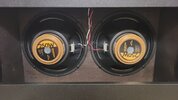
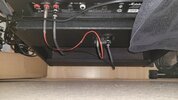
There should really be no difference. Parallel out is parallel out.On my custom 2x12 cabinet, the Celestion 250 watt Copperbacks are each a 16 ohm speaker.
I run two separate cables to each speaker and there's a distinct tonal improvement to powering the cabinet like this.
View attachment 82641
I've shared this with @ivan H and @syscokid, but I'm not sure exactly why...
There should really be no difference. Parallel out is parallel out.

It's parallel with double the Mojo...There should really be no difference. Parallel out is parallel out.


Robert, it is not confusing as it seems, once you see the explanation.I've always found all these variations very confusing.
Robert, it is not confusing as it seems, once you see the explanation.
Generally, the reading given by an ohmmeter will be about 2/3 to 3/4 of the impedance of the speaker. So, a 4 ohm speaker will typically measure about 2.5 - 3 ohms, and an 8 ohm speaker will typically read about 5-6 ohms, while a 16 ohm speaker will measure around 12 ohms.
As Per Mesa Boogie: https://mesaboogie.zendesk.com/hc/e...ted-impedance-not-match-an-ohm-meter-reading-
Measuring speaker cabinets using an ohm meter will not give accurate results because ohm meters read DC resistance, not AC impedance. AC impedance will always be greater than the DC resistance,a typical 16 ohm speaker will measure approximately 12 ohms, an 8 ohm speaker will usually measure between 5 and 7 ohms and a 4 ohm speaker will usually measure between 2.5 and 3.5 ohms.
I learned a lot when I got my orange tolexed 4x12 with 4 Governor speakers in it. The switchable 2 jack mono/stereo scenario can play havoc with readings if not wired right. The previous owner had things all screwed up, like I would get 54 ohm and 26 or some really odd numbers till I rewired it right.
Robert, you are smart, I can understand the patient part. NOW for when lack of patience biting one in the ASP,,,,,,,,,,,,,, just try rushing things and see what happens. WE usually muck up what we are doing and it take 10x longer to fix it.
Never rush or omit checking an unknown CAB. Always make sure to MATCH impedences. Never want to ruin an amp by Ohms mis matches.
Picture a worst case scenario. NO LOAD on a Valve amp powered up. That is basically the same as taking John Force's Funny Car and running it 350 mph toward a wall and having no brakes or chute.
Picture the OHMs as the brakes and the proportioning valve for the hydraulics. I am pretty sure you understand how that works on car braking systems.



The one that I sold to Todd was 8ohmsCouldn't find any information on the VS-412
The one that I sold to Todd was 8ohms
Yeah, all the ads for the VS-412 show them as an 8 ohm cab.The one that I sold to Todd was 8ohms
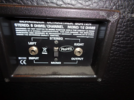
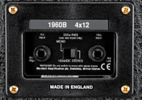
Yep that's why I suspect it is a 12 ohm cab given the 9.2 ohm resistance which could mean cab has 2 pairs of 2x8 ohm drivers in parallel (4 ohms each pair) and each pair series together for the 8 ohm total.YES a VS412 can be an 8 ohm cab. HOWEVER, during it's life, it is possible speakers were changed, 1,, 2, 3 or even 4 of the speakers could be dead or shorted etc. IT is best to VERIFY before hooking up to any amp that is not the usual amp used with that cab.
Now given my orange tolexed, 4x12, and the orange tolexed Marshall 100 Watt I got off Marketplace directly from the seller at HIS house. One might assume when the amp arrives in it's new home, that the amp and cab would be set with matching impedences. ESPECIALLY SINCE I PLAYED THROUGH THE AMP AT THE GUY'S HOUSE BEFORE BUYING IT. WRONG.
Once I got home, I did not get past taking the amp off standby before the fuse blew. Put replacement fuse in, and the other fuse blew. Heard Pop noises and decided to lambast the seller and see if he would do me a solid.
No dice.
So as folks like bdon know, I found out the Power tubes were bad, some pre amp tube(s) too. As I got new tubes, I went about testing the cab with a speaker cable and multimeter. ALL kinds of screwy readings like I said. I also hooked up my 1960A cab to the amp once I got the new tubes in and biased etc. It worked fine, no blown fuses, etc.
To ensure I would wire up the new orange 4x12 Behringer cab with Governor speakers in it, this is when I opened up my Marshall 1960A Stereo cab to verify it's readings, wiring scheme and compare it to how the new 4x12 was wired. ALL 8 speakers are 16 ohm, wired properly now, both cabs read correct for Mono and correct for Stereo as per the switchable plate in the back with 2- 1/4 inch jacks.
The Behringer yields 8 ohm stereo, 16 ohm mono
View attachment 82661
The Marshall will give either 4 ohm or 16 ohm if switched to Mono ( depending on which jack is used)
Then if switch is in Stereo, each jack yields 8 ohms on each bank of 2 speakers.
I set my amp to 16 ohm, put the switches in 16 ohm, run 1 speaker cable to the 16 ohm jack, and put tape over the stereo side of the switch and 4 ohm jack so no one can plug in and get it wrong.
View attachment 82662
It's just a cab at our rehearsal space that I was invited to use.
It has a single jack with no switches.
That 9.2 should indicate about 16 ohms. Stock cab is 8 but measured resistance of a speaker will be LOWER than impedance which would indicate 16 ohm. Which means drivers were changed.
It measured 9.2ohms