It won’t be long before the Scorpions, a veteran hard rock aggregation from Hanover, Germany, celebrates its 30th anniversary of creating guitar-based music with memorable hooks for an untold number of fans around the globe. Founded in 1971, the ensemble has a track record of gold and platinum albums, as well as memorable concerts that would be the envy of any band in any country.
The Scorpions music is truly international in its scope and vision. Not only do many of their fans consider one of their signature songs, “Wind of Change” to be a “world anthem” of sorts, the band has been involved in historical sociopolitical musical projects in their own country on more than one occasion. Erstwhile Pink Floyd member Roger Waters invited the German combo to participate in his live production of The Wall in 1990 (staged at the Berlin Wall…or what was left of it), and the Scorpions were invited to return in November ’99 to perform with cellist Mstislav Rostropovich (and 165 other cellists) at the Brandenburg Gate on the 10th anniversary of the collapse of the definitive icon of the Cold War.
The Scorpions released a new album, Eye II Eye, in ’99, and toured during the summer of that year in a double bill with Motley Crue. Vintage Guitar was recently able to sit down with Matthias Jabs for a cordial give-and-take about the band’s unique position in the world of rock, and the guitars he used in their ascent to that position of prominence.
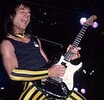
The younger of the Scorpions’ two axe-slingers, Matthias Jabs hails from Hanover (like the band’s founders) but didn’t join the group until the late ’70s. Jabs has been ensconced for over two decades, and handles most of the lead guitar work.
Vintage Guitar: The Scorpions had been in existence for the better part of a decade when you joined. Can you give us an overview of your musical history prior to that occasion?
Matthias Jabs: I started playing guitar when I was 13 years old. I spent the first couple of years at home, rehearsing. But I came out of my closet once in a while (chuckles). I knew Uli Roth, the guy who was in the Scorpions before me – we lived in the same community near the Hanover airport. I went to school with his younger brother, Jochen.
Hendrix got me started, but I was listening to other styles, as well – players like John McLaughlin and Al DiMeola, and I was trying Paganini violin stuff on guitar; I’d rehearse at home up to eight hours a day. For blues, I liked to listen to Johnny Winter.
I formed a band with Jochen Uli Ritgen, who was my best friend at school, and a drummer, Frank Tolie, and we had a rehearsal room right next to the Scorpions in the early days; they even borrowed our drummer for a couple of shows. I’d seen the Scorpions around ’72 at a cityfest in Hanover and thought they were quite good. But that was our first contact.
But the band I was in never played live, so I joined a band called Fargo. Basically, we did our own material and two or three covers, and toured all over Germany, usually on weekends with maybe a show on Wednesday – the Scorpions did the same thing. I did that for a year, then I went on to a band called Lady, which had members from other famous bands in Hanover; they were older than me, but they had more experience. I stayed with them from ’77 to ’78, then I got a call from Rudolf (Schenker). He told me he was thinking about some kind of musical project – maybe solo – but he didn’t mention the Scorpions, and he wanted to sit down with me and play. I didn’t know at the time that Uli had left the band, so they were looking for a guitar player. Weeks later, I got the call to audition.
When you were learning to play, were there any songs in particular that made you want to play guitar?
There were two songs on the German radio; there was only one show per week – Wednesday nights – and they played music that was on the charts. “White Room” by Cream and “All Along the Watchtower” by Hendrix mesmerized me, for some reason. Even though I’ve never played in the style of Hendrix, his feeling was his biggest influence. I even liked some of my father’s classical music – I just got Felix Mendelssohn’s “Violin Symphony in E minor” the other day, and I’m planning on recording with the Berlin Philharmonic next year.
Tell me about some of your early equipment. Was it German-made?
The first amp I had was a Vox AC-30, and my very first instrument was a cheap Hofner, but the next guitar I got was a sunburst ’63 Stratocaster. I’d always liked Stratocasters, since I’d been listening to Clapton and Hendrix, and I saved money from working during summer vacations, and I gave guitar lessons, too. And I managed to buy it for about 600 marks.
So, brands like Fender and Gibson were desired by German musicians?
Absolutely. Everybody wanted to have the good Fenders and the good Gibsons.
I’ve asked British players about listening to Radio Luxembourg, and would like to get a German player’s perspective on that station, and perhaps Armed Forces Radio as well.
Since we lived in the north of Germany, I couldn’t get the Armed Forces network on my radio. But Radio Luxembourg was the coolest station you could pick up; otherwise, there was just that one chart show. Radio Luxembourg would fade in and out.
Details about your audition for the Scorpions – how many other guitarists were you up against?
I didn’t know it at the time, but they’d already tried out 140 guitar players. I’d prepared by buying their records myself – that’s how generous the Scorpions were then (laughs). I rehearsed the material very carefully, and I made it, and we began rehearsing and recording the songs for the Lovedrive album, which was the first worldwide release.
Were all those who auditioned German?
No, almost all of them were British. They went to London to do some auditions. Some were from famous bands like the Pretty Things, U.F.O., and the Alex Harvey Band.
What was your rig when you joined?
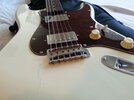
In Fargo and Lady, I played 50-watt Marshalls with two 4 X 12s. By then, I was playing a Strat again. In between, I played a black Les Paul Custom, and a Les Paul with P-90s, but I didn’t like them too much. I played a Firebird, too; looks-wise, it was one of my favorite guitars, but the neck is long and heavy, so you have to hold the neck up while playing – it’s not balanced. I bought another Strat just before I joined the Scorpions.
Have you relied on a Strat more than anything else during your tenure with the Scorpions?
Well, for many years I was known for playing Explorers, and I still play them. I bought my first Explorer as soon as I joined, because I needed another guitar – one that could get a “Gibson sound.” In ’87, I made a suggestion to Gibson about a guitar that I play today; it’s called an Explorer 90 because it’s 90 percent of the normal body size – Explorers are very bulky.
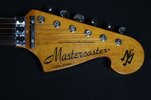
And your signature model is a Strat. Why did you want the planet Saturn fretboard inlays?
I was asked by Fender to design my own guitar in ’94. Sound-wise, I knew what I wanted and I wanted to give it a unique look, as well. Some people might like “star” inlays or square inlays, but that doesn’t seem to fit on a Stratocaster – it has dots, and I wanted to leave the dot, but do something with it, so we put a ring around it!
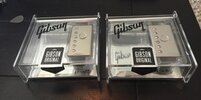
It has two Vintage 150 single-coil pickups, and the humbucker is the Seymour Duncan Jeff Beck model, because I knew what it sounded like. I still want to try other pickups, but there’s never enough time to work with your guitars when you’re on the road.
It also has two volume controls and one tone control. Who needs two tone controls? More importantly, with that five-position switch, I can do something I’ve always wanted to do – go from a very distorted sound to a very clean sound instantly; I can pre-set the volume controls, and it works perfectly onstage.
I have lots of old Fenders, and I like the rosewood necks on the early-’60s models, so this one has rosewood and a similar neck shape. It’s Candy Apple Red because in the early ’80s, I got a rare pre-CBS Telecaster that was Candy Apple Red, and now I have all of the Fender models from the ’60s in Candy Apple Red – the 12-string, Jaguar, Jazzmaster, the basses. They were on the cover of a magazine in Germany once.
Was the US Festival the biggest gig the Scorpions have ever done?
Either the US Festival or the first Rock in Rio; they were both huge. These are one-offs, so you aren’t used to them and the energy is amazing. We’re used to playing for 10,000 to 20,000 people, and we’d played for 80,000 to 100,000 people, but when we played outdoors in San Bernardino Valley, you couldn’t even see the horizon; all you could see were people.
Let’s talk about a couple of things on the new album. The opening chord on the opening track, “Mysterious,” gets your attention. What was your rig on that?
Believe it or not, that’s the old Candy Apple Red Telecaster.
That was the first song we recorded for the album. In the verse, that’s the “Jabocaster,” which is a name Fender came up with for my signature guitar. I think I used an old ’60s Hiwatt amp in connection with a Soldano amp. I also used Fender Pro-Sonics on the album.