Microphone Suggestions:

I am - reluctantly - doing lead vocals more and more with our current band. I'm looking for a new vocal mic to replace the one I been using.

Basically, looking for a mic that has an on/off switch. I find this feature really useful on songs where I am not singing.

Thoughts???
Super Cardioid is the way to go for a stage mic because it rejects sound from a distance and only works close up. Therefore controlling bleed and lowering feedback on a live stage.
However there are some better mics that are switchable from super cardioid to cardioid or omni, making them change over for use on live stage or a recording studio.
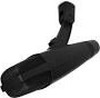
1607095867807.jpg Sennheiser 421

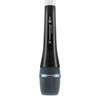
1607096147647.jpg

906 you can use for vocals, and works wonders for guitar speaker cab.
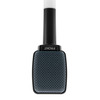
1607096840049.jpg
 
Excellent suggestions!!!!!

There is 2-3 things that make your live vocals / PA miles ahead.

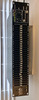
A. 31 band 1/3 octave EQ. This type of EQ is used ("cut only") to control feedback on a live stage.

1607097663704.jpg

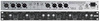
B. Electronic Crossover with time alignment.

1607098006988.jpg

The time alignment allows eliminating cancellations due to out of phase signals.
(which is actually a major issue in live sound systems)
This doubles the loudness of the PA system without increasing the wattage. In other words the headroom is increased noticeably by elimination of out of phase cancellations caused by different speaker positions...

C. Multi-band compression, same as used by FM stations / TV stations.
There are "all in one" units that accomplish this.
The signal is divided up into different frequency ranges.
Then each range is compressed separately.
Then the ranges are mixed back together in proper balance.
This not only makes the audio consistently even- level (subtracts variations) but makes the entire pa sound more "studio like."
Sounds more like a giant hi fi stereo than an ordinary PA system. But also the constant level that is far more consistent controllable.
 
There is 2-3 things that make your live vocals / PA miles ahead.

A. 31 band 1/3 octave EQ. This type of EQ is used ("cut only") to control feedback on a live stage.

View attachment 53470

B. Electronic Crossover with time alignment.

View attachment 53471

The time alignment allows eliminating cancellations due to out of phase signals.
(which is actually a major issue in live sound systems)
This doubles the loudness of the PA system without increasing the wattage. In other words the headroom is increased noticeably by elimination of out of phase cancellations caused by different speaker positions...

C. Multi-band compression, same as used by FM stations / TV stations.
There are "all in one" units that accomplish this.
The signal is divided up into different frequency ranges.
Then each range is compressed separately.
Then the ranges are mixed back together in proper balance.
This not only makes the audio consistently even- level (subtracts variations) but makes the entire pa sound more "studio like."
Sounds more like a giant hi fi stereo than an ordinary PA system. But also the constant level that is far more consistent controllable.

Wow...that’s something I need to read twice!
 
Shure 58, they are used by many , they are tough, sound good, not expensive and come with on off switch as well. I like mine and does a good job.View attachment 53521
Of course the 57 / 58 is the most widely used vocal mic.
It rejects background noise which is the greatest feature....
But it doesn't sound as "hi fi" compared to some of the newer offerings out there. It sounds kind of flat and lacks lower mid range.
People use this mic for guitar amp speakers and drums, which is really not the greatest sound quality. But it "works."
Most of the time it's mis-used (for drums etc) because it's position is too far away to get a good sound quality.
It should really be used for close up vocals only to get the best sound out of it....not really an ideal drum mic.
 
Of course the 57 / 58 is the most widely used vocal mic.
It rejects background noise which is the greatest feature....
But it doesn't sound as "hi fi" compared to some of the newer offerings out there. It sounds kind of flat and lacks lower mid range.
People use this mic for guitar amp speakers and drums, which is really not the greatest sound quality. But it "works."
Most of the time it's mis-used (for drums etc) because it's position is too far away to get a good sound quality.
It should really be used for close up vocals only to get the best sound out of it....not really an ideal drum mic.

I'm learning more all the time. I've never put much thought into this until recently.
 
A 58 with a switch. Subtlties are lost in a live setting. They are bulletproof and have a nice proximity effect - sing closer you get more low end. Dynamic mic, no power needed. The standard still for so many decades.
I would guess you have EQs for monitor feedback control already?
 
A 58 with a switch. Subtlties are lost in a live setting. They are bulletproof and have a nice proximity effect - sing closer you get more low end. Dynamic mic, no power needed. The standard still for so many decades.
I would guess you have EQs for monitor feedback control already?

Hey, @Jethro Rocker ...

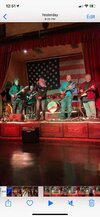
We do have some monitors and the PA is setup by the bandleader and he's pretty good with feedback control...although I am not quite sure exactly what he's doing...

received_131587648515032.jpeg
 
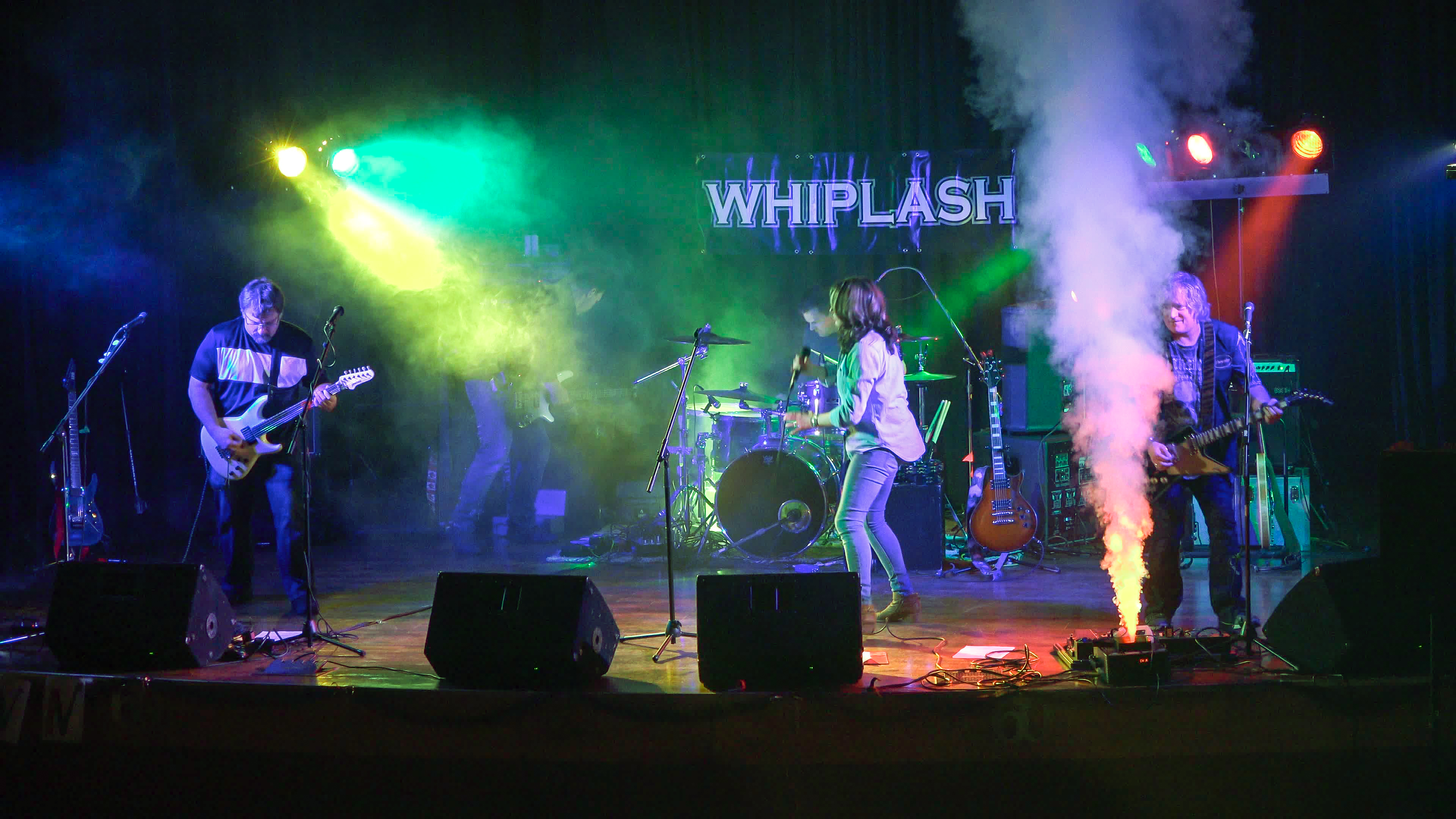
The 2 guys stage left share a monitor often. The singer gets 2. I have one as well. We also each get our own mix so we can have whatever we like in our own monitors.
I kinda cheat. We have EQs to ring out trouble frequencies but we also use feedback destroyers. Just start turnjng up wedge one at a time until feedback starts. The unit finds which frequency is feeding back and cuts it automatically. Turn it up more till tye next one kicks in amd so on till you have like 12 or 15 frequencies rung out. Combjne with an EQ and man the monitors kill, no feedback anywhere.


jA4ETVZ.jpg
 
The 2 guys stage left share a monitor often. The singer gets 2. I have one as well. We also each get our own mix so we can have whatever we like in our own monitors.
I kinda cheat. We have EQs to ring out trouble frequencies but we also use feedback destroyers. Just start turnjng up wedge one at a time until feedback starts. The unit finds which frequency is feeding back and cuts it automatically. Turn it up more till tye next one kicks in amd so on till you have like 12 or 15 frequencies rung out. Combjne with an EQ and man the monitors kill, no feedback anywhere.


jA4ETVZ.jpg

Nice setup!!!!
 
Back
Top