
You are using an out of date browser. It may not display this or other websites correctly.
You should upgrade or use an alternative browser.
You should upgrade or use an alternative browser.
Cleaning frets
- Thread starter Session 5
- Start date

OP

Session 5
Ambassador of Strings & Wings

oh.............................comeon........................
if Im not changing strings I am DAMN SURE not cleaning the frets--- didnt you hear the GRUNGE is where the MOJO hides
EDIT: you asked for opinions .........................
That's why you here grunge , the frets are dirty....

RVA
Ambassador
For serious polishing - note the many grit levels
 www.stewmac.com
for shining
www.amazon.com/gp/product/B0009H519Y/ref=ppx_yo_dt_b_search_asin_title?ie=UTF8&psc=1
and
www.amazon.com/gp/product/B000CNBI1A/ref=ppx_yo_dt_b_search_asin_title?ie=UTF8&psc=1
Fret Erasers - StewMac
Shop Fret Erasers at StewMac. Your #1 source for luthier tools and supplies, guitar parts, and instrument hardware. StewMAX FREE Shipping!
for shining
www.amazon.com/gp/product/B0009H519Y/ref=ppx_yo_dt_b_search_asin_title?ie=UTF8&psc=1
and
www.amazon.com/gp/product/B000CNBI1A/ref=ppx_yo_dt_b_search_asin_title?ie=UTF8&psc=1

Clockworkmike
Ambassador of STACKS in WV SHACKS

Good topic! I use this Music Nomad system, pretty cheap and works like a charm every time i do a restringing. I also use their F-one oil on the fretboard.
If a fret has light indentions, i take super fine steel wool and rub them out gently to keep from having to refret later
I use Eterna Shine Player's Kit 2 Part polishing on the body finish. Takes light and moderate scratches out completely
If a fret has light indentions, i take super fine steel wool and rub them out gently to keep from having to refret later
I use Eterna Shine Player's Kit 2 Part polishing on the body finish. Takes light and moderate scratches out completely

Amp Mad Scientist
Ambassador of Heresy
What are some of you using to clean your frets. There are some different ideas out there. Would like to hear your opinions. This is what I am checking into..
I use 0000 steel wool, which will also clean the fingerboard wood (depends on the fingerboard)
I learned this from a Luthier Joseph Wallow.
But now days, Scotch Brite pads will work the same as Steel Wool to polish metal just about.
No, you won't use steel wool on a varnished fingerboard obviously.
You can mask off the fingerboard when polishing the frets if you have a maple / varnished fingerboard.
But on rosewood or ebony steel wool works just dandy.
I could mask off the pickups with tape when I polish the frets....I just vacuum up the dust constantly while I do it.
People use finger-ease (mineral oil) on the fretboard. Mineral oil can be non toxic / food grade.
People cry about steel wool dust sticking to the PU magnets, but I really don't have that problem, just do it carefully.
Or use Scotch Brite pads instead to polish metal.
----------------------------------------------------------------------------------------------------------
SCOTCHBRITE GRIT CHART (courtesy of Charlest) back to top
3M Scotch Brite Nylon Pads:
7445 - White pad, called Light Duty Cleansing - (1000) 1200-1500 grit
7448 - Light Grey, called Ultra Fine Hand - (600-800) 800 grit.
6448 - Green (?), called Light Duty Hand Pad - (600) 600 grit
7447 - Maroon pad, called General Purpose Hand - (320-400) 320 grit
6444 - Brown pad, called Extra Duty Hand - (280-320) 240 grit
7446 - Dark Grey pad, called Blending Pad (180-220) 150 grit
7440 - Tan pad, called Heavy Duty Hand Pad - (120-150) 60(?)
Green Scotch Brite is available EVERYWHERE. It's 600 grit.
Blue Scotch-Brite is considered to be about 1000 grit.
(The value inside the parentheses is directly from 3M.)
3M Chart
Less Aggressive --------> More Aggressive
7445 7448 6448 7447 6444 7446 7440
Finer Finish --------> Coarser Finish
------------------------------------------------------------------------------------------------------------
Well we always used a rubber eraser to clean oxide off metal.
We learned this from slot car tracks.
But an eraser can only go so far, depending on how oxidized the metal is.

marshalltsl
Well-Known Member

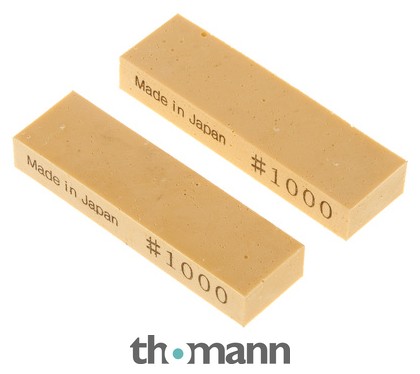
I use fret polishing rubber.
 m.thomann.de
Göldo Fret Polishing Rubber
Herramienta de pulido de trastes Pack de 2 unidades, Rápido y fácil, La goma se puede cortar a tamaño individual para cualquier propósito, Se adapta perfectamente al contorno de los trastes y mantiene al mínimo los daños del diapasón, Ideal para...



jtcnj
Ambassador of the Crossroad
same here but only use worn 320 then 400.I polish them when I put new ones in or level the existing ones, otherwise I just play the guitars.
Up to 2000 grit wet/dry and then Autosol polish.
Geddes last refret
View attachment 53550
When I clean fretboard I wipe on mineral oil and scrub board and frets with toothbrush a little and wipe clean.
They dont get grungy.

Beagle
Ambassador of Slippin' and a Slidin'

same here but only use worn 320 then 400.
When I clean fretboard I wipe on mineral oil and scrub board and frets with toothbrush a little and wipe clean.
They dont get grungy.
I never use any oil or wire wool near my guitars. I use 320 and 400 to level the frets, it far too coarse for polishing them. My fretboards never get dirty.
OP
Session 5
Ambassador of Strings & Wings
All good stuff here. But I have to stop scrolling thru the list of threads first thing in the morning before my eyes wake up. Thought I saw “cleaning farts.”
How do you do that..

A very soft brush.How do you do that..

flatrockmobile
Well-Known Member
Here's a method I've been using lately.
Take a piece of 4/0 steel wool and roll it up until it's about as big in diameter as your index finger.
Wrap it tightly with 2" masking tape leaving a very small amount of wool protruding from the end.
Now you have a tool a little larger than a pencil and 2" long to polish the frets with and very little to no shedding of steel wool fibers.
Take a piece of 4/0 steel wool and roll it up until it's about as big in diameter as your index finger.
Wrap it tightly with 2" masking tape leaving a very small amount of wool protruding from the end.
Now you have a tool a little larger than a pencil and 2" long to polish the frets with and very little to no shedding of steel wool fibers.

Ramo
AmTHRASHador of Chugz

i got question
i changed strings today, which i meant to do loooooong ago but i was lazy as tuning Floyed guitar its not easy task , i busted a string so i had reason to change... anyways when i was cleaning fret board, i notice some inlays are bit lose, how can i fix them, and is it something i can do??
thanks
i changed strings today, which i meant to do loooooong ago but i was lazy as tuning Floyed guitar its not easy task , i busted a string so i had reason to change... anyways when i was cleaning fret board, i notice some inlays are bit lose, how can i fix them, and is it something i can do??
thanks
Ramo
AmTHRASHador of Chugz
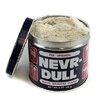
have you used it?One can of this will last a lifetime, and it's nonabrasive.View attachment 53796

Ramo, anyone can do anything, with the right mindset & equipment.i got question
i changed strings today, which i meant to do loooooong ago but i was lazy as tuning Floyed guitar its not easy task , i busted a string so i had reason to change... anyways when i was cleaning fret board, i notice some inlays are bit lose, how can i fix them, and is it something i can do??
thanks
If the inlay is completely loose, I'd remove it, scrape the bottom of the inlay & the cavity is sits in, and reset it with superglue, or even clear epoxy if there are gaps to be filled.
If it just seems like it's slightly loose, you may be able to gently lift the loose edge & work some slow set superglue into the void and then hit it with an activator, like "Glue Boost.
Fine Wood Glues, Fills and Matched Repairs | GluBoost
Unlock the potential of your woodworking projects with GluBoost's leading Fine Wood Glues, Fills & Matched Repairs. Click to explore our Glues, Tints, Fills and our GluDry Accelerator. Available Nationwide.
 gluboost.com
Then after all is set up, if the inlay is smooth & you can feel nothing, your done.
If the inlay protrudes, even slightly, it'll need to be scraped flush with the board using a single edge razor blade.

Ebidis
Ambassador of Cross Legged Tele-Communication
Yes, I use it all the time. Works great.have you used it?