T-Top Questions:

I'm not an educated guy. What I know, I learned the hard way. I bought gear I didn't need because the marketing is geared that way. I became frustrated and discouraged. I was spending more time either researching the newest gear or trying to figure out what was wrong with the gear that I bought, when it didn't give me what I was looking for. After a while, I just decided to stop and look back. When I did, the answer became clear to me.

I played the same guitar for years, had only one amp and two pedals. I made a living from that gear and my sound wasn't bad either, but I began to drink the Kool-Aid and listen to the marketing. Soon, I had purchased 5 or 6 amps, 13 guitars (lifetime total - not all at once) and a slew of pedals and NONE of it was pleasing to me.

Now, I'm just trying to go back to a very basic setup and the funny thing is, I have a better tone now than I ever did and I only own ONE AMP now and TWO primary guitars.

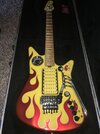
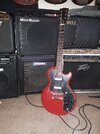
The Les Paul and the Schecter? What happened to the Jackson?
 
The Les Paul and the Schecter? What happened to the Jackson?

The Schecter and Jackson are my main stage guitars now because they stay in tune 100% of the time.

I still use a Les Paul for some recordings, but I've stopped using them outdoors, and right now, every performance is outdoors.
 
@chilipeppermaniac - the Chibster travels with us as the primary back-up guitar for the other two guitarists. Mike only owns ONE guitar- the 1976 Gibson Les Paul Deluxe. My 1999 Marshall MG50CRD Solid State also travels as the band's designated back up amp.

I have a full amp/guitar repair setup that travels with us too, in its own case. I've got spare tubes, tools and just about everything to keep all the gear up and running.
 
Robert, I thought your LP copy was an improvement in those areas. I guess I was mistaken.

Yes and no. The two Les Paul copies are great sounding and playing guitars, but the unstable tuning has caused me to shelve them.

Back in September 2019, we had the direct sunlight performance in Crestline, California. My 2016 Gibson Les Paul 50's Tribute just absolutely would not stay in tune. The Chibster was better, but still required tuning between songs. My black Les Paul Custom was better yet, bit still fought it the entire time.

Finally, I got pissed off and grabbed my 1987 Squire, which had only been brought as an emergency backup for the group.

It had been sitting in the sun and it was almost uncomfortably hot to the touch...but it was in perfect tune and I finished the last two hours playing it.
 
Good to know on the Manlius pickups priced right. As far as aftermarket pickups go been happy with JM Rolph Jim nailed my real PAF pickups.
My guitar amps are modified if I want high gain V-1 135K 2K2 both sections V-2 OD channel 150K 2K2 220K 3K3 with a trimmer set at 24K with a 220K tail resistor.

View attachment 50214
they could save a CRAP TON (and charge less) if they didnt waste like 6 ft of wire twisted down to 6" ......silly NON Ferengis
 
Oh Robert gets some Original BL velvet bricks from the 80s -- the GIBSON FAITHFUL totally HATE them -- so can be had affordably--
SOUND AMAZING ...............
ssshhhhhhhhhhhh

HELL I paid LESS for this WHOLE DAMN GUITAR --with them installed stock---- than some pay for a set of pickups ;)
Sonex 180 and mesa.jpg
 
Oh Robert gets some Original BL velvet bricks from the 80s -- the GIBSON FAITHFUL totally HATE them -- so can be had affordably--
SOUND AMAZING ...............
ssshhhhhhhhhhhh

HELL I paid LESS for this WHOLE DAMN GUITAR --with them installed stock---- than some pay for a set of pickups ;)
View attachment 50279


1602724388725.png


There were three models, the 180 Deluxe, 180 Standard and the 180 Custom, priced (in 1980) at $299, $375 and $449 respectively. The next cheapest Gibson guitar available in that year was the 335-S standard (solid body version of the famous Gibson ES-335) which was $499. By 1981, the Standard had been dropped in favour of the Sonex Artist, which was a lot more expensive at $749. By 1882 the Custom had been dropped also. By 1984 only the Deluxe model was left, now at $419.


Gibson-Sonex™-180 is a totally new kind of guitar. The secret is in the exclusive, new Multi-phonic™ body design, featuring an incredibly durable and acoustical material colled Resonwood™. Resonwood has the weight of mahogany and the density of maple. That means you get brilliant harmonic reproduction and superior sustain never before available on on electric guitar at this low price.

multi-phonic1.gif

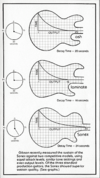
The Sonex Multi-phonic™ body is composed of Resonwood surrounding an inner tone wood core. The tone wood core not only acts as the anchor point for the neck, it also adds acoustic resonance and exceptional body resilience. The Sonex body is so resilient, that it's structural properties survived extreme testing in temperatures ranging from 40° below to 180°F.


Experience a Sonex instrument. It's unlike any guitar you've ever played.


Famous Gibson styling. Famous Gibson quality.


There are three guitar models to choose from in the Sonex Series, all with the popular Gibson single cutaway design. The Sonex-180 Deluxe features a rosewood, dot inlayed fingerboard and adjustable exposed coil high output Humbuckers™. Other Sonex-180 features include a three-position pick-up selector switch, Tune-0-Matic Bridge', stop bar tailpiece and volume/tone control speed knobs.


In addition to all the features offered on the Deluxe guitar, the Sonex Standard and Custom models feature famous Gibson 'Dirty Fingers' pickups, plus a coil top switch for even more versatility. And to really enhance your payability, the Custom has a three-piece maple neck and ebony fingerboard. The Sonex-180 Custom is also available in a striking white finish, as well as ebony.


Unlike comparably priced guitars, the Gibson Sonex series is made in the U.S., and is backed by a one year, limited warranty on all parts and labor. What's more, Sonex is backed by the strongest service center network in the industry.
 
Back
Top