ECC82 in V3 Position of DSL40C???

A long time ago... I read that 12AX7's with long plates like the Sovtek 12AXTLPS don't fare well on combos because of the effects of the nearby speaker cranking away. Is this a myth, or not? Anybody?
Spose they are more subject to microphonics. Depends how loud amd how much amp moves! I have a variety of long plates in a variety of combos. Had the odd one go micro but it could just be from the vintage of the tube.
 
Thank you, Ivan...i suppose that i am perhaps "hung up" on the higher transconductance of the 12AT7 in comparison to the 12AX7.

I want you to know (and this includes the rest of you that have commented) that i sincerely appreciate the education in this regard.

Let me say that the ECC823 is pure genious in the V1 position of these DSL40C amps. I believe it was @syscokid, @Goldmember, and @Hackmaster that suggested this "hybrid" tube to me.

These amps have way too much gain in stock form, so much so that the upper 2/3rds of the gain knob is largely unusable.

The JJ5751 in V2 and V3 gives the gain control a more linear functionality. The gain is still quite pronounced, but not as "peaky" or extreme.

Conversely, a 5751 or other lower gain tube in V4 has a similar effect of reducing the "harshness" of the gain structure and giving the amp a smoother, less "brittle" tone.

I am eager to try a 12AT7 in V4, but have zero in stock, so i have to wait for replacements to arrive from Amplified Parts.

I read an article by Myles Rose where he liked to put a Sovtek 12AX7LPS in V4 despite lower gain tubes in the first 3 slots. This seemed very odd to me to have the highest gain tube in the very last position.

Any idea why this would be a suggestion???

Also, Is there any risk of damaging the DSL40C by long term use (very near 3/4 knob volume with volume controlled by a FV30L in the FX loop) with a 12AT7 in V4???

I have a couple of experiments that i would like to try in V4...

It's always been that way on just about every high gain guitar amp.
Mostly, because they copy each others design...
High gain amps are all just copies of the same design (Randall Smith did not invent it either).
It's all a copy of Fender Bassman mostly.
So you always have that "way too much gain" and you always have that "UN-usable" range of the volume control....on every amp ever made.

Of course I have to redesign it and make it more usable, eliminate the bugs in it.

No - changing the tube does not damage anything.
 
Spose they are more subject to microphonics. Depends how loud amd how much amp moves! I have a variety of long plates in a variety of combos. Had the odd one go micro but it could just be from the vintage of the tube.
The microphonic is just a side effect of the design and layout.

(since everybody copies the same design no wonder) It's dumb and dumber.
Properly designed, it wouldn't have the microphonic problems.
 
The microphonic is just a side effect of the design and layout.

(since everybody copies the same design no wonder) It's dumb and dumber.
Properly designed, it wouldn't have the microphonic problems.

I been really fortunate in that my amp has to lay down on its back to fit in my car's trunk, and all the driving back and forth hasn't wiped out a tube just yet...
 
Ok, so today's regiment is:

Working on a couple of recording and voice over projects today until 2pm.

Then drive 85 miles to rehearsal in Forest Falls.

Rehearsal is 5pm to midnight.

Morning comes earlier each day it seems...
 
A long time ago... I read that 12AX7's with long plates like the Sovtek 12AXTLPS don't fare well on combos because of the effects of the nearby speaker cranking away. Is this a myth, or not? Anybody?
Spose they are more subject to microphonics. Depends how loud amd how much amp moves! I have a variety of long plates in a variety of combos. Had the odd one go micro but it cod just be from the vintage of the tube.
The microphonic is just a side effect of the design and layout.

(since everybody copies the same design no wonder) It's dumb and dumber.
Properly designed, it wouldn't have the microphonic problems.
Well I have a bunch of other long plates that aren't microphonic. Hasn't really been a big issue for me. Example the Raytheon long black. I have some other old RCA longs that haven't had issues, at least not yet and they are from the 60s. SO they have had a good run so far.
 
Last edited:
I didn't get home until after midnight, but I wanted to share this experience with you DSL40C guys.

Not long ago, with the help of TTR Tone Fiends, I discovered the ECC823 tube for the V1 position. This tube reduces gain on the red or "lead 1 & 2" channels, without altering the "green" channel.

This is my go-to V1 tube now for the DSL40C across the board.

I've tried a lot of tubes in these amps and many changes are quite subtle. However, I stumbled onto something that really turned out unexpectedly nice yesterday and wanted to share it.

Now keep in mind that I play with the volume knob between 7-8 and mitigate volume with a Boss FV30L in the FX loop. This is a key element of my sound and setup that makes it a very important point to note.

As many of you know, one of the problems with the DSL40C is a very harsh and grainy gain structure and gain is largely unusable above about 12am on the knob.

Initially, I tried a custom 50 Watt, WGS Reaper 55Hz Speaker in an effort to correct this tendency, but it didn't help. I thought the lack of articulation was the speaker being overwhelmed by the gain and high bass/resonance settings, but the real problem was in the tone stack.

Next, I moved onto a number of tube changes that produced some interesting and positive results, but one tube stood out among all the others.

The JJ5751 in V2 and V3 made the gain much less grainy and "fizzy" and much more natural sounding. It also gave much more adjustability of the gain control and produced less gain per degree of gain knob rotation.

My next experiment was with the V4 or Phase Inverter tube. Again, many tubes were tried here, including 12AU7, 12AX7LPS, 12AT7, 5751 and even some vintage Ken-Rads. The results were predictable, with the lower gain tubes reducing overall amp volume levels and smoothing the gain structure somewhat.

Yesterday, I made a discovery. I installed a Genelex B759 Gold Lion (high gain 12AX7) in V4, and the amp took on a completely different character.

The amp volume was immediately louder than it was before and while the gain was still very organic, it responded to pick attack with greater sensitivity than with any other tube combination to date.

I was immediately able to turn my gain knob up higher than I had previously and this changed seemed to make the gain control much more linear.

However, the biggest change that I noticed was the amp's natural feedback resistance, despite very high initial settings and standing less than 3 feet from the amp.

To further this experiment, I installed a JJ ECC83S In V4 with very similar behavior.

Currently, I haven't found anything that can beat this ECC823/5751/5751/B759 tube rollout.

All the best...
 
I didn't get home until after midnight, but I wanted to share this experience with you DSL40C guys.

Not long ago, with the help of TTR Tone Fiends, I discovered the ECC823 tube for the V1 position. This tube reduces gain on the red or "lead 1 & 2" channels, without altering the "green" channel.

This is my go-to V1 tube now for the DSL40C across the board.

I've tried a lot of tubes in these amps and many changes are quite subtle. However, I stumbled onto something that really turned out unexpectedly nice yesterday and wanted to share it.

Now keep in mind that I play with the volume knob between 7-8 and mitigate volume with a Boss FV30L in the FX loop. This is a key element of my sound and setup that makes it a very important point to note.

As many of you know, one of the problems with the DSL40C is a very harsh and grainy gain structure and gain is largely unusable above about 12am on the knob.

Initially, I tried a custom 50 Watt, WGS Reaper 55Hz Speaker in an effort to correct this tendency, but it didn't help. I thought the lack of articulation was the speaker being overwhelmed by the gain and high bass/resonance settings, but the real problem was in the tone stack.

Next, I moved onto a number of tube changes that produced some interesting and positive results, but one tube stood out among all the others.

The JJ5751 in V2 and V3 made the gain much less grainy and "fizzy" and much more natural sounding. It also gave much more adjustability of the gain control and produced less gain per degree of gain knob rotation.

My next experiment was with the V4 or Phase Inverter tube. Again, many tubes were tried here, including 12AU7, 12AX7LPS, 12AT7, 5751 and even some vintage Ken-Rads. The results were predictable, with the lower gain tubes reducing overall amp volume levels and smoothing the gain structure somewhat.

Yesterday, I made a discovery. I installed a Genelex B759 Gold Lion (high gain 12AX7) in V4, and the amp took on a completely different character.

The amp volume was immediately louder than it was before and while the gain was still very organic, it responded to pick attack with greater sensitivity than with any other tube combination to date.

I was immediately able to turn my gain knob up higher than I had previously and this changed seemed to make the gain control much more linear.

However, the biggest change that I noticed was the amp's natural feedback resistance, despite very high initial settings and standing less than 3 feet from the amp.

To further this experiment, I installed a JJ ECC83S In V4 with very similar behavior.

Currently, I haven't found anything that can beat this ECC823/5751/5751/B759 tube rollout.

All the best...
You might have found a tube that produces just the right imbalance (... or balance) at the phase inverter circuit. @ivan H has discussed this type of performance feature before. I do know that some Dumble amps are built with a phase inverter trim pot to purposely inject a slight imbalance between the plate voltages of the PI tube. Usually the benefits of this imbalance isn't experienced until the amp is running hard... like in your situation.

It would also be interesting to document a voltage chart on your current DSL, and see the results especially at the PI circuit. But this would also be dangerous, cuz you would be poking and probing on a live amp!
 
You might have found a tube that produces just the right imbalance (... or balance) at the phase inverter circuit. @ivan H has discussed this type of performance feature before. I do know that some Dumble amps are built with a phase inverter trim pot to purposely inject a slight imbalance between the plate voltages of the PI tube. Usually the benefits of this imbalance isn't experienced until the amp is running hard... like in your situation.

It would also be interesting to document a voltage chart on your current DSL, and see the results especially at the PI circuit. But this would also be dangerous, cuz you would be poking and probing on a live amp!

I'd be happy to take readings, but I would need to know what I am looking at...
 
I'd be happy to take readings, but I would need to know what I am looking at...
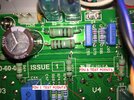
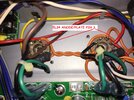
With the amp fully on and warmed up, the plate or anode voltages of all the tubes would be a good start. With all the preamp and PI tubes, that would be pins 1 & 6. Sometimes its easier to find the corresponding plate resistor to those pins and probe at that point. Not sure what the chassis layout of your DSL looks like. For the EL34's, the plate or anode would be pin 3.

346BB447-1CFC-4F89-AB8B-D05DC0BED3F9.jpeg

183B75C8-95D9-4DBC-817B-A93F3B5F34C8.jpeg
 
Also, Is there any risk of damaging the DSL40C by long term use (very near 3/4 knob volume with volume controlled by a FV30L in the FX loop) with a 12AT7 in V4???
Why should that be the case? the 12AT7 has the same heater as the 12AX7, and, well, a smaller internal resistivity. But that will hava hardly some effect on the total current through the tube, because a) the anode resistor is large - designed for the 12AX7 - and b) the cathode resistor is large comapred to what a 12AT7 wants to see to draw lots of current: a 12AT7 in a circuitry for te 12AX7 will be biased pretty cold and hence not draw much current (actually it is comparable to the 12AX7) . So there ist nothing thet can harm the amp.
 
Back
Top