
You are using an out of date browser. It may not display this or other websites correctly.
You should upgrade or use an alternative browser.
You should upgrade or use an alternative browser.
Why must we "have"?
- Thread starter RVA
- Start date

eSGEe
Ferengi Ambassador of Trade

I have some suggestions Ray 
TBTH -- I cant play for poop any more -- I used to be "decent" but years of abuse my hands and fingers are semi useless stumps on a good day.
Love Rock N Roll and all types of music --
this keeps me "connected" to it
I dont fly remote control planes
Cant race dirt bikes anymore
I rarely go scuba diving anymore
dont have time for Golf ---hunting--fishing or "most the normal" hobbies due to the riggers of running a freakin NEGATIVE profit animal shelter
I enjoy getting things for cheap and flipping them --- or holding while they appreciate in value (To be honest my guitar "investments" have done WAY FREAKIN better than my 401k has this year!) -- buy low sell high....... have fun -- learn a LOT about a LOT of different models/brands etc.
ITs also a hobby the misses APPROVES of ---because I am HERE at home enjoying my hobby -- (except when I run to meet a buyer or make a buy) -- not gone for a whole weekend hunting--
or for the day playing golf --etc -- etc.
Also messing about with gear -- relaxes me, and keeps me from "snapping" a going on a rabid killing spree ..........
So all in all its a GOOD thing
TBTH -- I cant play for poop any more -- I used to be "decent" but years of abuse my hands and fingers are semi useless stumps on a good day.
Love Rock N Roll and all types of music --
this keeps me "connected" to it
I dont fly remote control planes
Cant race dirt bikes anymore
I rarely go scuba diving anymore
dont have time for Golf ---hunting--fishing or "most the normal" hobbies due to the riggers of running a freakin NEGATIVE profit animal shelter
I enjoy getting things for cheap and flipping them --- or holding while they appreciate in value (To be honest my guitar "investments" have done WAY FREAKIN better than my 401k has this year!) -- buy low sell high....... have fun -- learn a LOT about a LOT of different models/brands etc.
ITs also a hobby the misses APPROVES of ---because I am HERE at home enjoying my hobby -- (except when I run to meet a buyer or make a buy) -- not gone for a whole weekend hunting--
or for the day playing golf --etc -- etc.
Also messing about with gear -- relaxes me, and keeps me from "snapping" a going on a rabid killing spree ..........
So all in all its a GOOD thing

Jethro Rocker
Ambassador of Live & Loud Action

I want to get an Alpine White LP. Jist cause they look so nice and I don't have one.
It doesn't fill anything more than any of my other LPs.
I can afford it, it will make me happy to have one and I will trade one I don't connect as well with.
It doesn't fill anything more than any of my other LPs.
I can afford it, it will make me happy to have one and I will trade one I don't connect as well with.

Ramo
AmTHRASHador of Chugz


Im infected with wanting fancy guitars and amps , i know im not the only one with this infection and that makes me happy.When I see a beautiful guitar, I WANT it. Unlike many players, who see them as tools, I want to posses the aesthetic beauty even though I have that "tool" covered. This can also be true of any subject of art. Judging by the memes and t-shirts about guitarists and their guitars, I am not alone in this feeling.
I have trouble reconciling myself with this, and it is worthy of consideration because it never ends.
I know "how many is enough" has often been discussed, but I would rather discuss why there is never enough for those of us who suffer from this affliction.
So, please take a seat, or lay down on the couch if you like, and lay it bare so we may discover the mystery of G.A.S!


Amp Mad Scientist
Ambassador of Heresy
When I see a beautiful guitar, I WANT it. Unlike many players, who see them as tools, I want to posses the aesthetic beauty even though I have that "tool" covered. This can also be true of any subject of art. Judging by the memes and t-shirts about guitarists and their guitars, I am not alone in this feeling.
I have trouble reconciling myself with this, and it is worthy of consideration because it never ends.
I know "how many is enough" has often been discussed, but I would rather discuss why there is never enough for those of us who suffer from this affliction.
So, please take a seat, or lay down on the couch if you like, and lay it bare so we may discover the mystery of G.A.S!
"why-must-we-have?"
Although many people perceive Buddhism as a religion, it's not.
Buddhism is a philosophy.
 See? I just showed you something new today.
Buddha is not a God, the son of God, or a deity. He is a teacher.
And with that in mind, I will try to explain this to you.
Taṇhā, states Peter Harvey, is the key origin of dukkha in Buddhism.[5] It reflects a mental state of craving. Greater the craving, more is the frustration because the world is always changing and innately unsatisfactory; craving also brings about pain through conflict and quarrels between individuals, which are all a state of Dukkha.[5] It is such taṇhā that leads to rebirth and endless Samsara, stated Buddha as the second reality, and it is marked by three types of craving: sensory, being or non-existence.[9] In Buddhist philosophy, there are right view and wrong view. The wrong views, it ultimately traces to Taṇhā, but it also asserts that "ordinary right view" such as giving and donations to monks, is also a form of clinging.[10] The end of Taṇhā occurs when the person has accepted the "transcendent right view" through the insight into impermanence and non-self.[10]
The taṇhā, states Walpola Rahula, or "thirst, desire, greed, craving" is what manifests as suffering and rebirths.[7] However, adds Rahula, it is not the first cause nor the only cause of dukkha or samsara, because the origination of everything is relative and dependent on something else.[7] The Pali canons of Buddhism assert other defilements and impurities (kilesā, sāsavā dhammā), in addition to taṇhā, as the cause of Dukkha. Taṇhā nevertheless, is always listed first, and considered the principal, all-pervading and "the most palpable and immediate cause" of dukkha, states Rahula.[7]
The third noble truth teaches that the cessation of taṇhā is possible. The Dhammacakkappavattana Sutta states:[17]
Bhikkhus, there is a noble truth about the cessation of suffering. It is the complete fading away and cessation of this craving [taṇhā]; its abandonment and relinquishment; getting free from and being independent of it.
Cessation of taṇhā can be obtained by following the Noble Eightfold Path. In Theravada Buddhism, the cessation results from the gaining of true insight into impermanence and non-self.[18][19][20] The 'insight meditation' practice of Buddhism, states Kevin Trainor, focuses on gaining "right mindfulness" which entails understanding three marks of existence - dukkha (suffering), anicca (impermanence) and anatta (non-self).[21] The understanding of the reality of non-self, adds Trainor, promotes non-attachment because "if there is no soul, then there is no locus for clinging".[21] Once one comprehends and accepts the non-self doctrine, there are no more desires, i.e. taṇhā ceases.[21]
Taṇhā is an important Buddhist concept, and found in its early texts. It literally means "thirst, longing, greed", either physical or mental.
Samsara is the cycle of death and rebirth to which life in the material world is bound.
Duḥkha is an important concept in Buddhism , commonly translated as "suffering", "unhappiness", "pain", "un-satisfactoriness" or "stress". It refers to the fundamental un-satisfactoriness and painfulness of mundane life.
Bhikkhu literally means "beggar" or "one who lives by alms".
Noble Eightfold Path is described in the fourth Noble Truth as "the path to the end of suffering". The eight steps are: Right View, Right Intention, Right Speech, Right Action, Right Livelihood, Right Effort, Right Mindfulness and Right Concentration.
Dhammacakkappavattana Sutta ( The Setting in Motion of the Wheel of the Dharma Sutta or Promulgation of the Law Sutta) is a Buddhist text that is considered by Buddhists to be a record of the first sermon given by Gautama Buddha.
Last edited:

I too suffered from this GAS of falling in love with a guitar that I did not need. I was cured from this GAS by having no room to keep them and not enough income to sustain my purchasing addiction. @Sp8ctre was hosting most of my gear collection for over 1 year before I was able to make room for them and he is still holding 2 of my amps. I'm not sure if he is still interested in purchasing them, or if he is just being gracious in storing them for me until I make room in storage for them. I don't think that you will be able to use my same cure Ray. So if you can afford your addiction and have someplace to keep them, keep on keeping on! Just remember to keep posting pics because well, you know how we are with gear porn.When I see a beautiful guitar, I WANT it. Unlike many players, who see them as tools, I want to posses the aesthetic beauty even though I have that "tool" covered. This can also be true of any subject of art. Judging by the memes and t-shirts about guitarists and their guitars, I am not alone in this feeling.
I have trouble reconciling myself with this, and it is worthy of consideration because it never ends.
I know "how many is enough" has often been discussed, but I would rather discuss why there is never enough for those of us who suffer from this affliction.
So, please take a seat, or lay down on the couch if you like, and lay it bare so we may discover the mystery of G.A.S!
Recently my attention has been directed at my car. Any additions to it stay in the car. I can easily move it from location to location. I receive compliments almost on a daily basis and love the tone it produces. It's actually in the shop now getting pampered with a windshield replacement due to a rock that was flung from a truck tire causing a nasty chip that started growing. This addiction can be just as strong, cost just as much (or more), give just as much satisfaction and not take up any more space. You can tune a car, but you can't drive a guitar to work.
eSGEe
Ferengi Ambassador of Trade
Sounds good so when are you sending me all your gear so you can reach Tanha?????Taṇhā, states Peter Harvey, is the key origin of dukkha in Buddhism.[5] It reflects a mental state of craving. Greater the craving, more is the frustration because the world is always changing and innately unsatisfactory; craving also brings about pain through conflict and quarrels between individuals, which are all a state of Dukkha.[5] It is such taṇhā that leads to rebirth and endless Samsara, stated Buddha as the second reality, and it is marked by three types of craving: sensory, being or non-existence.[9] In Buddhist philosophy, there are right view and wrong view. The wrong views, it ultimately traces to Taṇhā, but it also asserts that "ordinary right view" such as giving and donations to monks, is also a form of clinging.[10] The end of Taṇhā occurs when the person has accepted the "transcendent right view" through the insight into impermanence and non-self.[10]

Sp8ctre
Ambassador of Steel
Although many people perceive Buddhism as a religion, it's not.
Buddhism is a philosophy.
Buddha is not a God, the son of God, or a deity. He is a teacher.
And with that in mind, I will try to explain this to you.
Taṇhā, states Peter Harvey, is the key origin of dukkha in Buddhism.[5] It reflects a mental state of craving. Greater the craving, more is the frustration because the world is always changing and innately unsatisfactory; craving also brings about pain through conflict and quarrels between individuals, which are all a state of Dukkha.[5] It is such taṇhā that leads to rebirth and endless Samsara, stated Buddha as the second reality, and it is marked by three types of craving: sensory, being or non-existence.[9] In Buddhist philosophy, there are right view and wrong view. The wrong views, it ultimately traces to Taṇhā, but it also asserts that "ordinary right view" such as giving and donations to monks, is also a form of clinging.[10] The end of Taṇhā occurs when the person has accepted the "transcendent right view" through the insight into impermanence and non-self.[10]
I'll just stick with all my material possessions thanks...
Amp Mad Scientist
Ambassador of Heresy
Sounds good so when are you sending me all your gear so you can reach Tanha?????
I was getting to that part....

Amp Mad Scientist
Ambassador of Heresy
View attachment 47248
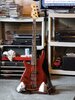
It's an interesting concept all this lust. I really like my bass. I needed it to help with my creations. I don't have any desire for more basses. Guitars on the other hand.....
According to Rupert Gethin, taṇhā is related to aversion and ignorance. Craving leads to aversion, anger, cruelty and violence, states Gethin, which are unpleasant states and cause suffering to one who craves. Craving is based on misjudgement, states Gethin, that the world is permanent, unchanging, stable, and reliable.[28]
For example, in the first discourse of the Buddha, the Buddha identified taṇhā as the principal cause of suffering. However, his third discourse, the Fire Sermon, and other suttas, the Buddha identifies the causes of suffering as the "fires" of raga, dosa (dvesha), and moha; in the Fire Sermon, the Buddha states that nirvana is obtained by extinguishing these fires.[29]

Cadorman
Ambassador of the Catocaster
Well, as long as I buy quality tone wood guitars they should come in handy as firewood when the apocalypse comes.According to Rupert Gethin, taṇhā is related to aversion and ignorance. Craving leads to aversion, anger, cruelty and violence, states Gethin, which are unpleasant states and cause suffering to one who craves. Craving is based on misjudgement, states Gethin, that the world is permanent, unchanging, stable, and reliable.[28]
For example, in the first discourse of the Buddha, the Buddha identified taṇhā as the principal cause of suffering. However, his third discourse, the Fire Sermon, and other suttas, the Buddha identifies the causes of suffering as the "fires" of raga, dosa (dvesha), and moha; in the Fire Sermon, the Buddha states that nirvana is obtained by extinguishing these fires.[29]
OP

RVA
Ambassador
You're know someone will find one for you now. It just made my radar!Only thing on my wish list right now is a Wine Red late '70's Les Paul Custom ('76 - '79 would be fine). If I find one in the right condition that plays and sounds right it will be almost impossible to walk away.
Amp Mad Scientist
Ambassador of Heresy
You're know someone will find one for you now. It just made my radar!
The Universe will bring you to it.
And if you are not brought there, it was never meant to be.