Twin Reverb Noise Issue Need Some Advice

Caps all look good and I don't want to just change them all out for the hell of it. I lost some of the good sound
in my Princeton Reverb just doing a "Replace Everything" approach. I'm going go bit by bit with this one.

First thing is to try yet another tube...
Yes yes... you gotta positively have to have good working tubes.

If that amp has not been electrified in a long time, there's a good chance the e-caps have started to dry out. Lift one end of the e-caps and check for proper capacitance specs. But more important are its ESR ( equivalent series resistance) specs. You wouldn't happen to have an ESR meter, do you?
 
Do you have a footswitch?

I haven’t looked at the schematic but you might need one/or a shorting plug to activate the trem.

edit. I see y’all beat me.

might want to use a new production tube there instead of old stock.

Just put in a new JJ 12AX7 and the tremolo works with it as well.

Yes yes... you gotta positively have to have good working tubes.

If that amp has not been electrified in a long time, there's a good chance the e-caps have started to dry out. Lift one end of the e-caps and check for proper capacitance specs. But more important are its ESR ( equivalent series resistance) specs. You wouldn't happen to have an ESR meter, do you?

I'm pretty sure my Fluke 289 will do that ESR function. It does everything else!
 
Just put in an old NOS RCA 12AX7 and all my issues are gone. I have a noise free amp with working Tremolo!

I'll tear into it at a later date. I want to play it a bit before my shoulder surgery puts me out for 6 weeks minimum...
Yeaha find out what the letter code inside the chassis is.
It's going to be 2 letters.
One is the mouth and one is the year.
That way you find the matching schematic.

And one thing to avoid always:
Don't blame problems on capacitors. 90% of the time when something is wrong, it's not caused by capacitors.

Avoid:
shotgun replacement of parts. Don't try to fix any problem by changing a whole bunch of parts, especially capacitors.

For some reason:
People blame all amp problems on capacitors.
They replace capacitors without knowing what the real issue is. And they spoil the tone of the amp too.

I'll tell you a secret:
When people replace a whole bunch of parts (like capacitors) it rarely fixes anything.
How do I know this?

I have been an authorized Fender amp tech for over 20 years. I am an authorized Fender tech "for life."
I am authorized to repair any Fender product, including Rhodes Pianos, and any guitar. For Life.

Second secret:
Capacitors make the amp sound different. Different capacitors always sound different.
Different filter caps sound different too.
Changing the capacitors changes the sound of the amp, and this is not a joke.

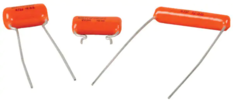
The best sounding caps for Fender are: Old style retro coupling caps.
1596367128777.png

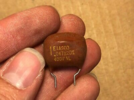
1596367507222.png The sweetest sounding coupling caps are Brown Drops. You can expect these to last 50-100 years.

The best filter caps are:
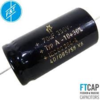
1596367187335.png It's F&T brother, German Hi Fi Caps. These are probably the best sounding filter caps you can buy.
 
Last edited:
I'm pretty sure my Fluke 289 will do that ESR function. It does everything else!
I was just researching the specs of your Fluke 289. It's definitely a magnificent and featured-loaded meter, but it doesn't appear that it's capable of ESR testing.

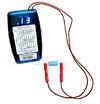
Personally, I have the Anatek Blue ESR meter. These type of meters can test for leaky e-caps while still in the circuit. It won't test for capacitance though, but your Fluke will.

Sounds like the amp's issue was just a worn-out preamp tube... is this correct?

But still, those big filtering e-caps might be 40 years old. If it were my amp and I plan on keeping it and using it frequently, then I would most likely replace the filter caps... even if the old caps all measure in spec. If the old caps are original, I definitely would keep those around too. Hell, if you have the time and a few bucks, do your own comparison on fresh filtering e-caps versus the old ones... :unsure:
 
Yeaha find out what the letter code inside the chassis is.
It's going to be 2 letters.
One is the mouth and one is the year.
That way you find the matching schematic.

And one thing to avoid always:
Don't blame problems on capacitors. 90% of the time when something is wrong, it's not caused by capacitors.

Avoid:
shotgun replacement of parts. Don't try to fix any problem by changing a whole bunch of parts, especially capacitors.

For some reason:
People blame all amp problems on capacitors.
They replace capacitors without knowing what the real issue is. And they spoil the tone of the amp too.

I'll tell you a secret:
When people replace a whole bunch of parts (like capacitors) it rarely fixes anything.
How do I know this?

I have been an authorized Fender amp tech for over 20 years. I am an authorized Fender tech "for life."
I am authorized to repair any Fender product, including Rhodes Pianos, and any guitar. For Life.

Second secret:
Capacitors make the amp sound different. Different capacitors always sound different.
Different filter caps sound different too.
Changing the capacitors changes the sound of the amp, and this is not a joke.

The best sounding caps for Fender are: Old style retro coupling caps.
View attachment 46844

View attachment 46846 The sweetest sounding coupling caps are Brown Drops. You can expect these to last 50-100 years.

The best filter caps are:
View attachment 46845 It's F&T brother, German Hi Fi Caps. These are probably the best sounding filter caps you can buy.

Very nice to know! I know who I'll be PM'ing when I need assistance!
 
I was just researching the specs of your Fluke 289. It's definitely a magnificent and featured-loaded meter, but it doesn't appear that it's capable of ESR testing.

Personally, I have the Anatek Blue ESR meter. These type of meters can test for leaky e-caps while still in the circuit. It won't test for capacitance though, but your Fluke will.

Sounds like the amp's issue was just a worn-out preamp tube... is this correct?

But still, those big filtering e-caps might be 40 years old. If it were my amp and I plan on keeping it and using it frequently, then I would most likely replace the filter caps... even if the old caps all measure in spec. If the old caps are original, I definitely would keep those around too. Hell, if you have the time and a few bucks, do your own comparison on fresh filtering e-caps versus the old ones... :unsure:

I'll be looking into one of those meters. But, for now the amp is working beautifully! The issue was just a bad V5 Tremolo tube.

It's running super quiet now and I'm glad because I don't have the time to tear into it right now. My shoulder surgery is on the
10th and my right arm will be out of commission for at least 6 weeks. I have to wear a sling for that long!
 
Every single amp i get. Off to my tech's. before even turn em on.1 fender guy since early 70's & a Marshall guy got 35+ as Authorized repair center. . They have kept the values of the good ones over the years & noted the mods. First we bring em all to bone stock. Then i learn them for a few weeks..then request where i want to go with it.

The amps come back with no noise at all & are such a joy. Very worth while investment to have the guru's trace the circuit from start to finish. I love my fenders & the dead quiet it so nice..

here's to amp tech's !!
 
Every single amp i get. Off to my tech's. before even turn em on.1 fender guy since early 70's & a Marshall guy got 35+ as Authorized repair center. . They have kept the values of the good ones over the years & noted the mods. First we bring em all to bone stock. Then i learn them for a few weeks..then request where i want to go with it.

The amps come back with no noise at all & are such a joy. Very worth while investment to have the guru's trace the circuit from start to finish. I love my fenders & the dead quiet it so nice..

here's to amp tech's !!

I am a life long Electronics Tech, although I major in radio repair it's very similar to amplifier repair. I came into electronics in 1979
and we spent six weeks learning tube theory. I forgot a lot, but it will come back to me. I sent my Princeton Reverb out to a great tech.
He replaced every Cap in the thing and I can attest it did change the sound...
 
I am a life long Electronics Tech, although I major in radio repair it's very similar to amplifier repair. I came into electronics in 1979
and we spent six weeks learning tube theory. I forgot a lot, but it will come back to me. I sent my Princeton Reverb out to a great tech.
He replaced every Cap in the thing and I can attest it did change the sound...
Nice. i so wish i knew how to work on amps. My dad was C&S for the Railroad & they built those silver relay boxes you see every 25 miles on the RR as it computerized. He worked on the high tension lines all his life. I just never could grasp it all..so wish i could.

Still frustrated with the Washburn G2v form yesterday..lol.. the previous guy has stuff wired everywhere. Have to take it all apart & start fresh. Ordered some more pots. Quickly defer to playing. when the tech stuff gets to me. Did enjoy the recent guitars..making them spot on, The pots & pick up swaps really payed off. And the fret leveling & crowning. Those beasts are now my mains.. The Epi V is incredible.
 
I'll be looking into one of those meters.
Decent LCR/ESR meters are about $70 to $120. The Anatek Blue ESR meter is about $100:

Besr_500_400x.jpg


But, for now the amp is working beautifully! The issue was just a bad V5 Tremolo tube.
Cool news!

My shoulder surgery is on the
10th and my right arm will be out of commission for at least 6 weeks. I have to wear a sling for that long!
Will you be out of work during this time?
 
Very nice to know! I know who I'll be PM'ing when I need assistance!

I have helped fix amps online for several years now, it's become a hobby.
But there's certain practices (like changing hoards of parts to fix a problem...) that need to be discouraged.
What we need to do is to encourage people to identify problems instead of changing a bunch of parts.

Cause what we have seen is:
some people changed nearly every part, and it still didn't fix anything. :pound-hand: This has really happened...
and the whole amp is all torn up, sometimes the PC board is damaged, etc...

And sometimes changing all the parts causes more problems, besides the original problem.
People install capacitors backwards, diodes backwards, etc, etc.

It seems harder to identify problems yes.
But the final outcome is always better compared to changing all the parts.
 
Last edited:
I have helped fix amps online for several years now, it's become a hobby.
But there's certain practices (like changing hoards of parts to fix a problem...) that need to be discouraged.
What we need to do is to encourage people to identify problems instead of changing a bunch of parts.

Cause what we have seen is:
some people changed nearly every part, and it still didn't fix anything. :pound-hand: This has really happened...
and the whole amp is all torn up, sometimes the PC board is damaged, etc...

And sometimes changing all the parts causes more problems, besides the original problem.
People install capacitors backwards, diodes backwards, etc, etc.

It seems harder to identify problems yes.
But the final outcome is always better compared to changing all the parts.

You are so right on this! We had a tech at one of my shops who would just dig and and start tearing radios apart.

One day we went out in the shop and he had 4 radios down! One wouldn't align right for him so he kept taking
other down and doing module swaps! We ran him out and put all the radios back together and aligned them
all with NO issues!

After that day that guy became our file clerk and general office paperwork dude. He never touched another radio.
It just wasn't in his wheelhouse...
 
The problem was a tube.
There was nothing wrong with the capacitors.
See?

For some reason every time an amp has problems, people rush to blame the capacitors.
And at least 90% of the time, it's not the capacitors.

What makes people think that capacitors are the cause?
Cause at least 9 out of 10 times, it's not the cause.

There has actually been 1-2 amps (I looked at) in the past year, where the caps caused the problem.
But it's like, the last thing I suspect.

I remember in the Marshall forum:
The "experts" kept crying: "capacitors! capacitors! capacitors!"
And I would argue with them...
And, it turned out they were wrong, just about every single time.
So much for "experts.".........
 
The problem was a tube.
There was nothing wrong with the capacitors.
See?

For some reason every time an amp has problems, people rush to blame the capacitors.
And at least 90% of the time, it's not the capacitors.

What makes people think that capacitors are the cause?
Cause at least 9 out of 10 times, it's not the cause.

There has actually been 1-2 amps (I looked at) in the past year, where the caps caused the problem.
But it's like, the last thing I suspect.

I remember in the Marshall forum:
The "experts" kept crying: "capacitors! capacitors! capacitors!"
And I would argue with them...
And, it turned out they were wrong, just about every single time.
So much for "experts.".........
them people chased me away from marshall's lol.. basically did the opposite of what that self proclaimed forum guru's .who dont post clips..um..hummm.. but will argue for pages about nothing..when you can hit record & show us what ya got..
 
them people chased me away from marshall's lol.. basically did the opposite of what that self proclaimed forum guru's .who dont post clips..um..hummm.. but will argue for pages about nothing..when you can hit record & show us what ya got..
aint that gospel!
 
Back
Top