You are using an out of date browser. It may not display this or other websites correctly.
You should upgrade or use an alternative browser.
You should upgrade or use an alternative browser.
20%?
- Thread starter eSGEe
- Start date



Jethro Rocker
Ambassador of Live & Loud Action

Wow. If components had 20% variability on each, plus the hand wiring etc there would be huge differeneces between sample products.
Generally speaking I think stuff (in general) is more cheaply made, more disposable today but I suspect there would be greater consistency.
Generally speaking I think stuff (in general) is more cheaply made, more disposable today but I suspect there would be greater consistency.

gball
Ambassador of Boogie

Wow. If components had 20% variability on each, plus the hand wiring etc there would be huge differeneces between sample products.
Generally speaking I think stuff (in general) is more cheaply made, more disposable today but I suspect there would be greater consistency.
That's kind of what I was meaning. Anyone who has ever gone looking for a good old Fender or Marshall knows 4 out of 5 are either turds or unremarkable. Seems to jive with the 20% factor, though there are many more that effect the final outcome. Honestly, it's the reason I gave up on old amps: news are are more predictable, more relaible and in the end cheaper.
Jethro Rocker
Ambassador of Live & Loud Action
Yup agree entirely! I guess I was just re hashing what you said.That's kind of what I was meaning. Anyone who has ever gone looking for a good old Fender or Marshall knows 4 out of 5 are either turds or unremarkable. Seems to jive with the 20% factor, though there are many more that effect the final outcome. Honestly, it's the reason I gave up on old amps: news are are more predictable, more relaible and in the end cheaper.

ninjaking67
Ambassador of Good Will
10 or 15% is still a pretty common tolerance for non-precision (read that consumer) electronics. 20% is not outrageous.
Those tolerances can fall to 1.0 or even 0.5% for military applications (or a Hiwatt DR103).
Those tolerances can fall to 1.0 or even 0.5% for military applications (or a Hiwatt DR103).

Amp Mad Scientist
Ambassador of Heresy
7:30 in he mentions the 20% variable that was "accepted" in manufacturing "back in the day"..............
It's plus minus 20 percent. (in fact on some parts like filter capacitors, it's even wider than that)
Not 20 % alone.
And this is normal for capacitors, resistors and pretty much all components used in tube amps.
Nothing wrong. Nothing unusual.
In fact almost every tube amp (even today) Marshall Fender Boogie is still built that way.
One of the few tube amps that meets a 1%-5% spec is McIntosh.
The only spec it's going to meet is: output power. That spec must be true according to law. There are laws which regulate power measurements.
(even though Bugera doesn't obey them)
(but that's a different story)
Last but not least: Output Wattage. It's Fake. The "100 watt" amp you have, is actually not 100 watts at all.
Because folks: volts X amps does not = "watts." But guitar amp manufactures tell you it does.
Volts X Amps = VA (VA is not watts)
Volts X Amps = VA then, VA X efficiency = True Wattage
You cannot calculate true wattage without a number for "efficiency. "
And since "efficiency" number is missing, you will never know what the true wattage is. This is Ohms Law.
And so folks: none of the guitar amps sold today actually have a true wattage specification either.
3. Last Concept: "Watts" does not = loudness. But most people think it does.
Last edited:
OP

eSGEe
Ferengi Ambassador of Trade
?????????????????????????even though Bugera doesn't obey them
Amp Mad Scientist
Ambassador of Heresy
?????????????????????????
Have a look at a Bugera 100 watt amp, that's rated 150 watts.
They are not following requirement of spec advertising, and grossly misstating wattage.
This is supposed to sell more amplifiers?
It's false advertising. There is a law against what they are doing.
Amp Mad Scientist
Ambassador of Heresy
is it compounding?
if the caps are off 18%-- pots are off 5%m -- wiring is off 2% and then ...............its ALL OFF 25%?!?!?!/
That is correct.
Tube amps in general have never been built to precision specifications, especially guitar amps.
But what you will find is something like McIntosh that is built to 1% - 5%, and also costs an astronomical sum of money.
And that's why stuff like measuring capacitors uF with a meter, is pretty much a moot point. It never fixes anything.
But it does sell a lot of new capacitors.

People try to fix guitar amps, they are so often focused on the wrong things, replacing parts for no reason.
OP
eSGEe
Ferengi Ambassador of Trade

I would think the issue would be "BUY OUR 150 watt amp!!!' -- that is really only 100 watts because it cheaper to build and none of these rubes are using 150 watts anyway---
sort of like the BUGERA 1000 watt bass amps..............I mean -- come on are they REALLY 1000 watts??????
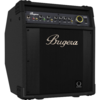
or their 2000 watt Veyron...................
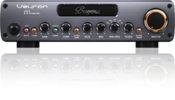
SERIOUSLY????????
Amp Mad Scientist
Ambassador of Heresy
I would think the issue would be "BUY OUR 150 watt amp!!!' -- that is really only 100 watts because it cheaper to build and none of these rubes are using 150 watts anyway---
sort of like the BUGERA 1000 watt bass amps..............I mean -- come on are they REALLY 1000 watts??????
View attachment 44323
or their 2000 watt Veyron...................
View attachment 44324
SERIOUSLY????????
First the power ratings of Bugera amps are wildly over-stated, measuring in peak power instead of RMS, as required by marketing and sales laws.
(RMS measurement is required for sales and marketing)
It's not a standard measurement of power.
Second, it's Class D operation, which means the power is pulsed.
Pulse Width Modulation
Not normal continuous sine wave output.
So basically class D has more power, just not continuous or as clean.
Output of Class D amplifier is pulsed something like this:
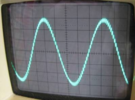
Normal sine wave is like this:
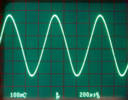
Therefore the Bugera power rating is: "not real."
Amp Mad Scientist
Ambassador of Heresy
It's like a pound of feathers weighs more than a pound of gold, because gold is weighed in troy ounces.awh crap ...............................science?
ugh
oh so BUGERAs power rating is like when I tell a girl my schlongs 36 inches WIDE............
And unfortunately In the Troy system only 12 ounces equal a pound. So a pound of feathers weighs 453.59 grams approximately and a pound of gold weighs 373.24 approximately. So a pound of feathers weighs more then a pound of gold.
But let's look into where the "troy" measurement system originates...
Troy weight, traditional system of weight in the British Isles based on the grain, pennyweight (24 grains), ounce (20 pennyweights), and pound (12 ounces). The troy grain, pennyweight, and ounce have been used since the Middle Ages to weigh gold, silver, and other precious metals and stones.
Originally used in Troyes, France, one troy ounce is equal to 31.1034768 grams, according to the U.K. Royal Mint. ... The troy ounce is often abbreviated to read "t oz" or "oz t."

awh crap ...............................science?
ugh
oh so BUGERAs power rating is like when I tell a girl my schlongs 36 inches WIDE............
Hmmm, We may be on to something here, if 12 Troy ounces equal 16 ounces in our measure, that means Adrian's 36 inch wide shlong may actually be closer to 27" wide. Or possibly even 45" wide.It's like a pound of feathers weighs more than a pound of gold, because gold is weighed in troy ounces.
And unfortunately In the Troy system only 12 ounces equal a pound. So a pound of feathers weighs 453.59 grams approximately and a pound of gold weighs 373.24 approximately. So a pound of feathers weighs more then a pound of gold.
But let's look into where the "troy" measurement system originates...
Troy weight, traditional system of weight in the British Isles based on the grain, pennyweight (24 grains), ounce (20 pennyweights), and pound (12 ounces). The troy grain, pennyweight, and ounce have been used since the Middle Ages to weigh gold, silver, and other precious metals and stones.
Originally used in Troyes, France, one troy ounce is equal to 31.1034768 grams, according to the U.K. Royal Mint. ... The troy ounce is often abbreviated to read "t oz" or "oz t."

Science & math make my head hurt.