Help, please: 8 into 16 or 16 into 8???

Mr Grumpy

Ambassador of Comings and Goings
Country flag
I have another silly idea...

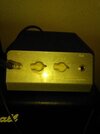
I love my new little amp and its 8" speaker sounds surprisingly ok, but the separate 1x12" cab sound is too roomy for me in my small apartment (I'd prefer it a bit tighter too), I liked the 1x10s I previously had more than this 1x12. So, there's the possibility that I can swap my 1x12 cab for my old DSL5 combo. But, there's a problem: I don't like the speaker in the DSL5, so I'd throw a 10" greenback in there which I did before and sounds great. But, here comes the 8 into 16 or 16 into 8! In an ideal world, it'd be nice to sometimes plug the Cornell into the 10" Greenback of the DSL, just to get a different sound, buuuut the Marshall is 16 Ohm while the Cornell is 8 Ohm. Buuuuuut, if I was to change the speaker anyways, I could put an 8 Ohm or a 16 Ohm in the Marshall, so we come back to:

1) Would the Marshall 16 Ohm amp be better with an 8 Ohm speaker that I could also plug the Cornell into. I don't mind losing some volume with the Marshall, but I don't wanna blow a transformer. I don't mind reducing life of tubes, but I don't wanna blow anything up or damage circuitry.

Or

2) Would a 16 Ohm Marshall amp and speaker be ok to plug the 8 Ohm Cornell amp into (this is the idea that worries me; I don't wanna take any risk at all of damaging the Cornell amp...).

Or

3) Are they both stupid ideas.

I'd like to have the Marshall sound and the Cornell (AC-ish) sound too. Marshall on the floor, Cornell sitting atop - happy days. :dood:
 
Thank you, Gentleman, looks like my plan might work

Soooooo, a 16 Ohm speaker should work in both although the Cornell might lose some sound quality?

Just to check, a 16 Ohm speaker which matches the Marshall will be no problem if I plug the Cornell 8 Ohm speaker output into it.
 
^ thank you for the confirmation, if I see a cheepish (and decent) impedance matcher than maybe I'll get that too. But it'll be nice to have two amp sounds, and a nice 10" speaker which is ideal for my situation - 1x12 would be great if I had a bigger place. Even if I never plug the Cornell into the Marshall speaker, it's an option (and I'll likely give it a go to see...). I'm playing at 1/8th watt with volume and gain dimmed on the Cornell, so I still have the 1/4, 1 and 5w settings - volume/loudness won't be an issue.

Another win is that the wife has accepted the current situation, so changing the big black lower box for a slightly smaller black lower box won't cause any verbal chastisement. (I'll probably have to get another guitar because 1 guitar and 2 amps is a bit silly... Oh, and I have the Yamaha THR, so that's 3 amps, means I need 2 new guitars really...)
 
I figure if you are playing balls out cranked for hours at a time, something may fail, or fail sooner.
Probably not so much at lower volumes.
Tone is different too.

Is the higher to lower vs lower to higher - 1 way is ok , the other a no,no? No, really both are not okay, or maybe, or not.
Most recommend to NOT mismatch.

From what I have read with Tube output power sections, a mismatch with lower impedance speaker is safer than a higher impedance speaker - than the amp output.
The story goes if amp is played with no speaker connected it is more likely the OT (and power tubes) on the amp with with the switched (shorted) output jack will fare better than with an open style jack.

I have never and dont intend to test this to some definitive outcome.

The opposite is reportedly true with SS power amp sections: a lower (closer to short) output load will draw more current and defeat the heat sink capacity / over heat the power amp. The release of the magic smoke ensues.

If I remember this has to do with the relationship where the SS power supply will maintain the voltage at the output and the current will increase a LOT, where as the tube will some what buffer as the current increases across the power tube the voltage drops, as the power supply sags and the tube characteristics generally work that way anyway.
 
At Weber speaker site I purchased this "Z-Matcher 100w Impedance Matcher"

As long as you can do the math on your speaker ohms, it will match anything.

Very handy as I have lots of different cabs and speakers and like to experiment.

I've had mine for approx. ten years, kept me from damaging my precious output transformers.
 
The guidance that it is okay to run an amp into a higher impedance speaker is fine for solid-state amps.

However, it gets into a little bit of a gray area for tube amps.

It will be easier on the tubes to go into a higher impedance speaker, but it can be harder on the output transformer.

Solid-state amplifiers are direct-coupled; they do not have output transformers, so it isn’t an issue for them.

Usually, a transformer can handle a 1:2 mismatch, so it may not be too much of an issue. But, it’s just something to keep in mind.
 
The guidance that it is okay to run an amp into a higher impedance speaker is fine for solid-state amps.

However, it gets into a little bit of a gray area for tube amps.

It will be easier on the tubes to go into a higher impedance speaker, but it can be harder on the output transformer.

Solid-state amplifiers are direct-coupled; they do not have output transformers, so it isn’t an issue for them.

Usually, a transformer can handle a 1:2 mismatch, so it may not be too much of an issue. But, it’s just something to keep in mind.
That's why I extoll the virtues of the impedance matcher, really solves those issues.
 
As many have said, if you are going to mis-matched, you want the speaker impedance to be higher than the amp's nominal output impedance, never lower.
The output transformer is, among other things, an impedance matching device. It transforms the impedance of the speaker (through its "turns ratio") into the much higher ideal load impedance that the output tube(s) would like to see. In the case of a single ended EL84 this is usually 5,000 ohms (5k) or 7,000 ohms (7k) depending on HT voltage.
Now tubes are very forgiving devices & will usually tolerate a 100% mis-matched upward (doubling the load impedance the tube "sees"). How well the output transformer handles it is dependant on the actual design of the transformer in question. Some handle it better than other, but as Jethro Rocker said above, with a 5 watt amp you should be cool.
Alternatively, if you want to plug a 16 ohm speaker to your amps 8 ohm output, you could get a 15 ohm 10 watt wire wound resistor & wire it in parallel with the speaker. This will have the effect of letting the tube see roughly the same load impedance it likes to see, though it will attenuate the output some. Cheers
 
I have another silly idea...

I love my new little amp and its 8" speaker sounds surprisingly ok, but the separate 1x12" cab sound is too roomy for me in my small apartment (I'd prefer it a bit tighter too), I liked the 1x10s I previously had more than this 1x12. So, there's the possibility that I can swap my 1x12 cab for my old DSL5 combo. But, there's a problem: I don't like the speaker in the DSL5, so I'd throw a 10" greenback in there which I did before and sounds great. But, here comes the 8 into 16 or 16 into 8! In an ideal world, it'd be nice to sometimes plug the Cornell into the 10" Greenback of the DSL, just to get a different sound, buuuut the Marshall is 16 Ohm while the Cornell is 8 Ohm. Buuuuuut, if I was to change the speaker anyways, I could put an 8 Ohm or a 16 Ohm in the Marshall, so we come back to:

1) Would the Marshall 16 Ohm amp be better with an 8 Ohm speaker that I could also plug the Cornell into. I don't mind losing some volume with the Marshall, but I don't wanna blow a transformer. I don't mind reducing life of tubes, but I don't wanna blow anything up or damage circuitry.

Or

2) Would a 16 Ohm Marshall amp and speaker be ok to plug the 8 Ohm Cornell amp into (this is the idea that worries me; I don't wanna take any risk at all of damaging the Cornell amp...).

Or

3) Are they both stupid ideas.

I'd like to have the Marshall sound and the Cornell (AC-ish) sound too. Marshall on the floor, Cornell sitting atop - happy days. :dood:

You can't plug a 16 ohm amp into a 8 ohm speaker, that's where problems occur. This makes the amp draw more current than normal.
You could plug an 8 ohm amp into a 16 ohm speaker which is not as hazardous. This also causes the power to be cut in half but loudness change is not very noticeable.
 
Just connect the resistor across the two terminals of the speaker. This will put the speaker & resistor in parallel. Cheers

I don't think he wants too add any more load in parallel unless it is the 8 ohm amp into a 16 ohm speaker.
Then he could add a 16 ohm resistor across the 16 ohm speaker for a total 8 ohms load.
 
I don't think he wants too add any more load in parallel unless it is the 8 ohm amp into a 16 ohm speaker.
Then he could add a 16 ohm resistor across the 16 ohm speaker for a total 8 ohms load.
This is exactly what we were talking about. 15 ohm is a commonly available resistor value, 16 ohm isn't. Cheers
 
Just connect the resistor across the two terminals of the speaker. This will put the speaker & resistor in parallel. Cheers

Thanks, that sound doable even by my standards.

20200331_131727.jpg

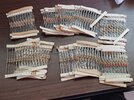
I knew they'd come in handy one day! Okay, so yellow is 1 and orange is 4 and green is 7 and... :io:
 
Back
Top