
Dave Sloven
Ambassador of DOOM!

It is the side wall where it touches and shorts out, rather than against the cavity cover. You can put tape over the copper tape, it doesn't affect the shield underneath. You can also paint on 'liquid tape'


It is the side wall where it touches and shorts out, rather than against the cavity cover. You can put tape over the copper tape, it doesn't affect the shield underneath. You can also paint on 'liquid tape'
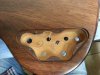

Just to clarify here is a photo of my cavity showing the area where the problem occurrred. I just lifted the jack up, put some electrical tape in there, and all was sweet thereafter. You might also notice the conductive paint under the copper slug tape. The paint was running out and I didn't have enough to ensure a complete shield so I went over it with the slug tape. Rough and ready but very functional. I painted down the connecting channel, which avoided the need for a wire connecting the cavity shields
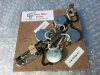
Looking forward to a review of that harness.


Are you doing the winding by hand, or do you have some sort of machine to do it with? I imagine it's going to take a while by hand...It won't be real soon....I still havebto finish winding the neck pickup...
Are you doing the winding by hand, or do you have some sort of machine to do it with? I imagine it's going to take a while by hand...
Yea, you have some work to do. Going to be a great set-up though. Nice!

I'm scatter winding these two humbuckers...
I'm curious. Supposedly, scatter winding results in a little less capacitance distributed in the coil, resulting in a little more treble from the pickup.
I thought you preferred something darker.
Just to clarify here is a photo of my cavity showing the area where the problem occurrred. I just lifted the jack up, put some electrical tape in there, and all was sweet thereafter. You might also notice the conductive paint under the copper slug tape. The paint was running out and I didn't have enough to ensure a complete shield so I went over it with the slug tape. Rough and ready but very functional. I painted down the connecting channel, which avoided the need for a wire connecting the cavity shields
I'm curious. Supposedly, scatter winding results in a little less capacitance distributed in the coil, resulting in a little more treble from the pickup.
I thought you preferred something darker.
Did you measure the threaded section of the output jack to see if the .260" will be long enough? I'd hesitate to ream away additional wood from the body to allow the .460 shoulder to be recessed into the body. Can you try test fitting to see if the output jack extends through?
As for the Bourns pots, I had to do that with my Washburn when I replaced all the electronics. The Bourns were wider than the stock pots. I went ahead and enlarged the holes. I didn't care because that was an imported guitar and of minimal value. I believe CTS pots use a narrower threaded portion.

