Resistor Placement Question:

Inspector #20

Ambassador of Tone
Fallen Star
Country flag
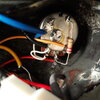
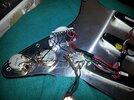
I have a guitar in for pickup replacement. It has a 220k resistor soldered between the middle lug of bridge volume pot to ground.

Wouldn't this simply attenuate some high frequencies???
 
I would think thats what it was for. Only time ive ever done something like that was when i put together a 1 Volume pot guitar . With no tone pot at all its a little brash for me but if you take say a .015uf cap and solder it from the pickup lead lug to ground it cuts the highs down. course its not adjustable so ya might have to experiment to get the tone you like. but id guess it would work the same soldering the resister to ground off the output jack lug .
 
I would think thats what it was for. Only time ive ever done something like that was when i put together a 1 Volume pot guitar . With no tone pot at all its a little brash for me but if you take say a .015uf cap and solder it from the pickup lead lug to ground it cuts the highs down. course its not adjustable so ya might have to experiment to get the tone you like. but id guess it would work the same soldering the resister to ground off the output jack lug .

Thanks, Goo...I was thinking that too...
 
I resistor will not affect frequency. It will reduce voltage which means it effects volume. A capacitor to ground will change frequency, as that is what is in the tone circuit (needs resistance too to set the cut off frequency).
 
Robert, do you have a photo of the entire cavity so we can see all the Wiring?

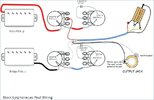
I will have to take a pic of the whole thing....but it's basically an Epiphone wire setup. It follows this diagram...

5-wire-pickup-wiring-diagram-library-of-diagrams-o-schematic-image-result-for-jr-special-2-dat...jpg

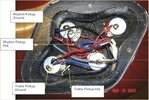
And here's a file photo of an Epiphone Les Paul cavity...

gibson-les-paul-jimmy-page-wiring-diagram-standard-diagrams-tech-tip-how-to-install-pickups-in...jpg
 

I measured this resistor. It is color coded as 220kΩ but measured 185.6kΩ. I unsoldered one corner and played the guitar, recording the tones with and without the resistor in place.

The result was a slight, very, very slight reduction in volume (output) and only visible on a waveform, and the tone is slightly (again very slight) brighter with the resistor unsoldered.
 
I measured this resistor. It is color coded as 220kΩ but measured 185.6kΩ. I unsoldered one corner and played the guitar, recording the tones with and without the resistor in place.

The result was a slight, very, very slight reduction in volume (output) and only visible on a waveform, and the tone is slightly (again very slight) brighter with the resistor unsoldered.


If you are looking to experiment use some gator clips and try using higher value resistors for comparison.
 
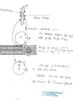
The last comment in that post link is correct. That 220K from the wiper to ground turns the 500K pot into a 152K pot with respect to the signal leaving the wiper. Think of it this way, when the 500K volume pot is dimed meaning the wiper is tied directly to the pup output in what should be just the 500K to ground, you have that 500K PLUS the 220K in parallel to ground. The math for calculating the effective parallel resistance yields 152K. When the volume pot is all the way down, the wiper on the 500K is at ground and the 220K has no effect. So the volume pot ranges from 152K to 0 ohms as it is turned.
 
The last comment in that post link is correct. That 220K from the wiper to ground turns the 500K pot into a 152K pot with respect to the signal leaving the wiper. Think of it this way, when the 500K volume pot is dimed meaning the wiper is tied directly to the pup output in what should be just the 500K to ground, you have that 500K PLUS the 220K in parallel to ground. The math for calculating the effective parallel resistance yields 152K. When the volume pot is all the way down, the wiper on the 500K is at ground and the 220K has no effect. So the volume pot ranges from 152K to 0 ohms as it is turned.

Don,

It doesn't make a huge difference, and I would expect that much of a 'cut' to make a significant difference...?????
 
From Fralin Pickups:

Let’s set the stage: You have a Telecaster with a Humbucker in the neck and a Single Coil in the Bridge. The Humbucker needs a 500K pot to sound good, and Single Coil sound best on 250K pots. You only have one volume pot – how can you compromise? Put a Resistor From The Bridge Pickup Hot To Ground.
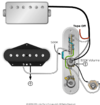
Resistor-In-A-Tele-1.png


HOW DOES IT WORK?
Let’s explain this using a simple formula. When you use two resistors in Parallel, one side of each resistor connects to the same location. For example, your Volume Pot is a resistor: 250K, 500K, these are resistance values. One side of the pot is a “hot,” or “input,” and one side of the pot is Ground. If you attach a resistor from the “Hot” of a pickup, and one leg to “ground,” you’re putting that resistor in Parallel. See below for the equation of using 2 Resistors in Parallel:

Resistors-In-Parallel-768x371.png


As you see, if you put a 500K resistor in Parallel with a 500K pot, the Bridge Pickup will “see” a 250K pot. This is great for your Telecaster as it you’ll have a great sounding Neck Humbucker and a perfect-sounding Bridge Single Coil.

NOTE:
The above formula works well when you’re on your Neck pickup and Bridge Pickup only. However, when you get in the Middle Position, you’re adding yet another resistor. Your Neck Pickup (500K) Your Bridge Pickup (500K) and the Parallel Resistor (~470K). When you combine your neck and bridge using this resistor trick, the middle position will see a 163K pot, making it darker than usual.

TRANSFORM YOUR POTS:
In our last example, you can use a resistor to change your pot value. This is handy when you only have a 500K pot on hand, but you need a 250K pot. If you have a ~500K Resistor, you can make this happen! See below for a diagram on how to wire this up:

Resistor-In-Parallel.png

In the above image, you have a 470K resistor in Parallel with your Volume Pot. The pot value’s resistance is 500K, and your Resistor is 470K – with a combined resistance of 242K. Pretty neat! You can use this trick to take a bit of high-end off of your pots as well. Let’s say you have a 500K pot, and your pickups are just a little too bright on them: you can add a 1Meg resistor like the image above, and you’ve turned your 500K pot into a 333K pot. This will tame some of the highs.
 
Don,

It doesn't make a huge difference, and I would expect that much of a 'cut' to make a significant difference...?????

What makes the mod in the OP a little different is that it is usually done by connecting the pickup hot lead (either at the volume pot input terminal or the switch) to ground via the resistor. In the example posted in the OP, the resistor is connected between the volume pot wiper and ground, not the volume pot input and ground.
 
Back
Top