MY one and only ORANGE Super Bass JMP 100 Mk 2

Exactly! 4 8Ohm speakers wired to that switch will actually be...well...not that...
8 and 2Ohms? Not cool.
 
Exactly! 4 8Ohm speakers wired to that switch will actually be...well...not that...
8 and 2Ohms? Not cool.

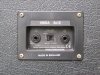
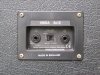
Lemme see if got the right pic. The jack mine has is like this, not that other one.

2805af4.jpg
 
Sorry, I have had trouble reading some of the pictures completely.
It’s reminiscent of this Marshall plate, and presents one less option, but doesn’t change the fact that use of this switch would require 16Ohm speakers to be accurately labeled.
ECD701E4-D5CC-405C-9006-B26906FAD1C8.jpeg

On the other link I posted, there are lots of 4 speaker diagrams. If you scroll the page, you will only find one(IIRC)for 4 8Ohm speakers, and it arrives at 8Ohms.
There is no way to wire 4x8Ohm speakers to create a 16Ohm load.
 
While we are on the subject of speakers.
2x12amp_mono.gif

Please see the last line edit in my last post, if you haven’t already.

To answer this post:
Yes, daisy chaining is common. I do it all the time. Cab impedance should always match. 4x16
Or 2x8Ohm will net a 4Ohm load. Etc.

Have a look at the Marshall plate again. Note in the mono section where it says “use only one input”...I’ve always stayed on the safe side, and never used it as the first in a daisy chain.
C9DC8A84-A60C-4BEA-B71C-C0BFBD231868.jpeg
 
Note in the mono section where it says “use only one input”...I’ve always stayed on the safe side, and never used it as the first in a daisy chain.


Yeah, that is why I have a piece of masking tape over my 4 ohm left side jack. I never daisy chained so knowing the cab is 16 ohm in the mono and right side Jack, I have my 50 Watt JMP in the 16 ohm setting and I am safe to go.
 
Yeah, that is why I have a piece of masking tape over my 4 ohm left side jack. I never daisy chained so knowing the cab is 16 ohm in the mono and right side Jack, I have my 50 Watt JMP in the 16 ohm setting and I am safe to go.
I agree with that logic.

Just remember, that Red Coat loaded cab is not going to measure accurately if they are indeed 8Ohm speakers. It should be labeled 4Ohm stereo / 8Ohm mono.(more likely)
 
Your logic seems accurate to me, don. This is why I will verify and correct any disagreeable speaker wiring scheme and make it how I want it. Plus for my simpleminded self likely swap in a single jack and be done with it,,,,,, whatever rating the S/P .

If I am not mistaken, 4 speakers @ 16 ohm is 16 ohm when wired Series Parallel with no fancy switchable jack to alter things.
Thus 4 speakers @ 8 ohm is 8 ohm when wired Series Parallel too. If only one of these cabs is used with whatever head I desire, I would just have to set the amp to the proper impedance.
 
Thus 4 speakers @ 8 ohm is 8 ohm when wired Series Parallel too. If only one of these cabs is used with whatever head I desire, I would just have to set the amp to the proper impedance.

Correct sir. I was only concerned with the possible mislabeled plate that is on it...I would hate to think of someone plugging in to what was thought to be a 16Ohm cab, and have it actually be an 8Ohm load. That would be bad.
 
Correct sir. I was only concerned with the possible mislabeled plate that is on it...I would hate to think of someone plugging in to what was thought to be a 16Ohm cab, and have it actually be an 8Ohm load. That would be bad.

Yes, this is exactly why I want to verify the cab and verify how the Ohms selector is hardwired on the amp.
 
I know I mentioned trying to open the possibility of seller full or partial refund, but he got shiddy and balked. This pretty much left me to make lemonade from lemons or at least to see how sour the fruit is and just how sick the patient is. SO, I just picked myself up 6 F and N filter caps and 2 Bias caps off ebay for the amp.

Soon will be picking up a new Ohms selector switch and getting my Tubes tested. Spent the past few days studying the amp layout, searching for anomalies, tested the resistors and soon will be testing the transformers and securing down the loose V3 socket retainer. In addition, I need to replace a snipped wire from V1 socket to the board for the .68 cap, and check the ESR on all the caps to see is any of the coupling caps have failed on me. That should keep me busy awhile.
 
OK< Thanks Sysco.

I found a ebayer who sells tubes. He is local and I messaged him about buying a set off him plus to see if he will test the ones from my amp for me. Waiting for answer
 
After doing a bunch of checks at the direction of Bastarddon, DonP, Sysco, Ivan, 67 and anyone else I forgot, it was mutually advised to get the tubes tested and go from there. As my previous message says, I found a tube seller willing to test them for me. Met with him Friday and got the news. 3 of 4 6550 Power tubes tested bad as did the V3 Power Inverter 12 AX7. The V7 tube was so bad it spark flashed in my amp the few times I took it off standby and would blow the HT 1 amp fuse.

Update

After buying 5 Svetlana 6550 tubes from the guy who tested my tubes and him donating a 12 ax7 tube he tested as good for me, I was able to install them in the amp at home, hook it up and safely turned on the amp and didn't blow any fuses when taken off standby.

Got the amp biased last night with the calculations Ivan prepared for me, and now waiting to get confirmation I did it right.

Now we will be on the road to giving it new filter caps and fixing a few half assed fixes and mods that happened before I owned it.
Also now that it is running decently, I can take the various measurements and fill in the chart like Sysco posted earlier in the thread.
 
Last edited:
SWEEET, THE lightbulb just went on.

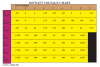
pexi-100-watt-voltage-chart-png.24095


I now have realization what a bunch of these numbers mean and where they come from.
Take for example V4-7 pins 2 and 7. These are 1/2 the 6.3 for both sides of the transformer. Then Pins 3 and 6 are the voltages to the plate of which I get 446 on my amp instead of the 498 and 496 above. While doing my other checks and being told to read pin 5, I got - 52.1 where above shows -45, and now I need to check PIN 4 and see what I get.
 
SWEEET, THE lightbulb just went on.

pexi-100-watt-voltage-chart-png.24095


I now have realization what a bunch of these numbers mean and where they come from.
Take for example V4-7 pins 2 and 7. These are 1/2 the 6.3 for both sides of the transformer. Then Pins 3 and 6 are the voltages to the plate of which I get 446 on my amp instead of the 498 and 496 above. While doing my other checks and being told to read pin 5, I got - 52.1 where above shows -45, and now I need to check PIN 4 and see what I get.
Hey Chili, let me remind you or anybody else that is looking at this chart, that these voltages are obtained without the power tubes installed in the sockets. Once the power tubes are installed, the plate voltages hitting the power tubes will drop about 20 to 50 volts. Your Pin 5 voltages of 52.1 is fine. The negative voltages of pin 5 will be different in your amp, because it is set up to operate on 6550s instead of the chart's EL34s.

From the same manual this chart came from we have this:
Now (still with no EL34 power tubes installed) check your amplifier’s voltages
against the following chart. Be aware that with no power tubes installed the voltages
will read higher than shown by 5-10%. (Differences in your local wall voltage and
component tolerances also may factor in if the readings differ, but the “trends” in
voltages from pin to pin should remain fairly constant.) Probe very carefully.
 
So it's not operational?

It is now,,,, thanks to all my friends here, and to some who aren't.
Also want to give a big shout out to a really nice guy from ebay who I just met Friday. I found him on ebay and he is local to me. He sells tubes and tests every one on his modern tester and provides the readings on each tube box. He had a set of 5 Svetlana 6550's that I offered to buy from him without knowing if the 3 Ruby and one Sovtek ones that were in my amp were any good or not. Having asked if he'd be open to allowing a local pickup and even to test my tubes for me, I was in luck when he said yes and the testing showed a dangerously bad tube and only one good 6550 out of 4, plus a bad 12ax7 in the V3 Phase Inverter position.

Now, from my visual, Multimeter testing of Voltages, readings of the Output transformer, Resistor tests, plus running the amp with only the preamp tubes in and not blowing fuses, the signs pointed to the wisdom of suspecting a tube issue. The eventual testing confirmed this.
The amp does work now and makes music with the new tubes in. So now I plan to continue to improve the amp with new reliable filter caps, and make it safer and more reliable than how I received it. Then a few fixes of some half shortcut type repairs and undoing a mod and cleaning up a few sloppy bits and she should be ready to rock.
 
Last edited:
Hey Chili, let me remind you or anybody else that is looking at this chart, that these voltages are obtained without the power tubes installed in the sockets. Once the power tubes are installed, the plate voltages hitting the power tubes will drop about 20 to 50 volts. Your Pin 5 voltages of 52.1 is fine. The negative voltages of pin 5 will be different in your amp, because it is set up to operate on 6550s instead of the chart's EL34s.

From the same manual this chart came from we have this:
Now (still with no EL34 power tubes installed) check your amplifier’s voltages
against the following chart. Be aware that with no power tubes installed the voltages
will read higher than shown by 5-10%. (Differences in your local wall voltage and
component tolerances also may factor in if the readings differ, but the “trends” in
voltages from pin to pin should remain fairly constant.) Probe very carefully.

OK Sysco, Your info is SIGNIFICANT. THIS is a very important detail I must log into my memory bank.
WHEN calculating the numbers to bias an amp, do we need to use the higher value voltages or the lower ones with the power tubes installed?
Also noted,,,,,,,, the difference between a PIN 5 voltage between my 6550 ones and an EL34 one like in the chart.
 
Back
Top