
You are using an out of date browser. It may not display this or other websites correctly.
You should upgrade or use an alternative browser.
You should upgrade or use an alternative browser.
Tone equation. Is it the amp? The guitar? The pickups? The wood?
- Thread starter alligatorbling
- Start date


Dave Sloven
Ambassador of DOOM!

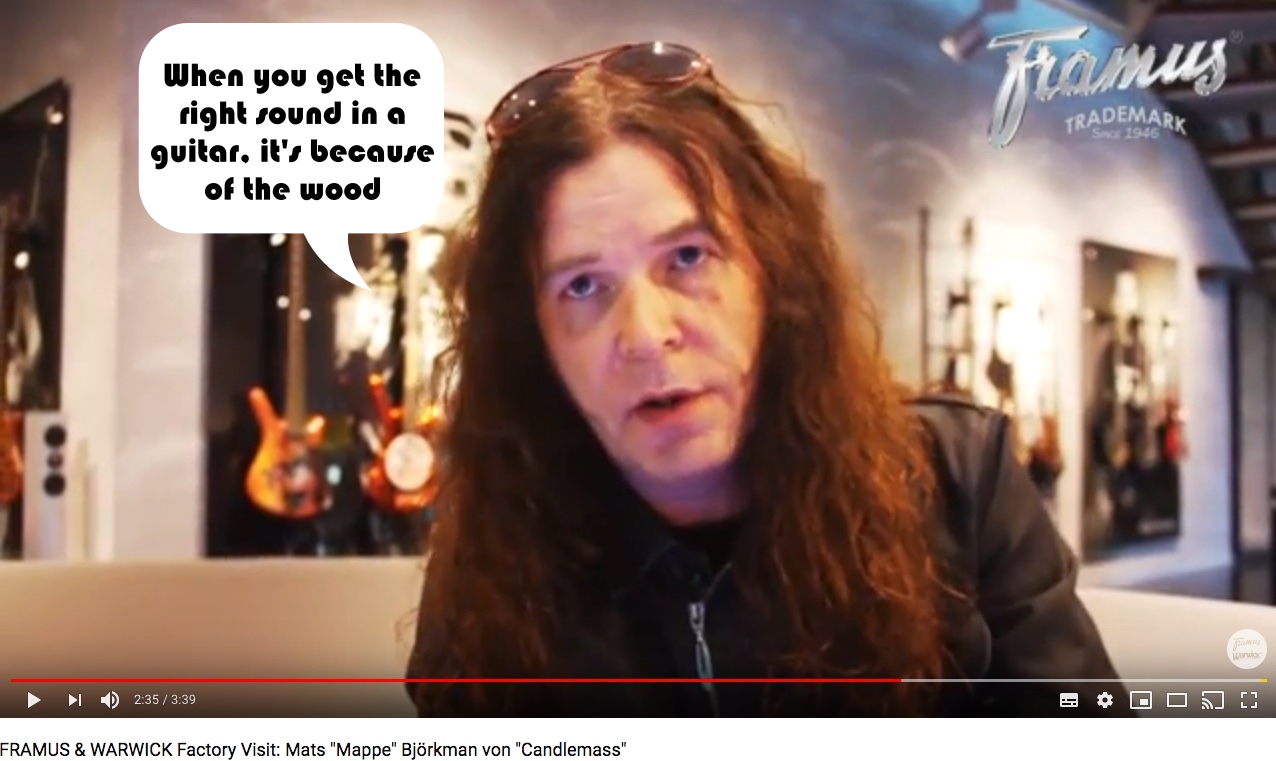


What makes a Les Paul sound so different from other dual humbucker guitars?

chilipeppermaniac
Ambassador of Decibels
Pickups, pickup placement, picking position, pick material, hands, amp and pedal set up...if any.
I told myself I would not stop to post before I read the hole thread, but Bastard hit some of the nails on the head. SO I had to.
I saw PICK material. YES, I have even read before that tone can even be shaped by the pick, the pick thickness, pick material, pick attack and everything but picking one's nose.
Another factor I immediately add into consideration for sound tone shaping. The SPEAKERS one plays through.
To be continued...
chilipeppermaniac
Ambassador of Decibels
I almost forgot another tone related area, palm muting, finger control ( such as vibrato, or picking up or down strokes while chicken picking, pinch harmonics, etc etc.)
Now if we are discussing specifically and exclusively one guitar vs others type factors, I will say tone is everywhere.
More To be cont.....
Now if we are discussing specifically and exclusively one guitar vs others type factors, I will say tone is everywhere.
More To be cont.....
chilipeppermaniac
Ambassador of Decibels
View attachment 23081
These two P90 SGs sound very different from each other. They sounded different when they both had the same bridges too. When both had stock Gibson P90s they sounded different.
Each of the two has its own personality(sound wise). The small guard has the pickups spread wider apart...the bridge pickup is closer to the bridge, and the neck pickup is closer(very slightly) to the neck. This guitar is a bit more brash sounding. It has more contrast in tone, between the two pickups, than the black batwing.
The batwing sounds more civilized, smooth, when changing pickups. The bridge pickup is easy to manage with higher gain.
The batwing, I am comfortable using to play anything in my wheelhouse. The small guard is more like my “punk rock”, edgy, SG...or my wooly, 70s fuzz/muff machine. If I’m attentive with the tone controls, I can keep them sounding fairly close to each other tonally....they’re just two different beasts really...and I’m always surprised as to how different, when I play them back to back. It ain’t the paint that makes the difference.
This is what I am sayin............... I believe some fellas here will say the same about 2 ES 335 guitars they have as well.
Both basically the same guitar, yet both sound totally different than the other.
chilipeppermaniac
Ambassador of Decibels
Most everything I play, I sound like me. Even if I use other people's gear. That's why I put hands first. I know if I plugged into David Gilmour's or Michael Schenker's rigs, I would not sound like them.
When I think of what John says and most of us already agree and say it is the player,,,,,,,,,,,, I think of examples like this.. Freaking Pete sounds like Pete and THIS SONG and LIVE AT LEEDS proves it. Although there is also another factor many have not mentioned. The venue. Small room, large, Outdoors, indoors, BIG crowd or small. I have heard it said, if one plays to a small venue but it is packed full of bodies, the sound is way different if the same venue has 40 people inside.

This is what I am sayin............... I believe some fellas here will say the same about 2 ES 335 guitar they have as well.
Both basically the same guitar, yet both sound totally different than the other.
I was specifically referring to the different pickup positions in those two P90 equipped SGs, mostly...but I agree that your scenario has also been true, in my experience.
chilipeppermaniac
Ambassador of Decibels
I was specifically referring to the different pickup positions in those two P90 equipped SGs, mostly...but I agree that your scenario has also been true, in my experience.
Yes Bastard, I know you were. My 87 3 Knob SG has the neck pup way up by the board, while my Faded SG has it farther toward the bridge and my EPI LES Paul has em totally different spacing.
Last edited:

jtcnj
Ambassador of the Crossroad
Its the electricity.
Go ahead, sample the difference with and without it.
It is everything, like a fantastic chili recipe - the ground beef may be the main ingredient (the amp), but all the other factors combine and contribute in a synergistic manner to produce AWESOME eats.
Including with upmost importance - the skills and methods / technique of the cook (the fingers / hands)
For me "good" tone is like water - "I then tried to grasp a handful of it but this proved impossible." - Bruce Lee.
I can experience it, flow with it and guide it and sometimes it sounds glorious.
But I cannot control it; it is elusive and often I settle for something less than glorious and just focus on my playing.
I think my hearing - perception of the mix of frequencies - changes from day to day as well.
Go ahead, sample the difference with and without it.
It is everything, like a fantastic chili recipe - the ground beef may be the main ingredient (the amp), but all the other factors combine and contribute in a synergistic manner to produce AWESOME eats.
Including with upmost importance - the skills and methods / technique of the cook (the fingers / hands)
For me "good" tone is like water - "I then tried to grasp a handful of it but this proved impossible." - Bruce Lee.
I can experience it, flow with it and guide it and sometimes it sounds glorious.
But I cannot control it; it is elusive and often I settle for something less than glorious and just focus on my playing.
I think my hearing - perception of the mix of frequencies - changes from day to day as well.
jtcnj
Ambassador of the Crossroad
Amen Brother.I will say tone is everywhere.
I believe Jesus is everywhere; is tone Jesus?
chilipeppermaniac
Ambassador of Decibels
Amen Brother.
I believe Jesus is everywhere; is tone Jesus?
Yup, Bobby Bare proves it.
chilipeppermaniac
Ambassador of Decibels

Col Mustard
Ambassador of Perseverance
kernel says
1. soul (including creativity and originality, artistic voice)
2. practice (including experience & history, and CONFIDENCE...)
3. technique (including pick choice, or bare fingers)
4. Tone controls (including pedals, EQ, amp controls)
5. Amp quality (including design, components, workmanship, power)
6. Signal chain (including pickups, cables, speakers)
7. Guitar characteristics (including setup, scale length, fretwork,
Pickup Placement, nut and bridge contact, nut and bridge material,
quality of components and whether it's stolen or not...
8. Hair, if any... including How Big, how clean, how radical, or how absent
9. Pants... including how tight, how clean, whether they even fit
10. fingernails (how long, how clean, how strong)
I'm sure there are more factors to the quest for tone, but that's enough for now.
THE QUEST FOR TONE HAS NO FINISH LINE
SO IT'S TECHNICALLY A DEATH MARCH...
1. soul (including creativity and originality, artistic voice)
2. practice (including experience & history, and CONFIDENCE...)
3. technique (including pick choice, or bare fingers)
4. Tone controls (including pedals, EQ, amp controls)
5. Amp quality (including design, components, workmanship, power)
6. Signal chain (including pickups, cables, speakers)
7. Guitar characteristics (including setup, scale length, fretwork,
Pickup Placement, nut and bridge contact, nut and bridge material,
quality of components and whether it's stolen or not...
8. Hair, if any... including How Big, how clean, how radical, or how absent
9. Pants... including how tight, how clean, whether they even fit
10. fingernails (how long, how clean, how strong)
I'm sure there are more factors to the quest for tone, but that's enough for now.
THE QUEST FOR TONE HAS NO FINISH LINE
SO IT'S TECHNICALLY A DEATH MARCH...

gball
Ambassador of Boogie
So...if it's the amp in your configuration what is it with a unit that uses powered speakers such as the AxeFX, Kemper or Helix?
I'm running my Helix through a Carvin power amp into a 2x12 cab. So what is my biggest contributing factor?
To me, still the amp configuration. In your case a Helix into a power amp into a 2x12 - that's your amp configuration (and it sounds like it kicks butt).
Interesting thing with this question is just about everyone will have a different opinion. The reason I left the 'fingers' or 'player' out of my reasoning is because its the one variable that can't be controlled. I'm keeping it down to the individual, meaning what are the things that make the biggest difference in my sound when I change them? Of course, fundamentally I will always sound just as terrible no matter what rig I am playing through but when I think about what makes the biggest impact to my sound when I alter it then it's by far the amp and configuration of that amp (combo, head+cab, 1x12 vs 4x12, etc).
Col Mustard
Ambassador of Perseverance
Note that in my list above, I put the things that guitarists obsess most about
...pretty far down in the rank of importance.
It's okay, we tend to take a lot of the MOST IMPORTANT factors for granite.
I don't, and those are what I work on and think about. Soul, practice and technique are
by far the most important IMHO, which is why I'm prone to saying that a good
guitarist will sound like himself on any guitar... or get close, as Dave says.
(I confess to LOVE working on my technique on a guitar I've modded just so
and through a pedal board I've designed, and into an amp I've selected and
maybe modded, out into speakers cabs I've built myself...)
And I agree with a lot of our colleagues when we get into the less important
factors, the amp comes first, followed by the signal chain and then the
guitar characteristics. And it seems like many internet posters seem to turn this
upside down, falling for the lie that "if I just buy this guitar, or these p'ups, or this
pedal, or this amp, I can sound like that."
Don't fall for that... it's marketeering hype.
...pretty far down in the rank of importance.
It's okay, we tend to take a lot of the MOST IMPORTANT factors for granite.
I don't, and those are what I work on and think about. Soul, practice and technique are
by far the most important IMHO, which is why I'm prone to saying that a good
guitarist will sound like himself on any guitar... or get close, as Dave says.
(I confess to LOVE working on my technique on a guitar I've modded just so
and through a pedal board I've designed, and into an amp I've selected and
maybe modded, out into speakers cabs I've built myself...)
And I agree with a lot of our colleagues when we get into the less important
factors, the amp comes first, followed by the signal chain and then the
guitar characteristics. And it seems like many internet posters seem to turn this
upside down, falling for the lie that "if I just buy this guitar, or these p'ups, or this
pedal, or this amp, I can sound like that."
Don't fall for that... it's marketeering hype.
Col Mustard
Ambassador of Perseverance
The reason I left the 'fingers' or 'player' out of my reasoning is because its the one variable that can't be controlled. I'm keeping it down to the individual, meaning what are the things that make the biggest difference in my sound when I change them? ...when I think about what makes the biggest impact to my sound when I alter it then it's by far the amp and configuration of that amp (combo, head+cab, 1x12 vs 4x12, etc).
Fair enough, especially for a forum thread... Each of us has our own level of talent.
So we do the best we can with what we got.
But IMHO,
>soul can be expanded, artistic voice needs developing all the time...
>practice is what makes a path for ALL of this to flow through... it may seem mundane sometimes, but it is NOT.
>Confidence is one of the most critical factors which can make or break a performance, whether it's for recording
or if it's live... Confidence shows in every note, as does its lack. And this affects tone hugely. That's why we work so hard.
>technique can be changed and developed, and it will alter tone. pick choice (or no pick) affects tone hugely IMHO,
>Tone Controls (especially EQ) are what it's all about, which is how they got their name. It's all about highs, mids and lows...
A lot of guys post about "tone from pickups" as if they didn't have any tone controls on their instrument, or on their pedal
board, or on their amp. *shrugs


Gahr
Ambassador of Blues & Brews

I always found the "tone is in your fingers" expression to be a bit strange. I wouldn't say tone as such is in your fingers at all. Style, skill, choice of notes, musicality and melody are in your fingers (and in your way of thinking about music), but not actual tone. That fact that a player is instantly recognizable no matter what guitar is because of his or her personal playing style, not tone. B. B. King would be recognizable if he played on a Stratocaster, but he would sound like he was B. B. King playing, well, a Strat. The sound of the Strat would not magically become identical to a Gibson ES345 just because B. B. was playing it. You play and sound like yourself no matter what guitar or rig, but the actual tone will not be the same. Now, where and you pick on the strings will be important, and how cleanly you play (in a technical sense) so your technique definitely matters, but it's still not really your fingers that create the tone. They "only" create the music.
For guitar tone I believe the speaker and amp are the most influential parts of the equation, then (disregarding any effects) the pickups and their placement in relation to the bridge.
For guitar tone I believe the speaker and amp are the most influential parts of the equation, then (disregarding any effects) the pickups and their placement in relation to the bridge.
