
You are using an out of date browser. It may not display this or other websites correctly.
You should upgrade or use an alternative browser.
You should upgrade or use an alternative browser.
'Cause I'm leaving on a jet plane, don't know when I'll be back again
- Thread starter WavMixer
- Start date


A few things wrong with that video.
First, it presumes aircraft are always filled with fuel to max capacity for every flight. They aren’t. They are filled to the capacity necessary for the load and range, plus some reserve and some fuel for taxiing and takeoff. Just because an airplane has a listed maximum range does not mean it is being flown that distance on every flight. The fuel loaded on each flight is carefully calculated, depending on the trip and weight of passengers and cargo. It would be a waste to make the airplane carry the weight of excess fuel.
Second, there are also fuel tanks in the tail on an A380, not just the wings. They aren’t as big, of course. But they can hold a few thousand gallons.
Third, there is not a single tank in each wing. There are multiple interconnected tanks. This cuts down on the sloshing about mentioned in the video.
Fourth, whereas I like pictures of elephants on an airplane wing as much as the next person (and who doesn’t like pictures of elephants on an airplane wing!), it really doesn’t argue against the ability of the wing to handle the load. While in flight, the downward pull of gravity on the wing is counteracted by the upward force of lift on the wing. In flight, the real concern is the ability of the wing joint to support the fuselage...where all the people are!
Fifth, the statement that the plane uses “little to no fuel” is kind of silly. Obviously, the plane uses some fuel! True, the modern planes do use far less fuel than previously. But, “No” fuel? Not!
By the way, he does correctly point out what comprises the bulk of the contrails: water vapor.
First, it presumes aircraft are always filled with fuel to max capacity for every flight. They aren’t. They are filled to the capacity necessary for the load and range, plus some reserve and some fuel for taxiing and takeoff. Just because an airplane has a listed maximum range does not mean it is being flown that distance on every flight. The fuel loaded on each flight is carefully calculated, depending on the trip and weight of passengers and cargo. It would be a waste to make the airplane carry the weight of excess fuel.
Second, there are also fuel tanks in the tail on an A380, not just the wings. They aren’t as big, of course. But they can hold a few thousand gallons.
Third, there is not a single tank in each wing. There are multiple interconnected tanks. This cuts down on the sloshing about mentioned in the video.
Fourth, whereas I like pictures of elephants on an airplane wing as much as the next person (and who doesn’t like pictures of elephants on an airplane wing!), it really doesn’t argue against the ability of the wing to handle the load. While in flight, the downward pull of gravity on the wing is counteracted by the upward force of lift on the wing. In flight, the real concern is the ability of the wing joint to support the fuselage...where all the people are!
Fifth, the statement that the plane uses “little to no fuel” is kind of silly. Obviously, the plane uses some fuel! True, the modern planes do use far less fuel than previously. But, “No” fuel? Not!
By the way, he does correctly point out what comprises the bulk of the contrails: water vapor.
Last edited:

gball
Ambassador of Boogie
Ugh. Not enough facepalm on the planet for the nimrod that took time out of their life to make this video.

Willfull ignorance does not challenge science.


Keep ‘em coming Wav! I actually find these things entertaining, most of the time...
Keep ‘em coming Wav! I actually find these things entertaining, most of the time...
Yeah. This one had elephants on an airplane wing and those cool, talking air and kerosene molecules.
The kerosene molecules looked like some real suave little dudes, didn’t they!
They were just what I’ve always wanted those scrubbing bubbles to be like!Yeah. This one had elephants on an airplane wing and those cool, talking air and kerosene molecules.
The kerosene molecules looked like some real suave little dudes, didn’t they!

Fuel consumption is widely varied across a range of given engines and depends, at least to an extent, on many environmental factors. On private, single or small twin engine aircraft, we always - always - flew with full tanks as a rule.
Flying Stearman crop dusters was a lot like mowing your yard. You filled the tanks and flew until you were low and refilled. Your flights were not long enough to even track GPH.
When we were doing restorations, we knew what the manufactuerer's expectations were for a given engine. A Rolls-Royce Merlin V-12 in a P-51 would burn 60 GPH @ cruise. A B-17 - with 2 pair of Pratt and Whitney Double Wasps (16 cylinders each) would burn 400 GPH @ cruise.
Propeller pitch (load) and fuel mixture are considered variables. We found that by increasing pitch (bite/load) and reducing RPM that we could improve fuel economy.
The crash that killed members of Lynard Skynard was due to a malfunctioning engine - that required a full rich mixture for adequate power output - and this was not calculated into the flight plan, causing the craft to run out of fuel prematurely.
Turbofans are very thirsty engines. On commercial aircraft, as Smitty has pointed out, fuel is carefully calculated with many factors taken into consideration.
The Auxiliary Power Unit (APU) provides power for accessories when the main engines are offline. These generally burn 300kg/hour.
In general, one ton of fuel is allotted for taxi and ground usage, 35TPH (Tons Per Hour) for take off and climb abd roughly 10TPH @ cruise. Thrust reversal - for slowing the aircraft's ground speed - also burns large amounts of fuel and everything must be taken into consideration.
Landing weight is also an important consideration. The reason aircraft dump fuel during emergency operations is that the landing gear would collapse if landing was attempted at take off weight.
These are very general figured as many facts it depends on altitude, temperature, density, drag, payload, etc...
Flying Stearman crop dusters was a lot like mowing your yard. You filled the tanks and flew until you were low and refilled. Your flights were not long enough to even track GPH.
When we were doing restorations, we knew what the manufactuerer's expectations were for a given engine. A Rolls-Royce Merlin V-12 in a P-51 would burn 60 GPH @ cruise. A B-17 - with 2 pair of Pratt and Whitney Double Wasps (16 cylinders each) would burn 400 GPH @ cruise.
Propeller pitch (load) and fuel mixture are considered variables. We found that by increasing pitch (bite/load) and reducing RPM that we could improve fuel economy.
The crash that killed members of Lynard Skynard was due to a malfunctioning engine - that required a full rich mixture for adequate power output - and this was not calculated into the flight plan, causing the craft to run out of fuel prematurely.
Turbofans are very thirsty engines. On commercial aircraft, as Smitty has pointed out, fuel is carefully calculated with many factors taken into consideration.
The Auxiliary Power Unit (APU) provides power for accessories when the main engines are offline. These generally burn 300kg/hour.
In general, one ton of fuel is allotted for taxi and ground usage, 35TPH (Tons Per Hour) for take off and climb abd roughly 10TPH @ cruise. Thrust reversal - for slowing the aircraft's ground speed - also burns large amounts of fuel and everything must be taken into consideration.
Landing weight is also an important consideration. The reason aircraft dump fuel during emergency operations is that the landing gear would collapse if landing was attempted at take off weight.
These are very general figured as many facts it depends on altitude, temperature, density, drag, payload, etc...
Last edited:
Yeah. This one had elephants on an airplane wing and those cool, talking air and kerosene molecules.
The kerosene molecules looked like some real suave little dudes, didn’t they!
Jet 'A' runs well in diesel engines. We would sometimes fill the fuel truck's (engine supply) tanks with Jet 'A' to keep from driving them into town for #2 diesel...



OP

I'll post them as I find them. I'm not saying that any of these that I post are true, I place them here for entertainment value. However this one did bring up some interesting questions. Although that jet may not fill up to capacity for any particular flight, how could they fit all that fuel into the wings? Looking at how many fuel trucks it would take to fill the plane, it would seem like much more fuel than the the plane could hold. Just another one of those things that make you go hmmm...Keep ‘em coming Wav! I actually find these things entertaining, most of the time...
OP
I used to work with a guy that referred to police officers as "pigs." We were on a subject once and he contradicted me and said "when pigs fly." I told him that pigs do fly and he told me know way! I told yes pigs do fly and I'd be willing to bet on it. He then said "OK, Ill bet my paycheck against your paycheck." I agreed and we shook hands. Then I pointed up to the sky above where a police helicopter was flying above our heads. As I was pointing up to the helicopter I said "See, pigs fly." He was not happy that I did indeed win the bet, but he never paid up.If pigs flew we could strap those suckers to the wings and when they started to give out need maintenance butcher 'em (bacon, chops, pork skins, sausage, etc). The whole elephant reference got me side tracked - sorry...
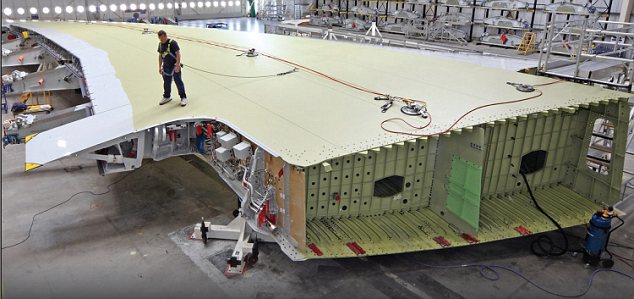
Looking at how many fuel trucks it would take to fill the plane, it would seem like much more fuel than the the plane could hold. Just another one of those things that make you go hmmm...
That’s because the information in the video is leaving out a really important detail:
There are different sizes of aircraft refueling trucks.
It would take sixteen trucks to fill the plane IF you’re using one of the smaller 5,000 gallon trucks.
Let’s use the figures in @gball ’s post (#14) above. At roughly 85,000 gallons of fuel, it would only take 8 1/2 fill-ups from from one of the large 10,000 gallon trucks. It would actually take 17 fill-ups to completely fill a dry A380 with the smaller 5000 gallon trucks.
It is true. You’d never fit eight of the 5000 gallon trucks in a wing. But you could fit the FUEL from those trucks in a wing!
It’s really great shock value to put pictures of trucks around an aircraft wing, but it really doesn’t say anything.
Now, ELEPHANTS on an airplane wing?
That’s where the real money’s at!
Keep in mind, that on commercial aircraft, they are generally never empty, so fuel is added to a specific amount that has been calculated as necessary for the load out and flight plan. I remember my first experience piloting a P-51 (TF-51-D Config) and one simply looked down at the cockpit floor to read the fuel level gauges.
When crop dusting, in a Stearman Model 75, your fuel supply was a little less than 50 gallons. However, the spray tank held about 220 gallons, roughly equaling 1,900lbs. The handling characteristics of the aircraft change dramatically as you begin to deplete the liquid supply in the sprayer tanks, and you had to be constantly adjusting your approach, altitude and power settings. I would imagine the big commercial craft also handle differently as the fuel supply is depleted.
When crop dusting, in a Stearman Model 75, your fuel supply was a little less than 50 gallons. However, the spray tank held about 220 gallons, roughly equaling 1,900lbs. The handling characteristics of the aircraft change dramatically as you begin to deplete the liquid supply in the sprayer tanks, and you had to be constantly adjusting your approach, altitude and power settings. I would imagine the big commercial craft also handle differently as the fuel supply is depleted.
Keep in mind, that on commercial aircraft, they are generally never empty, so fuel is added to a specific amount that has been calculated as necessary for the load out and flight plan. I remember my first experience piloting a P-51 (TF-51-D Config) and one simply looked down at the cockpit floor to read the fuel level gauges.
When crop dusting, in a Stearman Model 75, your fuel supply was a little less than 50 gallons. However, the spray tank held about 220 gallons, roughly equaling 1,900lbs. The handling characteristics of the aircraft change dramatically as you begin to deplete the liquid supply in the sprayer tanks, and you had to be constantly adjusting your approach, altitude and power settings. I would imagine the big commercial craft also handle differently as the fuel supply is depleted.
But, did you have an elephant on your wing?
I betcha didn’t!

Gahr
Ambassador of Blues & Brews

But, did you have an elephant on your wing?
I betcha didn’t!
I'd settle for pigs on the wing.
But, this guy missed his opportunity.
He could have picked one of the little 3,000 gallon refueling trucks.
Then, he could have said it would take twenty-eight trucks to fill the plane!
How on earth are you gonna fit fourteen trucks in each wing!?
Then, maybe we could have increased the elephant count, too!
He could have picked one of the little 3,000 gallon refueling trucks.
Then, he could have said it would take twenty-eight trucks to fill the plane!
How on earth are you gonna fit fourteen trucks in each wing!?
Then, maybe we could have increased the elephant count, too!