Col Mustard
Ambassador of Perseverance

So let's pool all our wisdom, Tone Room crew.
There's been much written and discussed about the care and maintenance
of our Lacquer coated instruments. I have participated, and I have also
learned a lot.
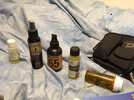
But not all my guitars are finished in Lacquer. Some of this stuff does nothing for a Polyurethane finish.
This afternoon, I removed the strings from an Epiphone Wilshire and my
much loved MIM Telecaster deluxe. The Epi has a rosewood fingerboard,
and I cleaned it with lemon oil because I've been playing the Epi a lot and
it had my grimy prints all over the place. Then I treated the fretboard with
a shot of Music Nomad's Guitar One.
I normally don't use Lemon Oil much, because I don't think it does much,
but in the case of an already treated fretboard that needs only surface cleaning,
the lemon oil worked fine and did no harm.
The "Guitar One" has both cleaners and Carnauba wax included, according to
the blurb. So that is a fine product for a Rosewood board, either that or Music
Nomad's F-1, which is intended for fretboard use.
I also like to wipe down the rosewood fretboard with a square of Gorgomyte
cloth. This has a great effect on the frets AND the wood, and often comes away
more grimy than I would have imagined. Which means that the grime is no longer
on the fretboard. I'm sure this enhances tone and sustain... *grins
Well and so... this is all pretty common knowledge, and even common practice.
But I don't think any of these efforts or products have the slightest effect
on a polyurethane finish.
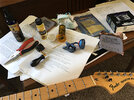
I wiped this Fender Tele neck down with the above cloth which I had been using to clean the Epiphone.
That took away all the fingerprints and shined the frets up just a bit, but I could see no other effect.
This MIM Telecaster is finished in Polyurethane AFAIK, and seems impervious to anything but hammer
blows or bullet hits. I have owned this instrument for almost ten years, and it was made in 2006,
and it shows no damage or ill effects from all that time. I haven't babied it... or even worried about it.
The back of the neck felt plasticky once I began getting used to it, so I worked it with a green
kitchen scrubbie, and then very carefully with a piece of steel wool (outside, with a good breeze
blowing the steel bits AWAY from the pickups)... No more plasticky feel, and no more problems.
I love this maple neck. I use the tele mostly for slide, so I haven't dug deep ruts into
the polyurethane'd fingerboard. I know it happens to Lacquered maple necks, do we need
to protect a maple fingerboard if it's finished in Poly?
This MIM Tele has been problem free since I got it professionally set up, and replaced the wiring
harness, using 500k pots for its Fender hum buckers. Problem free seems pretty cool to me.
It doesn't seem to need anything but an occasional wipe down with a clean cloth. The finish is black,
so fingerprints do show up, but they are easily removed with a bandanna, which I usually keep in
the case for wiping down strings.
Am I missing something? The Epiphone Wilshire also seems impervious, and has also been problem
free. The Wilshire has a white finish, which doesn't show anything. Finger prints might be there, but
how would anybody know? *grins Lemon oil just beads up and doesn't do anything... wipe it off.
Guitar polish just beads up and doesn't do anything. wipe it off.
My dog came in out of the rain once, ran right to the music room and shook his fur free of rain
drops and sand, all over all the exposed instruments in there. I followed him in there with a few
choice words and grabbed the nearest bandanna, to rescue my babies. I was very careful with the
two Lacquer coated instruments that got splattered, and wiped them down lovingly, trying not to
scratch them with sand grains. Lacquer can develop spots if it gets splattered with muddy water.
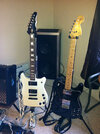
But the Telecaster and the Wilshire were unaffected. I let them
air dry, and the sand fell off. A quick wipe down with a clean bandanna, no problem.
What else should we do to care for polyurethane finished guitars?
There's been much written and discussed about the care and maintenance
of our Lacquer coated instruments. I have participated, and I have also
learned a lot.
But not all my guitars are finished in Lacquer. Some of this stuff does nothing for a Polyurethane finish.
This afternoon, I removed the strings from an Epiphone Wilshire and my
much loved MIM Telecaster deluxe. The Epi has a rosewood fingerboard,
and I cleaned it with lemon oil because I've been playing the Epi a lot and
it had my grimy prints all over the place. Then I treated the fretboard with
a shot of Music Nomad's Guitar One.
I normally don't use Lemon Oil much, because I don't think it does much,
but in the case of an already treated fretboard that needs only surface cleaning,
the lemon oil worked fine and did no harm.
The "Guitar One" has both cleaners and Carnauba wax included, according to
the blurb. So that is a fine product for a Rosewood board, either that or Music
Nomad's F-1, which is intended for fretboard use.
I also like to wipe down the rosewood fretboard with a square of Gorgomyte
cloth. This has a great effect on the frets AND the wood, and often comes away
more grimy than I would have imagined. Which means that the grime is no longer
on the fretboard. I'm sure this enhances tone and sustain... *grins
Well and so... this is all pretty common knowledge, and even common practice.
But I don't think any of these efforts or products have the slightest effect
on a polyurethane finish.
I wiped this Fender Tele neck down with the above cloth which I had been using to clean the Epiphone.
That took away all the fingerprints and shined the frets up just a bit, but I could see no other effect.
This MIM Telecaster is finished in Polyurethane AFAIK, and seems impervious to anything but hammer
blows or bullet hits. I have owned this instrument for almost ten years, and it was made in 2006,
and it shows no damage or ill effects from all that time. I haven't babied it... or even worried about it.
The back of the neck felt plasticky once I began getting used to it, so I worked it with a green
kitchen scrubbie, and then very carefully with a piece of steel wool (outside, with a good breeze
blowing the steel bits AWAY from the pickups)... No more plasticky feel, and no more problems.
I love this maple neck. I use the tele mostly for slide, so I haven't dug deep ruts into
the polyurethane'd fingerboard. I know it happens to Lacquered maple necks, do we need
to protect a maple fingerboard if it's finished in Poly?
This MIM Tele has been problem free since I got it professionally set up, and replaced the wiring
harness, using 500k pots for its Fender hum buckers. Problem free seems pretty cool to me.
It doesn't seem to need anything but an occasional wipe down with a clean cloth. The finish is black,
so fingerprints do show up, but they are easily removed with a bandanna, which I usually keep in
the case for wiping down strings.
Am I missing something? The Epiphone Wilshire also seems impervious, and has also been problem
free. The Wilshire has a white finish, which doesn't show anything. Finger prints might be there, but
how would anybody know? *grins Lemon oil just beads up and doesn't do anything... wipe it off.
Guitar polish just beads up and doesn't do anything. wipe it off.
My dog came in out of the rain once, ran right to the music room and shook his fur free of rain
drops and sand, all over all the exposed instruments in there. I followed him in there with a few
choice words and grabbed the nearest bandanna, to rescue my babies. I was very careful with the
two Lacquer coated instruments that got splattered, and wiped them down lovingly, trying not to
scratch them with sand grains. Lacquer can develop spots if it gets splattered with muddy water.
But the Telecaster and the Wilshire were unaffected. I let them
air dry, and the sand fell off. A quick wipe down with a clean bandanna, no problem.
What else should we do to care for polyurethane finished guitars?
Last edited: