RVA
Ambassador
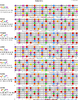
This is a great explanation of how to apply scales and modes, why some things sound good and some do not. Thanks to a member of Music Stack Exchange for clearing so much up for me. I threw in a very complete chart for reference.
=================================
The question, which if I might rephrase, is "if the notes are all the same, why does it sound terrible?"
There's an academic answer for this, and it's correct. But in practice I have found that guitar players--a group that typically is not strong in theory--don't get much practical benefit from that explanation. I know because I've tried and tried.
So here's my stab at the answer, which I've used successfully to shed some light on the subject for a guitar player. This is not the full explanation, there's a reason there's so many theory books on modes. But I have found that this can get you started on the right path.
--Side note: one common theme. You need to know the notes on the neck. Any answer to this question will refer to notes. If you can't look at a fret on the neck and after a couple of seconds figure out the note, you're already falling behind. ANY guitar player that says you do not need to know anything about notes is WRONG. Period. Any guitar player that argues this point, I walk away. It's a waste of time.--
Things you probably already know (if you don't, you need to before any answer of any kind will make sense), and we're talking basic western music here:
With the four above facts, the first inclination most guitar players have is, "ok, so let's take the first mode of the major scale: Ionian. In C Major, that's just the C Major scale. C D E F G A B C.
Let's build the base chord this mode represents, using the standard "recipe" (I use that term deliberately, keep reading):
1 3 5 7, so C E G B.
Sure enough, that's a CMaj7 chord. And if you look in any book on "modes", it'll say "Ionian is appropriate for soloing over Maj7 chords". The player runs the basic Ionian shape over the Maj7 chord and it sounds good.
Then it happens...
...but all the notes in all the modes are the same. So now I know how to rip over a Maj7 chord all over the neck, because I know all seven mode patterns!
And there's the problem. The player is correct, but doesn't understand why, so inevitably crashes into the "then why does it sound terrible" problem.
The issue: guitar players know everything about PATTERNS and SHAPES. They learn them, memorize them, practice them.
But until you break away from thinking in terms of patterns and shapes, and start thinking in terms of sound, you will never be able to capitalize on modes. A pattern is not a scale. It is a useful way to remember how to play a scale. But knowing a pattern does NOT mean you know anything about the scale. It's not unusual at all to see a player know all seven mode patterns, but if you stop them and say "what note is that and why are you playing it over this chord" they won't be able to tell you.
To illustrate: let's take C Ionian again. C D E F G A B C. Although this is Ionian, all seven mode are in there. So, you should be able to play any of those modes over a C Major chord and it should sound correct...right?
At a basic level...wrong. Not every note in that scale will sound straightforwardly "good" over the "recipe" of a C Major chord.
But how can that be? It's a C Major chord. I'm playing the C Major scale.
True, but consider the "recipe" of the chord (again, thirds from the root of the mode):
C E G B
Any of these notes will sound fine over this chord. They are the "chord tones" you always hear players talk about. As a general rule, if the note is in the chord, you won't get fired for playing it. So in any mode pattern, you just need to find these notes and play them, and you're ok. This feeds the notion that you can just play any of these notes in any mode over the chord and you're fine. But...
...what notes are left? D F A. There is a TON of analysis you could do on this, but for now, just consider those three notes. They are the 2 4 6 of the mode (which depending on the context, are often referred to as the 9 11 13, basically indicating that these are notes to be "added" to a chord, they are not part of the base chord. There's more to it, but at this point, it can be useful to think of it this way).
For now, we're going to refer to these as the "tensions" of the scale/mode.
--Side note: this is why you may have run into the confusing statement that "a mode is not just the same scale starting from a different root, each mode is a different scale" It's because the "chord tones" and the "tensions" are different in each mode.--
Back to tensions: these notes are not in the base harmonized chord, and when played over or added to that chord, create a sonic quality, or "tension" that somehow complements...or does not complement...the chord.
The best way to try it: record yourself slowly arpeggiating the chord, picking each note nice and clean and letting them all ring. Get at least a minute of yourself doing this.
Now, play it back, and play each "tension" over it. Pick the note, and let it ring. Use different registers (meaning the same note but lower/higher on the neck). You'll probably think, "the D sounds ok but it needs to go somewhere. The F, yeah that kind of works sort of in a more uncertain way but again sounds like it needs to go somewhere or do something, the A...hmm. That's tougher. Not sure what's going on there but it doesn't sound so good." And interestingly, depending on what register of the note you're playing, it can sound better or worse, even though it's the same note.
It's like you took the recipe for whipped cream and threw other ingredients into it. Some of them enhance it and you end up with whipped cream ++. Other times it's like you're throwing dirt into it.
Going back to the problem of "guitar players know patterns", consider what will happen if you try to play the sixth "pattern", or mode, of the major scale (Aeolian) over that C Major chord; the root of it is A. Because of where your fingers are used to playing that pattern, you're probably going to be playing that A note all the time. It's how you learned the pattern; start from the root A (a tough note choice to start improvising over a C Major 7 chord with), play the pattern all the way to the top (another A, this one probably sounding particularly awful since you'll probably hang on it), and so on.
This same example pans out to any of the other modes. Take the second mode of C Major, Dorian. D E F G A B C (D). Use the recipe to get the chord: D F A C (that's a Dmin7). Record it the same way, play each tension over it at different registers (E G B, again note the chord tones and tensions of this mode are different than Ionian). How's it sound, particularly that B? If you go to the sixth mode from the root (in this case you'll get Locrian, which has a root of B), how's that sound? Probably terrible.
And there you have it. All the notes are in the key. But you sound awful. It's because you aren't demonstrating an understanding of how a given ingredient interacts with the underlying recipe, which is about SOUND, not patterns.
I have seen books, and heard teachers, say "when improvising, avoid the 4(11) and the 6(13)". I have literally seen them called "avoid notes".
I think that's nonsense. Alan Holdsworth certainly doesn't seem to avoid any notes at all no matter what he's playing. But he gets away with it because he is EXTREMELY aware of the underlying chord he is playing over, and that's where we all want to be. I'm a huge fan of the 4(11) over min7 chords. That's just my ear though. But, knowing that, I can use it anywhere on the neck over a given min7 chord.
I once heard George Lynch say, "I find it really hard to play a bad note anymore." It sounds arrogant, but I have a lot of respect for Lynch, and thought carefully about what he meant, and realized he's basically saying what I just said in all those paragraphs above; if you LISTEN and don't just run through patterns, you eventually develop the near-unconscious ability to know what notes will not work, or at least, if you play one, how to resolve it so it sounds like it was all part of the plan.
One interesting thing about modes, is that as an improviser, you struggle to understand them, if you stick with it you eventually get it, you realize it's all about "recipes" (or that frustrating-to-beginner term "intervals"), and how to appropriately enhance recipes by adding or subtracting ingredients (meaning notes, or even other chords).
And then one day...you understand why Alan Holdsworth says, "I don't think in terms of scales, or modes, or any of that anymore. I just think about intervals."
Modes are a path to that understanding, and because they group and harmonize notes/chords in distinct ways, they are useful as compositional vehicles and so on.
But the patterns themselves mean nothing. That's just another guy at the jam sessions that sounds like a guitar god...until somebody starts playing a chord. It's the chord tones and tensions that a given mode represents, that makes them different and ultimately, is all that matters.
=================================
The question, which if I might rephrase, is "if the notes are all the same, why does it sound terrible?"
There's an academic answer for this, and it's correct. But in practice I have found that guitar players--a group that typically is not strong in theory--don't get much practical benefit from that explanation. I know because I've tried and tried.
So here's my stab at the answer, which I've used successfully to shed some light on the subject for a guitar player. This is not the full explanation, there's a reason there's so many theory books on modes. But I have found that this can get you started on the right path.
--Side note: one common theme. You need to know the notes on the neck. Any answer to this question will refer to notes. If you can't look at a fret on the neck and after a couple of seconds figure out the note, you're already falling behind. ANY guitar player that says you do not need to know anything about notes is WRONG. Period. Any guitar player that argues this point, I walk away. It's a waste of time.--
Things you probably already know (if you don't, you need to before any answer of any kind will make sense), and we're talking basic western music here:
- A scale has seven notes.
- A scale has seven modes. Each starts from a different note.
- By using the thirds of a given mode starting from the root (1 3 5 7), you get a chord.
- So, a scale has seven "harmonized" chords, each backed by a mode.
With the four above facts, the first inclination most guitar players have is, "ok, so let's take the first mode of the major scale: Ionian. In C Major, that's just the C Major scale. C D E F G A B C.
Let's build the base chord this mode represents, using the standard "recipe" (I use that term deliberately, keep reading):
1 3 5 7, so C E G B.
Sure enough, that's a CMaj7 chord. And if you look in any book on "modes", it'll say "Ionian is appropriate for soloing over Maj7 chords". The player runs the basic Ionian shape over the Maj7 chord and it sounds good.
Then it happens...
...but all the notes in all the modes are the same. So now I know how to rip over a Maj7 chord all over the neck, because I know all seven mode patterns!
And there's the problem. The player is correct, but doesn't understand why, so inevitably crashes into the "then why does it sound terrible" problem.
The issue: guitar players know everything about PATTERNS and SHAPES. They learn them, memorize them, practice them.
But until you break away from thinking in terms of patterns and shapes, and start thinking in terms of sound, you will never be able to capitalize on modes. A pattern is not a scale. It is a useful way to remember how to play a scale. But knowing a pattern does NOT mean you know anything about the scale. It's not unusual at all to see a player know all seven mode patterns, but if you stop them and say "what note is that and why are you playing it over this chord" they won't be able to tell you.
To illustrate: let's take C Ionian again. C D E F G A B C. Although this is Ionian, all seven mode are in there. So, you should be able to play any of those modes over a C Major chord and it should sound correct...right?
At a basic level...wrong. Not every note in that scale will sound straightforwardly "good" over the "recipe" of a C Major chord.
But how can that be? It's a C Major chord. I'm playing the C Major scale.
True, but consider the "recipe" of the chord (again, thirds from the root of the mode):
C E G B
Any of these notes will sound fine over this chord. They are the "chord tones" you always hear players talk about. As a general rule, if the note is in the chord, you won't get fired for playing it. So in any mode pattern, you just need to find these notes and play them, and you're ok. This feeds the notion that you can just play any of these notes in any mode over the chord and you're fine. But...
...what notes are left? D F A. There is a TON of analysis you could do on this, but for now, just consider those three notes. They are the 2 4 6 of the mode (which depending on the context, are often referred to as the 9 11 13, basically indicating that these are notes to be "added" to a chord, they are not part of the base chord. There's more to it, but at this point, it can be useful to think of it this way).
For now, we're going to refer to these as the "tensions" of the scale/mode.
--Side note: this is why you may have run into the confusing statement that "a mode is not just the same scale starting from a different root, each mode is a different scale" It's because the "chord tones" and the "tensions" are different in each mode.--
Back to tensions: these notes are not in the base harmonized chord, and when played over or added to that chord, create a sonic quality, or "tension" that somehow complements...or does not complement...the chord.
The best way to try it: record yourself slowly arpeggiating the chord, picking each note nice and clean and letting them all ring. Get at least a minute of yourself doing this.
Now, play it back, and play each "tension" over it. Pick the note, and let it ring. Use different registers (meaning the same note but lower/higher on the neck). You'll probably think, "the D sounds ok but it needs to go somewhere. The F, yeah that kind of works sort of in a more uncertain way but again sounds like it needs to go somewhere or do something, the A...hmm. That's tougher. Not sure what's going on there but it doesn't sound so good." And interestingly, depending on what register of the note you're playing, it can sound better or worse, even though it's the same note.
It's like you took the recipe for whipped cream and threw other ingredients into it. Some of them enhance it and you end up with whipped cream ++. Other times it's like you're throwing dirt into it.
Going back to the problem of "guitar players know patterns", consider what will happen if you try to play the sixth "pattern", or mode, of the major scale (Aeolian) over that C Major chord; the root of it is A. Because of where your fingers are used to playing that pattern, you're probably going to be playing that A note all the time. It's how you learned the pattern; start from the root A (a tough note choice to start improvising over a C Major 7 chord with), play the pattern all the way to the top (another A, this one probably sounding particularly awful since you'll probably hang on it), and so on.
This same example pans out to any of the other modes. Take the second mode of C Major, Dorian. D E F G A B C (D). Use the recipe to get the chord: D F A C (that's a Dmin7). Record it the same way, play each tension over it at different registers (E G B, again note the chord tones and tensions of this mode are different than Ionian). How's it sound, particularly that B? If you go to the sixth mode from the root (in this case you'll get Locrian, which has a root of B), how's that sound? Probably terrible.
And there you have it. All the notes are in the key. But you sound awful. It's because you aren't demonstrating an understanding of how a given ingredient interacts with the underlying recipe, which is about SOUND, not patterns.
I have seen books, and heard teachers, say "when improvising, avoid the 4(11) and the 6(13)". I have literally seen them called "avoid notes".
I think that's nonsense. Alan Holdsworth certainly doesn't seem to avoid any notes at all no matter what he's playing. But he gets away with it because he is EXTREMELY aware of the underlying chord he is playing over, and that's where we all want to be. I'm a huge fan of the 4(11) over min7 chords. That's just my ear though. But, knowing that, I can use it anywhere on the neck over a given min7 chord.
I once heard George Lynch say, "I find it really hard to play a bad note anymore." It sounds arrogant, but I have a lot of respect for Lynch, and thought carefully about what he meant, and realized he's basically saying what I just said in all those paragraphs above; if you LISTEN and don't just run through patterns, you eventually develop the near-unconscious ability to know what notes will not work, or at least, if you play one, how to resolve it so it sounds like it was all part of the plan.
One interesting thing about modes, is that as an improviser, you struggle to understand them, if you stick with it you eventually get it, you realize it's all about "recipes" (or that frustrating-to-beginner term "intervals"), and how to appropriately enhance recipes by adding or subtracting ingredients (meaning notes, or even other chords).
And then one day...you understand why Alan Holdsworth says, "I don't think in terms of scales, or modes, or any of that anymore. I just think about intervals."
Modes are a path to that understanding, and because they group and harmonize notes/chords in distinct ways, they are useful as compositional vehicles and so on.
But the patterns themselves mean nothing. That's just another guy at the jam sessions that sounds like a guitar god...until somebody starts playing a chord. It's the chord tones and tensions that a given mode represents, that makes them different and ultimately, is all that matters.