Thiele Small Parameters, Other Fun Music Mythology & Funny Stories:

Inspector #20

Ambassador of Tone
Fallen Star
Country flag
I still laugh when people make such a big deal about TSP's with respect to guitar cabinets. But, the trend has been to convince people that every minuscule detail makes some massive difference.

When discussing people's fascinating with gear, a top Los Angeles music producer told me once, "Be careful what you listen for because you will eventually convince yourself that you heard it.!"

Regarding Thiele Small Parameters:

Electric guitar speakers do not reproduce ‘low’ frequencies. The low E string of a guitar has a fundamental frequency of 82Hz, and so the frequencies at which Thiele Small parameters have significance are mostly below the operating range.

Also, the parameters are measured at very small signal levels. Guitar speakers become non-linear at very low levels compared to other types of speakers, greatly reducing the significance of Thiele Small parameters in actual speaker use. Using the Thiele Small parameters of a typical guitar speaker, you will find that halving or doubling the cabinet size makes minimal difference to the response.

Thiele Small Parameters have absolutely NO relevance to open back cabinets.

Guitar speakers are not recommended for use in ported cabinets because the increase in cone excursion, below the tuning frequency, can cause the thin paper edge of the cone to tear.

The cabinet size, shape and construction are of far higher significance than the internal volume. Cabinet design, using Thiele Small Parameters, ignore these most fundamental aspects. Important factors include the material you make the cabinet from, the panel sizes and shapes, how they are joined, how the cabinet is finished, the mounting of the speaker, etc. These, not Thiele Small Parameters, are the critical factors in the design and ultimately the sound of a guitar speaker cabinet.

Cabinet shape and frequency response: These graphs demonstrate the effect a loudspeaker's cabinet shape has on its frequency response.

attachment.php


Source: Celestion
 

Groove: A Phenomenology of Rhythmic Nuance - By Roholt​


Roholt introduces the question of musical nuances -- all those tiny (and sometimes not so tiny) deviations in pitch or duration made by musicians when performing. According to Roholt, groove is largely a matter of micro-timing nuances. Micro-timing nuances explain why two parts, identical in their rhythmic notation, can actually sound very differently. In the present case, it can explain why one part grooves while the other does not, or why one part achieves the right kind of groove while the other does not. A general problem is that such musical nuances are said to be ineffable (Raffman 1993), and our human capacity for pitch or duration discrimination being far more precise than our music-theoretical concepts (C-sharp, eighth-note, and so on).

Roholt tries to identify the listening attitudes that can induce the listener to have a groove experience. The bulk of the discussion rests on the opposition between "analytical" perception and what he calls "engaged" perception. Roholt claims that analytically focusing on the performance's micro-timing nuances (the point of view endorsed in the empirical studies done by pianist-researcher Vijay Iyer, discussed at length by Roholt) modifies our ordinary perception and disrupts the experience of groove, for at least three reasons.

First, grooves are gestalts, holistic experiences that depend on the perception of the music as a whole; their sense thus depends on their role in the whole. Second, some nuances can only play their role when they operate in the background of perception, and not in the role of figure. Roholt draws on an example discussed by Merleau-Ponty. Painters usually add reflections in the eyes that enliven the face of a portrait. But this detail must stay in the background of perception in order to function properly: as soon as we focus on it, the "gestalt of enlivening" disappears.

Like the reflections that direct our gaze towards the perception of a certain gestalt, micro-timing nuances need to stay in the background in order to mediate our perception of the music, guide our hearing towards the interlocking rhythmic patterns or the temporal tensions between two lines, and foster the feeling of groove.

Third, some perceptions need to remain indeterminate or ambiguous in order to produce their effects. Roholt draws here on the Müller-Lyer illusion. The peculiar feeling we have when seeing the Müller-Lyer lines is due to the ambiguity of our perception -- we effectively perceive the lines to be neither of the same lengths nor of different lengths. This feeling disappears as soon as we try to clarify our perception, for example by making the effort to confirm that the lines are actually of the same length. In a similar way, by allowing the micro-timing nuances to remain indeterminate or ambiguous, we perceive the musical parts both as rhythmically tight (far from the ample rubato that can be used by classical musicians) and as elastic/pushing/pulling/leaning, etc. This ambiguity plays a crucial role in the groove feeling.
 
Gear Acquisition Syndrome
by Jan-Peter Herbst & Jonas Menze
Consumption of Instruments and Technology in Popular Music

(NOTE: I actually laughed outloud that someone devoted so much time to this topic!!!)

Foreword
A few months ago, I was struck by a strong urge to buy a new electric guitar. I already
owned several. Some—a lovely purple Ibanez, a cheap red Hamer—lay in
various states of disrepair. I had retired a red Gibson Les Paul Studio guitar several
years ago, which now sits neglected, rarely taken out of its case. The guitar with
which I had replaced it, a brown sunburst Gibson Les Paul Signature “T,” is my
favorite guitar in terms of sound and playability, but as my aging body has become
more subject to back and shoulder pain, it has become too heavy to play comfortably.
So, too, has my far less expensive but still very fine ‘Made in Mexico’ Fender Stratocaster.
I bought a lighter guitar, a Guild Bluesbird, that has mostly served me well in
recent years, but has sometimes been unreliable. My goal, then, was to purchase
another lightweight solid-body electric guitar that would prove to be sturdy while
having great sound, good feel, and a nice aesthetic design. It did not take long for
me to set my sights on a Gibson SG, a guitar I had long coveted and almost bought
in the past. But then several other questions arose: which model of SG, or year? Did
I want a brand new instrument or a used one? Was I willing to pay a high price for a
‘vintage’ SG or would a more recent model suffice? I spent the better part of a month
exploring my various options, reading online reviews of different SG models and
years, before finally settling on a used SG ’61 Reissue model made in 2006 that I
found for a reasonable price on the online musical instrument and gear mega-site
Reverb.com. I have played the new guitar nearly every day since my purchase and
remain pleased with my choice. For now, my guitar collection feels sufficient to suit
my needs. However, the purchase of a new amp may not be too far in the future…
Do I suffer from GAS, or Gear Acquisition Syndrome, the phenomenon that
gives this book by Jan Herbst and Jonas Menze its title? I have never considered
myself to have anything like an excessive interest in buying guitars and related gear.
The guitars that I own have been accumulated over decades, although I have admittedly
purchased more in the last ten years—three—than at any previous time. Yet
that can be explained by different factors: my increased disposable income as I have
advanced in my academic career; the fact that I joined a band at the age of 48; and
as alluded to above, my aging body which has entailed searching for a guitar that is
comfortable to play. I own three amplifiers, each with a distinct purpose: one is my
full-time amp that I play at home and when I gig; one stays in my office on campus;
and one resides in the space where I rehearse with my band. My pedal collection is
notably small, and many of the pedals that I own I acquired more than twenty years
ago, such as an early generation Boss DD-2 digital delay dating from the mid-1980s.
The only significant recent addition is an MXR Super Badass distortion pedal, which
I use all the time to feed into my Traynor tube amp. Otherwise, I mostly prefer the
straightforward signal that exists between my guitar and amplifier, something that
10.5920/GearAcquisition.fulltext
 
Last edited:
Gear Acquisition Syndrome
by Jan-Peter Herbst & Jonas Menze Pt 2
Consumption of Instruments and Technology in Popular Music

Foreword
2
sets me apart from so many contemporary players whose well-stocked pedal boards
are a key to their expressiveness.
My moderation might make me an unlikely victim of GAS. The popular image
of GAS is one of excessive, extreme behavior, of unregulated desire for that next
object, the purchase of which only leads to temporary satisfaction before the quest
begins again with a new target. While some have treated GAS as though it merits
serious consideration as a psychological disorder, more common is the tendency to
present it with humor, as Jay Wright does in what has been to date the only booklength
treatment of the subject. In a passage quoted by Herbst and Menze, Wright
(2006: 22) observes:
GAS can strike you at any time, but onset normally occurs upon seeing, hearing,
or touching a particular axe. The attack itself can range from mild to severe… You
drool, you stare, you drool some more… Your mind races, as you imagine the rest
of your life with this baby in it—how much more skilled, happy, and fulfilled you
would be… You’re faced with two immediate problems: 1) how to find relief from
this powerful force, and 2) how to manage a transfer of ownership. That, my friend,
is a GAS attack.
I am tempted to say that Herbst and Menze address the topic with more seriousness,
but that does not tell you very much. More to the point, they address GAS with far
more nuance than available commentaries have typically done. In their analysis,
GAS is comprised of a complex set of motivations, some eminently practical and
some thoroughly driven by emotion. Rather than draw a strict line between those
impulses that may be deemed ‘healthy’ and those that may appear ‘unhealthy,’ they
view the phenomenon as existing along a continuum wherein the pragmatic drive for
improvement and a more basic sort of wish-fulfillment are always vying with each
other for supremacy. From their perspective, GAS is a particular manifestation of
the wider field of desires and practices that arise from living in a society and an
economy that are organized to a large degree through acts of consumption.
In his groundbreaking study of digital music technologies, Paul Théberge emphasized
the degree to which consumerism had become central to what musicians do
as musicians. With the advent of affordable digital synthesizers in the 1980s, electronic
keyboard instruments were equipped with an expanding range of pre-set
sounds that the practicing musician could select at the touch of a few buttons. Addressing
this new availability of ready-made electronic sounds that were designed to
emulate everything from a violin to a snare drum to a digeridoo, Théberge (1997:
200) asserted:
In effect, musical production has become closely allied to a form of consumer practice,
where the process of selecting the ‘right’ pre-fabricated sounds and effects for
a given musical context has become as important as ‘making’ music in the first
place. Musicians are not simply consumers of new technologies, rather their entire
10.5920/GearAcquisition.fulltext
Foreword
3
approach to music-making has been transformed so that consumption…has become
implicated in their musical practices at the most fundamental level.
GAS might be seen as an outgrowth of this development. As Herbst and Menze
demonstrate, many musicians spend as much or more time shopping for new gear—
whether instruments, effect pedals, amplifiers, or for horn players, new mouthpieces—
as they do playing their instruments. They do so out of a hope or conviction
that a new piece of equipment will reinvigorate their playing or expand their stylistic
range by giving them new sounds or techniques to apply. In this way, and following
from the insights of Théberge, the act of purchasing new equipment is not only incidental
to their musical lives and identities but is essential and inextricable from the
self-definition of contemporary musicians.
Study of these aspects of modern music culture has remained limited in the more
than two decades since Théberge’s work appeared. When music consumption is
treated by scholars, it is nearly always the consumption of recordings that is at issue.
While musical instruments have begun to receive more dedicated analysis in recent
years, the ‘new organology’ as it has sometimes been called has not typically placed
consumption at the forefront of concern. Herbst and Menze’s study of Gear Acquisition
Syndrome therefore constitutes the most concerted and substantial effort to
address the drives and processes through which musicians acquire the tools of their
trade to appear in many years, and this book makes plain why the subject deserves
attention and how much we have left to learn about it.
Central to the book’s success is the authors’ deft balance between theoretical
and empirical considerations. Theoretically, they employ concepts such as Robert
Stebbins’ notion of ‘serious leisure’ and Russell Belk’s idea of the way that consumer
items contribute to the formation of an ‘extended self’ to explain why the
purchase of instruments and associated gear has such consequence for understanding
how musicians think of themselves and what they do. Empirically, they combine the
results of extensive survey research with close reading of online message boards to
bring us inside the world of practicing musicians and their ways of talking about
their gear to an unusual degree. Doing so, they examine such factors as how musical
genre affects decisions about gear, whether or not players think of themselves as
‘collectors,’ how much influence the gear choices of well-known musicians have
upon the preferences of amateur players, and how gender informs participation in
networks of gear consumption, among several other issues. Their findings are sometimes
surprising and always illuminating, not least in the discovery that GAS is not
only found among guitarists—who have been most commonly associated with the
phenomenon—but is to a significant degree shared among players of diverse musical
instruments.
To return to the question I asked above: do I suffer from GAS? I would have
resolutely said no before reading this book. Now, I am not so sure. Yet I think a yes
or no answer is not the point. Reading the insights of Herbst and Menze prompted
10.5920/GearAcquisition.fulltext
Foreword
4
me to reflect on my own relationship to the musical equipment I possess in a new
light. I may not feel compelled to regularly update my gear collection at every turn,
but I absolutely view the amps, pedals, and especially the guitars that I own as a
major part of my ‘extended self,’ every bit as much as my collection of vinyl and
compact discs, or the shelves of books that fill my house and campus office. Anyone
who plays an instrument in a more than casual way will likely see themselves in
some facet of this book, and will come to a new understanding of how the gear they
own and use is both personally and socially meaningful.

Steve Waksman
Sylvia Dlugasch Bauman Professor of American Studies and
Professor of Music, Smith College
Northampton, Massachusetts, USA, January 2021
10.5920/GearAcquisition.

Here's the link to the full article:

 
Last edited:
FROM PLAY GUITAR PODCAST #141

When you think of lead guitar, distortion comes to mind. But, some of the most popular lead guitar solos have used clean to very light gain tones.


Mark Knopfler, John Mayer, David Gilmour, Stevie Ray Vaughn.... The list could go on and on. These fantastic guitarists know how to build a great guitar tone.


The thing is, if you listen to a lot of their music, it's not all full out drive. A good percentage of their classic solos use less than dirty tones.


Once you are up and running, cranking up the distortion and adding an overdrive pedal in front of it becomes the go to. It gets easy.


It can be very difficult to find a tone that gets your point across, fills the sonic space, and features your skills when you don't have the crutch that hides a lot of unflattering mistakes.
What I'd like to do today is build three different low to no drive tones and show the tips and tricks of how to make them sound great.


Clean Lead​


It is what is says: Clean. Just the clean sound of your amp. No drive, gain, distortion, fuzz, whatever you want to call it. It's the bottom floor of your tone and other than strumming a few chords, it doesn't get used too much by most lead players


Volume The number one property of a good clean lead.​


It has to be featured. In a band situation, your level for rhythm guitar is not going to cut it. The single notes of a clean lead will get lost.


You need to have a way to get up and over the rest of the instruments and put yourself out front.


With distortion it is natural for the level to jump up a bit, but for clean you have to think ahead.


There are two ways to make this happen.​


The first is to set your amp to the highest volume you will need.
Not the maximum volume, but just how much you will need to peak out over the band.
"But, won't that make my rhythm guitar too loud. ... Yes it will.


All you have to do is use the old volume knob on your guitar or a volume pedal.
Roll it back to normal volume and then dial it wide open for the leads. It sounds simple but you would be surprised at how many have a hard time with this.


It must be natural for guitarists to turn everything up and run on 10 all of the time. Then, the thinking is "I'm going to need some sort of pedal to get louder.
This is also a good idea for dirty tones as well. The lower the output from your guitar, the less distortion comes through.


The second is to push the amp with some sort of clean boost. For clean, a boost pedal in the effects loop is the best idea. It just gives the power amp of your amplifier more to amplify.
It doesn't slam the front end of the amp, and rob you of the next topic we need to be concerned with:


Headroom​


Headroom is how much volume you can pump into something or how loud you can crank our amp before it starts to distort.


If you try to boost your amp with a pedal into the guitar input of your amp, you may start to hear some distortion. This isn't necessarily a bad thing, just not what you are trying to get now. Higher wattage amps tend to have more clean headroom than smaller ones.


Compression​


One thing that distorted guitar sounds have all over clean ones is compression. When you distort a guitar signal, it clips. It cuts the peaks off of the loudest wave forms. This makes the peaks quieter and closer in volume to the quieter sounds. It crunches the waveform and gives you a added bonus: perceived sustain. You don't hear how drastic the volume drop is from the attack of a note to the end. It all sounds very even.


This is important because when you need to be the focus of attention and you are needing to be heard over the other instruments, compression keeps all of your playing at a similar volume and out front.


Clean amps usually don't have a lot of compression. But, don't worry, there is an easy fix for this. The compressor.


Mark Knofler and David Gilmour are masters of using compression on clean guitars to give the impression of lots of sustain but still remaining clean.


Delay/reverb​


The last thing that is usually used to dress up a clean lead guitar sound is delay and reverb. These effects put the guitar in a space. You can think of Delay as the smack against the closest wall and reverb as the sound of the whole room.


Making sure to place the clean lead is pretty important to adding interest to a relatively normal guitar sound.


On the Edge​


The next step up from the clean lead is playing on the edge of breakup. This sound is very interesting because you are getting the best of both worlds. Having a tone that is sometimes clean and sometimes dirty is very expressive and interesting.


Being able to do this without having to stomp on a pedal to change sounds makes things super easy and expressive.


Touch sensitive​


Setting your amp or pedals on the edge of breakup so that when you pick light you get a clean sound, and when you pick with a heavy strong attack, your tone starts to saturate and distort.
Players say that they don't have to think with a tone like this, they just have to feel. You can get all sorts of emotions out of your guitar just from your guitar pick.


There are two ways to do this as well by setting up your Amp or your pedal.


If your amp has some sort of d rive channel, this becomes easy. Just turn the drive channel down, start playing and turn it up until you hear a slight breakup in your playing. Then try it out.


If your amp doesn't have a drive channel. You could push your amp to distort with a boost pedal until you hear the same thing. The problem with this depends on how loud your amp is when you push it.


To get this without a ton of volume, use an overdrive pedal like a Tubescreamer, blues driver, or Klon Centaur clone, to simulate the very light amp gain and set the output to the desired volume.


Still want to be heard​


Even with this light bit of overdrive, you still have to be conscious about your overall volume. You still are competing with the whole band during a solo.


A lot of players set their amps rhythm volume at this breakup point. You then just have to roll down your volume on the guitar for clean, full up for low gain lead, and then boost with an overdrive pedal for your dirty lead sound.


Compression​


One thing that distorted guitar sounds have all over clean ones is compression. When you distort a guitar signal, it clips. It cuts the peaks off of the loudest wave forms. This makes the peaks quieter and closer in volume to the quieter sounds. It crunches the waveform and gives you a added bonus: perceived sustain. You don't hear how drastic the volume drop is from the attack of a note to the end. It all sounds very even.


This is important because when you need to be the focus of attention and you are needing to be heard over the other instruments, compression keeps all of your playing at a similar volume and out front.


Clean amps usually don't have a lot of compression. But, don't worry, there is an easy fix for this. The compressor.


Mark Knofler and David Gilmour are masters of using compression on clean guitars to give the impression of lots of sustain but still remaining clean.


Delay/reverb​


The last thing that is usually used to dress up a clean lead guitar sound is delay and reverb. These effects put the guitar in a space. You can think of Delay as the smack against the closest wall and reverb as the sound of the whole room.


Making sure to place the clean lead is pretty important to adding interest to a relatively normal guitar sound.


Light Overdrive​


Using an overdrive pedal is by far the most common way to get a good lead sound. You can dial in the amount of distortion you want with the drive knob, adjust the tone of your lead sound, and adjust the overall volume with the output knob.


Super easy and sounds great.


This form of low gain lead tone will usually have a solid light breakup.


It usually sounds like either a different amp or a different channel on your amplifier.
The lower amount of distortion usually doesn't cover up your tone too much and you can hear the nuances of your guitar.


You get the sustain from the light distortion and can pick from a ton of different drive sounds just by adding a new pedal.


But even the heaviest of metal pedals all have a drive knob. Take the one you have and turn that drive knob down and see how it sounds.


Mids or no Mids​


The thing I usually am concerned with when using overdrive pedals is if they have a mid hump or not.


This needs to match your amp. If you have a fender amp that has a very scooped sound (light mids) a pedal that has a mid hump will fill out your tone nicely for solos.

But, If I'm using an amp that has a lot of mids already some Marshalls for example, I may or may not use something that adds even more mids to the tone ( like a blues driver).
 
Listen to interviews of Susan Rogers talking about working with Prince.

She says he always worked fast and never spent time dicking around with things. And that was when he was making his most popular music. It's true his ear was probably better than most people and maybe he got good sounds faster, but the point remains that in an era when people might spend a week working on getting the snare perfect he would go with "good enough" and finish a track in a day.
 
"It’s best not to waste too much time on minor details. Looking at the bigger picture, it doesn’t really matter. Listeners aren’t thinking “oh geez, yep too much 3khz right there.” Keep a well balanced mix and an impactful arrangement, and you will have a solid track..." - Mike Shipley - Engineer Def Leppard's Pyromania
 

Thoughts From Producers:​

Don’t Waste Time Arguing Over What’s The Better Gear/DAW​

Sitting around for hours on internet forums, arguing what’s better, FL Studio or Logic Pro is a big waste of time. Stuff like this is hardly worth your time and it should be avoided at all cost. I can guarantee you that the biggest producers right now are not arguing with people on GearSlutz; they’re working.

Don’t Be A Perfectionist​

Expanding on this point, many people have a perfectionist mentality they believe will help them separate themselves from the rest of the herd, however, the truth is that all it does is acts as a hindrance.

Don’t Be A Perfectionist​

Expanding on this point, many people have a perfectionist mentality they believe will help them separate themselves from the rest of the herd, however, the truth is that all it does is acts as a hindrance.

Mixing and Mastering Is Supposed To Enhance Rather Than Fix a Song​

“We’ll fix it in the mix,” is a term that has become a running joke/meme among producers. Musicians often don’t want to recreate something, so everyone just throws their hands up and says, “we’ll fix it later.” However, from what I understand, this situation rarely comes to fruition, and it ends up going unfixed, and the final product is negatively affected. If something needs to be re-done or re-recorded, just do it and get it over with.

In other words, you’ll spend hours and hours EQing the snare, when the difference it would’ve made is practically negligible, and nobody will notice. The truth is that no one can see - or hear - just how much work you’re putting into the EQ'ing or mixing process, and nobody cares either. People just want a good song, they don’t care about pleasing the “audiophiles” or whatever those people call themselves, and don't waste your time trying to please other guitarists/musicians who falsely claim they can hear the difference between a $10.00 cable and a $100.00 cable. Those people are not worth your time and effort.

In the beginner and intermediate phase of acquiring your skillset, it’s better to work hard and publish often, rather than spend all of your time obsessing over minute, sonic details that nobody will even notice anyway.

On the collaboration point, this is a great way of meeting people and getting to know the individuals in your local industry. The truth is that you need people to succeed at something. One person can’t just be an island with nobody around them, it won’t work out. Moreover, many people spend all of their spare time trying to “get better at making music,” but they never actually publish their tracks or try and meet other people in the scene. They end up just being this forever-casual musician/producer who hasn’t published anything really
 
Last edited:
Real Studio Conversations:

Guitarist: "I think my cabinet needs to be miked from the back of the cabinet too."

Engineer: "You've been dicking with that setup for 30 minutes.

Producer: "Get this guy the funk out of here and get me somebody in here who can play."

_______________________________________________________________________________________

Guitarist: "I know it can be better."

Producer: "It can always be better. What we want is a finished project."

_______________________________________________________________________________________

Guitarist: "I think the wood in this guitar makes it sound so sweet on this track."

Producer: "Keep telling yourself that and eventually you'll believe it."

_______________________________________________________________________________________

Guitarist: "I can play that perfectly in three takes."

Producer: "I'd rather have one take, full of energy, than perfection."

______________________________________________________________________________________
 
Below, you can find the next part of the interview where Jeff recalls producer and engineer Paul Lani who worked with them on "So Far, So Good... So What!" who was eventually fired by Megadeth's Dave Mustaine.

To give some context before we go into it, the story goes that Lani took Mustaine to Bearsville Studios, near Woodstock, New York to mix the album. To those who may not know, the studio is located in a somewhat secluded part of the state and is surrounded by forests. Initially reluctant, Mustaine finally had enough when he, while drinking his morning coffee, allegedly saw Lani outside of the studio feeding a deer while wearing nothing but underwear. He flew back to Los Angeles and officially fired Lani after the incident.

Wasn't Paul Lani fired as well? Was that before your time in the group?​

That guy was a piece of work… I gotta say that with the disclaimer that I loved the next album he did, which was Enuff Z'Nuff's 'Strength' — that is a killer, killer record and he did an amazing job on that record. Derek Frigo was an amazing guitar player, rest his soul, but the thing I liked about Paul was that first night when I went in there, the very first night, he was there when I did 'Darkest Hour', and he was jumping around the room saying, 'This is great, man. You're killing it. I haven't had this much fun since I worked with Steve Vai on Alcatraz's 'Disturbing The Peace.'' So I took that as a big compliment and that gave me a lot of confidence to continue to be there and do what I had to do.

I know they went to Bearsville studios. I think that's Todd Rundgren's place to mix it and there wasn't a lot of mixing going on and the mixes weren't turning out that great and Mustaine called me from Bearsville, none too happy, and I mentioned that I knew Michael Wagener, and I didn't even think about it when I mentioned that, that he had done 'Master of Puppets'. I knew him because Michael had just done my demos so he'd been working with me and I'd known him from making some of my demos. So when I said well, I know Michael Wagener, Mustaine jumped on that in a second. I wasn't even really aware why but that's what led to Michael Wagener doing the actual mixes to finish it off. When you pull up the digital files, there's kind of a diary of what went down at Bearsville and Michael Wagener called me and said, 'What was Paul Lani doing? Out feeding the deer? Because he's doing a mix like every four, six hours.' It didn't seem like there was a lot of work being done.

Yeah, I heard something about a guy in his underwear feeding the deer or something.​

Yeah, there you go.
 

How Pete Willis Was Fired From Def Leppard​

0*TvgdNHsEHvugzNT9.jpg


For many Def Leppard fans, their best work included original guitarist Pete Willis.

Sadly though, the last fans heard of his guitar playing were the rhythm tracks on Leppard’s blockbuster Pyromania album, as he was fired while the band was recording it with producer Mutt Lange.

Willis was an integral member who co-wrote many songs on On Through the Night, High ‘n Dry and several off Pyromania (“Photograph”, “Too Late For Love”, “Comin’ Under Fire” and “Billy’s Got A Gun”).

It was Willis who brought singer Joe Elliott into the fold, as well as the late Steve Clark.

Naturally, as a bunch of 20-something’s from Sheffield, England, the band enjoyed partying as much as the next rock star, but Willis had more of a problem with alcohol than the other members.

Even before he was fired, there was trouble with Willis as they were touring in support of High ‘n Dry. His eventual replacement, Phil Collen, told musicradar.com that Elliott actually called him and told him to learn the songs.

“What happened was, Pete Willis was having some problems with the band — things were just not going well — and one day, during the High ’n’ Dry tour, I got a phone call from Joe Elliot, who was in the States at the time. ‘Can you learn 16 songs in two days?’ he asked me. ‘Uhh, yeah,’ I said. ‘Why is that?’ And then he told me that things weren’t great with Pete, that it wasn’t working out,” said Collen. “Funny thing is, Joe called me two days later and told me that things were OK again.

That would have been in the late summer/fall of 1981.

Things with Willis would come to a head during the recording sessions for Pyromania less than a year later in England. After a long night of partying, Willis showed up at the studio in rough, rough shape.

The band were working on “Stagefright” and Willis basically could not play the guitar, so Lange told him to go home and dry out.

It was then that Leppard decided to fire Willis, and Elliott was tasked with breaking the news to his bandmate. Incidentally, the band wanted then-manager Peter Mensch to tell Willis, but he refused, reportedly saying “No, it’s your band. You’re big boys.”

So Elliott broke the news to Willis over the phone on July 10, 1982.

“He was nice about it,” Willis said of Elliott’s phone call. “He said ‘I’m really sorry, Pete, I didn’t want to have to be the one to tell you this, but I got the job anyway.’ After he said that, I knew what was coming next, I said I wanted to come down and talk about it. I didn’t want to change their minds as much as to ask why — although deep down, I knew why.”

The next day, Willis met with the rest of Leppard at Mensch’s London home and was told again he was no longer a member of the band.

Elliott recalls Willis offered to get psychiatric help, but the singer responded that it was too late for that. “I had to be adamant because I knew nobody else would stand up. I said ‘It’s finished, there’s nothing to discuss.’ After that, he went ‘Well, to be honest with you, I’m slightly relieved about it.’ And that was it.”

With that, the band brought in Collen to finish the Pyromania sessions where he laid down some solos and added backing vocals, then became a permanent member in the band.

Sadly though, alcohol addiction cost Def Leppard another member when Steve Clark died in 1991.

After Willis left, Def Leppard lost some of their hard rock edge as Hysteria, the follow-up to Pyromania, boasted more of a radio-pop feel to it.

To their credit, Willis still gets all of his song-writing royalties and he’s never had any hard feelings towards his former band.
 

I THINK TO SUMMARIZE THE RECORDING OF HYSTERIA I’D SAY WE TRIED TO DO WHAT PEOPLE DO NOW WHEN THEY RECORD IN PRO TOOLS, BUT BACK IN 1985 PRO TOOLS DIDN’T EXIST... - Nigel Green​

In the UK, during the 80’s, record production was getting more and more sophisticated. Most of the time we recorded each instrument separately, a big departure from what was going on in the late 70’s where bands tended to record live together. I think the reason was that in the 80’s it was all about making music production larger than life. Like Spielberg with the movies, everything was edited to the nth degree. You had to blow people’s minds.

But that creates its own set of problems. Recording instruments separately requires re-creating the original feel of the music. This is something that naturally happens when any band plays together but when you record one instrument at a time the feel is very hard to replicate and it takes time. We would punch in and out of the multi- track tape recorder. (‘Punch’ was a term used in the old days meaning to replace parts of the recorded music in an ef ort to improve upon the original performance). Sometimes we’d replace whole sections of songs, other times just bars or even a single beat. We’d do this over and over until we got the feel just right.

Of course this meant that instead of an album production taking a month or so, it could take anything up to a year. Of course with Hysteria we completely annihilated that barrier… it took three years!

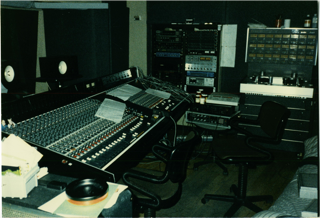
Control-Room-Windmill-Lane-1.png


To be fair though, during the first year of recording the band used a different producer, Jim Steinman. After 8 months they parted ways and I was brought in for what I thought would just be finishing off recording vocals and final mixing. But it soon became clear that a lot of the record still had to be recorded. I did my best re- recording guitars to beef up the sound and improve certain parts. We plodded on for quite a while but in the final analysis it was really Mutt they needed.

I have to say Steve Clarke was a really funny guy to work with. You had to have a sense of humor working the hours we did or you’d go crazy. We’d be working on part of a song for hours at a stretch and suddenly he’d say, “Well, we’ve got all the notes… now we just need to get them in time and in the right order.” He’d have us rolling around laughing.

Then just after Christmas, 1984, Rick Allen had a terrible car accident and lost his left arm. We were all shell-shocked. The story I heard was Mutt went to Rick’s bedside and convinced the 21 year-old he still had a career playing with the group. His eyes lit up; all he ever wanted to do was play drums. That’s when Mutt decided to get involved, and Hysteria the album really got started. From that point on it was two years in the making.

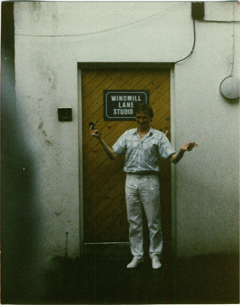
We recommenced recording in a Dublin studio called Windmill Lane 2. It was a jingle studio with a pretty cheap Soundcraft board. From the get-go we all knew this was going to take a long time so we saw no reason to be locked into a really expensive studio for the lengthy recording process. We’d save that for the mixing.

To explain why Hysteria was recorded the way it was you have to look back to Def Leppard’s previous album, Pyromania. Mutt and the band would write and record the music while in the studio. Mutt is all about the song first, then the performance, then the sound. He wanted freedom in the studio to change parts of songs anytime he thought they could be improved upon musically, and that meant at anytime during the recording process. This led him to decide to leave the drum arrangements until last in the whole recording process. The reason is once you have the drum parts set in stone in a recording it’s very hard to change the arrangement later on. With an analog multi track tape machine pretty much everything you’ve already recorded is set in stone.

Nowadays, changing the arrangement of a song is a lot easier to do using Pro Tools. But we didn’t have Pro Tools back then. (You’re going to be sick of me saying Pro Tools soon)☺️

So on Pyromania they decided to leave the drums to the last and start recording bass and guitars to what was essentially a click track. The click track was there to help them record everything in time before they recorded the final drums. It was a Linn Drum (one of the first computer drums) playing straight time, no cymbals, no toms, just kick, snare and hat.

At the time this was considered a very unorthodox way to record. No one in the music business was recording the drums last. But there was a real method to the madness. It allowed Mutt and the band to explore new ideas freely.

(Very much like everyone does nowadays with Pro Tools.☺️ Aaaagh.)

On the Hysteria album Mutt was changing and adding things even at the final mix stage. On Gods Of War, Phil Nicholas (Mutt’s Fairlight programmer) found all the Thatcher and Reagan sound bites to sample into the Fairlight so we could use them on the final mix.

The intro to Pour Some Sugar On Me was changed even after the album was finished (and pressed!). It was just Phil Nicholas and me messing around with samples on the Fairlight, for an extended version of the song. Mutt came in and heard it and said, “Great, do it.” Without recording the album the way we had, we wouldn’t have been able to make changes like that.

On Hysteria, the drums were always going to be recorded last. But after Rick’s devastating car accident Rick had to design and build a whole new drum kit with electronic triggers, and learn to play drums a different way so that he could be ready to record with his new drum kit before we went into the mixing.

On Pyromania they put the bass down first on all the songs. That’s fine if you record the bass in one take, but, as I said before, they were punching in bars and even beats to make sure they had the right feel. This would often take all day. What they didn’t realize is that the bass would slowly drift out of tune because the air conditioning kept coming on and off, changing the temperature of the room. This would change the tension of the bass strings and therefore the tuning of the bass. So if they weren’t constantly checking the bass with a tuner it could drift out of tune. It’s hard to hear that happening without any other instruments interacting with the bass at the time. The end result was the guitars had to be tuned slightly differently between choruses, verses, and bridges on different songs on Pyromania. It was a nightmare.

So on Hysteria we decided to do all the guitars first before we put the bass down. It’s a lot easier to hear guitars drift out of tune. The problem now was we were recording guitar parts to no drums or bass, just a click track to keep us in time. It was very hard to envision what the dynamics and the final sound was going to be like without bass and drums.

On Pyromania the guitar sounds were recorded using a Marshall 100 watt amp. But they went through a ton of guitar amps (and a whole lot of time) before they found the right one. Eventually I think the amp blew up.

This-must-before-we-decided-to-go-amp-less-1.png


When Mutt finally arrived on the Hysteria album he didn’t want to go through that again so we decided to go for processed guitar sounds using something called a Rock Box. Other times we would us a Rockman, made by Tom Scholz. The Rock Box had similar settings to the Rockman: a clean sound and a distorted sound. The difference was you could turn off the chorus and effects on the Rock Box allowing you to use your own effects.

So the plan was we were pretty much going to use either the Rockman, or Rock Box for everything guitar wise. If the sound was not right after we added EQ or some outboard gear then we’d maybe change to a different guitar or add some kind of effects pedal. Sometimes I would blend a Roland studio flanger in to beef some of the power chord sounds. We pretty much would try anything to make it work, but in the end if it wasn’t cutting it Mutt and the band would change the guitar part altogether.

A lot of people couldn’t believe we didn’t use real amps. But this is where Mutt taught the band and me that music production is about the song and arrangement first, then performance, followed lastly by the sound. If the song and the arrangement is great, and the performance is great, then the sound quite often takes care of itself.

We were recording the guitar verse jangle for the song, Hysteria. Sav was playing the part and the problem we were having was the Rock Box clean sound was so compressed you could hear every finger fret movement almost louder than the guitar sound itself. We liked the sound of the jangle but there was no way we could allow this scratching fret noise between chord changes to be part of the recorded sound. So what to do?

Paris-1.png
 

I THINK TO SUMMARIZE THE RECORDING OF HYSTERIA I’D SAY WE TRIED TO DO WHAT PEOPLE DO NOW WHEN THEY RECORD IN PRO TOOLS, BUT BACK IN 1985 PRO TOOLS DIDN’T EXIST... - Nigel Green​

PART II​


We decided to punch in each chord change separately. Sav would be playing the next chord while the first chord was playing back from the multi track and when the time came we’d just punch in the next chord, eliminating the fret noise completely and giving us a clean smooth jangle sound. Recording like this and trying to get the feel right at the same time could literally take days. We had to double track each part plus add embellishments later on in the song. So we came up with the idea of recording all the parts we needed for the song on a single 8 bar section of music, say the verse. Then we’d do another 8 bars for the bridge. And the same for the chorus. We’d record everything we needed… background vocals, the lot. The idea was to create a whole recorded song on the second multi track machine by offsetting and transferring 8 bars at time from the original multi track machine.

It was revolutionary at the time but something you can do in 5 minutes in Pro Tools now. All we had then though was two Studer A800 analog 24 track tape machines synced together by a synchronizer called the Q lock and an AMS digital delay.

I would offset one machine against the other by 8 bars using time code, which was only frame accurate, so I used an AMS delay in the chain so I could break the increments of the time code down to a smaller amount, milliseconds. Then I would punch in the next 8 bars using the Q lock and AMS to move the timing around until it felt natural as if the band had just played it. So it would take maybe up to 20 tries punching in each time to get the timing right against the click track. If I screwed up a punch l’d have to go back and do the part before again.

It literally had to be perfect, timing wise, for this whole thing to work. Many times I’d walk out of the room, come back in again, and pretend I was hearing the song for the first time (Ha ha) to see if the 8 bar punch-ins were noticeable or not.

It took me a week to do 3 songs this way: Hysteria, Rocket, and Armageddon It. Mutt and the band left me on my own to do this while they were in another room writing more songs. I tell you… sometimes I’d run out of that room screaming. Fortunately we only recorded those three songs that way. The rest of the album we recorded a more conventional way, punching in on the multi track.

You can see now why this album was taking so long to record. Remember that by the time we got to the end of the recording we still had to record Rick’s drums on tape. When we finally got to the mixing stage I was burnt out. It was a relief when Mutt got Mike Shipley in to start the mixing. He came in with fresh ears and was able to create, with Mutt, the drum sound in the mix we needed to sow the album together and make it the classic we know today.

But even still it was not without problems. When we finally got into Mutt’s studio on the first mix there was something seriously wrong with the Fairlight 3. (The Fairlight was one of the first computers you could use to sample sounds, I think it was 16 bit, pretty basic compared to nowadays, but it enabled use to add sounds to the mix you would not be able to do without a sampler in those days. ) Anyhow It just would not stay in time with the multi track tape. I was getting really worried thinking it was something to do with all my hand syncing of tracks earlier on. Fortunately (for me!) we found out the Fairlight at fault and we ended up using another computer sequencer instead. The Synclavier.

The only problem was we didn’t own a Synclavier and there was not many of them in the country, so we had to use one in another studio which meant we had to commit these sounds to the multi-track — something we really didn’t want to do. We wanted the flexibility to have it run live in sync so we could make changes to sounds on the fly. Just like you can in Pro Tools.☺️

The Hysteria album was a testing time for the band and all of us who worked on it. It’s hard to imagine what it feels like to work on an album for three years. Over such a long period even trends in music change. At one point we were trying to soften things up a little, guitar wise. Then suddenly Bon Jovi broke with You Give Love A Bad Name. We thought — poop, now we have to heavy things up again!

There are many more stories about how this album was put together. I know the band will have loads of stories of their own. I’ve mostly talked about the technical side because that was my job and I wanted to explain why we took the approach we did. (And why it took so long!)

But you don’t work with people for three years without getting close to them, personally. I have to say they’re the most down to earth, nicest people you could ever meet. When I came to work with them in Holland they’d just come off a major, highly successful, Pyromania tour in the US. Yet they were the most normal guys you could ever meet. I love it when people in this business don’t change with success… that’s how it should be.

I remember in Holland it was like clocking in every day with Phil to do the daily guitar work. An engineer or producer is expected to be in the studio 100% of the time; not so the band members, usually. But Phil Collen was pretty much with us 100% as well, apart from the mixing. He was a rock on the recording of this album.

And Joe, what can I say? We’d have Foosball tournaments. Joe would look at me like my son, Thomas, does today. “Who the hell are you? You can’t play foosball!” Well, I’m sure Joe will remember things differently but sorry… I have to admit it. I was the Foosball champion. Enough said, okay? I don’t wanna talk about it any more, Joe!. ☺️


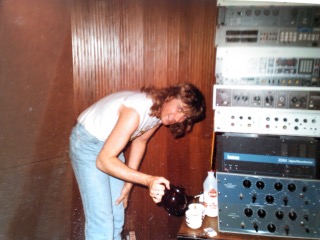
Joe-Making-The-Tea-1.jpeg


The band are talented guys. They were great to work with, and we became family those 3 years in the studio. It’s hard to wrap your head around the problems they dealt with during the making of Hysteria. I’ve already mentioned Rick’s tragedy but of course we all know that shortly afterwards Steve died. Another utterly devastating blow. How they’ve carried on, I don’t know. We worked tremendously hard and shared laughs and tragedy together.

Finally, like I said, it was a great relief when Mike Shipley got involved. It took the pressure off me and his first few mixes gave us the formula we needed to finish the album. In the end Mike too had to leave after mixing for about 4 months. He and I ended up mixing six songs each.

All I can remember is the last mix took me and Mutt straight through the night into the morning and I had to catch a flight within hours to cut the second side of the album in New York.

Mutt said to me, “Well I guess we’re done, then.”

Yes. Finally!☺️

Lastly, I have to say to you Mike, you saved the day!
Thank you so much, and god bless. Rest in peace, mate.
– Nigel.


Nigel-green-locking-up-the-studio-1.png
 

Craig Thomson talks about his experience recording Def Leppard’s 1983 breakout album, ‘Pyromania.’​


Here’s a great interview with engineer / producer Mike Shipley that is in this month’s issue of Tape Op. The interview was conducted several years ago as Shipley passed away in 2013, but his work will continue to inspire for generations. In 2012, he won a Grammy for Best Engineered Album, Non-Classical category for his joint work on Paper Airplane, by Alison Krauss and Union Station. He also worked with bands like the Sex Pistols, Maroon 5, Barenaked Ladies, 5 Seconds to Mars, Nickelback, Green Day, RATT, Cheap Trick and countless others, but he will most likely always be remembered more for working alongside producer Mutt Lange and Def Leppard. Shipley worked with Def Leppard from High n’ Dry to Pyromania to Hysteria to Adrenalize. Here are some excerpts from the interview:

You and Mutt were trying something truly revolutionary, compared to the way rock drums were being recorded at that time.


The previous Def Leppard record, High ‘n’ Dry [1981], was recorded with real drums. On Pyromania [1983] Mutt wanted to be experimental and leave the drums to the very end. He would keep changing the arrangements, so therefore the drum parts would need to keep changing. We had to figure out how to sync that up. It was on the cutting edge, but somehow we managed to put it all together. Take “Photograph,” for example. Like all the other songs on the record, the song’s drums were all samples from the Fairlight [CMI (computer musical instrument) sampler]. There are no real drums. The cymbals are played, but the bass drum, snare, and toms are all machine. We had all kinds of drums in there, and I sampled them into the Fairlight and detuned them. We’d sample them in at half-speed, thinking that we’d get a better sound, because that’s when Fairlight was at 8 bits – you had to get around that part of it. We sampled [Ludwig] Black Beauty snares, other snares, and all kinds of bass drums. We ended up with something that Mutt liked that we could detune a little bit. When we were sampling in the sounds, we used [Neumann] KM 84s and we used [Shure SM]58s. There were so many mics. The toms were primarily Simmons toms back then, which were electronic. We experimented, EQ’d, and mangled the sound up a little bit to come up with the drum sound. It was pretty unnatural, but that was kind of the point.

The Fairlight seems like it basically became like another member of the band. What kind of role did it play as you got near the end of tracking?


We were recording Pyromania on 24-track, and we spent a lot of months on that record. By the time it came to mixing, the tape was peeling off in 2-inch pieces. It became clear from the intensity of working on a record like that, going over and over and over, blocking out backgrounds, changing arrangements, and all that. I’m surprised we ever got it finished, because the tape literally fell to pieces. It was experimental; we were using a Fairlight, trying to sync that whole thing up and work like that, and we hadn’t figured out ‘til the end how we were going to do the drums. So even when “Photograph” was about to be mixed, Mutt decided to change the chorus. Songs would evolve, and he wanted to have control until the last minute of what the feel was going to be. Rather than commit to the drums, and have to re-cut them and re-cut them, he thought this was a better way to do it. I don’t think anyone had done it before, but we decided to give it a shot – scary as it was – and we just went on blind faith. It was more about being able to change the arrangements at the last minute, which was very important to him.

Mutt Lange invented the “layers upon layers” approach to recording walls of guitar and vocal tracks stacked throughout that album. What was that construction process like in the studio?

Because of the nature of the way that band played, and the inversions they used, it was very hard to get the right – what Mutt had in his head as – “commercial distortion.” We had hundreds of amps and cabinets in that studio; from AC/DC amps, to little combos, to big stacks. Everything you could think of. We spent weeks and weeks trying to get a commercial sound for those inversions, rather than the [raw] crunchy, distorted sound. I’m pretty sure we ended up with just a little Marshall combo amp after we’d tried everything. It’s funny, because after a while you get so fatigued that nothing ever sounds good enough. But we had to start recording at a certain point, so we found a good combination that worked, and used condenser mics, [Neumann U] 87s and [Neumann U] 67s, on the amplifiers.

What do you remember that process being like for the guys in Def Leppard?

There were certain points where it got very hard, because Steve Clark [guitar] and those guys were used to going in and just laying it down. But Mutt’s brilliant as a diplomat, which worked as a strength for him at certain points because of the length of time involved. It was hard for Joe [Elliott, vocals] because of how much Mutt would work on the vocals, but they understood he had a vision and that everything was coming out great. It was tough for them, at the same time as being great for them. Mutt was very, very hardcore about the lead vocal. We’d spend the longest time on the vocals; Joe would get frustrated about it at certain points, but he was an excellent sport. He’d have terrible headaches because Mutt was just relentless about it. We used a [Neumann U] 67 pretty much for everything vocally on Pyromania. Mutt always had specific ideas about delays, and we just had to figure out how to create them. We used all kinds of delay lengths on Joe’s lead vocals; they might have been created by a tape machine, because there wasn’t that much “long delay” outboard gear out back then. The reverbs were usually regular EMT 140 plate reverbs, which we had four of at that studio in a plate room. After that record was out, the AMS [RMX-16 digital reverberator] came out. We also used to use a lot of the old, original Lexicon delays; I remember this huge box. The other delays we’d use would be multitrack delays, where we’d make up the delay length by going into different channels in [record on the] multitrack to get different delay amounts. We also used a flanger, and a couple of 2-track tape delays. We didn’t use [outboard] mic preamps; we just used what was in the SSL [console]. When we were recording harmony vocals, in order to keep the distinction away from the lead vocals, the backgrounds were usually Mutt and Rick Savage [bass]. They would do 20 or 40 tracks of one part, then dump down 20 tracks onto one track, then do 20 more tracks and dump them down onto another track to make up a stereo pair. Then they’d add the backgrounds to that part, bounce them down two tracks, and then hand-sync them back into the choruses. We’d EQ them, bounce them onto a 2-track machine, and then I’d have to get the timing right, hit the play button, keep going until we got the timing right, and slide them in.

When I listened to a new Def Leppard album back in the ‘80s, it always felt like listening to a futuristic experience. What was Mutt paying most attention to in mixing to achieve that sound?


Whenever we were mixing, regardless of the band or style of genre, we went for what seemed to be the right thing to do. We’d listen to the song and say, “Okay, this is what it needs to be like,” and go for that. It’s always been a gut thing, as well as a technical thing. Not really worrying about any rules or regulations about EQ, what backgrounds should sound like, or what drums should sound like. It’s about carving out the space so things could be intentionally soft but still very audible, because it’s still about depth of field as well as everything being in your face. We’d just need to carve out the right space for the instrument. That’s something Mutt taught me how to do, and I’d end up doing it by second nature. It was one of those things that was experimental, but he’d find a place for it. He’d have a sound in his head, and make it work. We were working 18 hour days, seven days a week, for that whole record. This kind of commitment was necessary, because Mutt wanted big, larger than life on everything. They were all very lengthy records to mix. A lot of time was taken, more than what most people would think, especially later on, in terms of records like Hysteria. We spent a long time, and if it wasn’t working we’d just start again. Given those machine sounds, it was really quite difficult – we were so lost in the process. We had an end vision in sight, and I would work, and work, and work. Mutt wanted to make things as 3-dimensional as possible, sonically.
 
After The Cars, the saga of making Def Leppard’s Hysteria began. The record took three years to make, and put the band $4 million in debt to their label, due in part to drummer Rick Allen losing his left arm in an auto accident. Would you consider drums to be the most experimental part of production you worked on from that album?

All of the guitars and vocals were already tracked with the album’s other engineer, Nigel Green, before I got there, but there were no drums and bass. It was just a very basic LinnDrum 16th-note hi-hat guide drum part. The drums and bass were all written in the mix. It was all done as part of the mix process, and therefore that meant getting the sounds. It was quite difficult, because Mutt had been listening for quite some time to just guitars and maybe a rough bass, but no real drum or bass parts at all. He’d been concentrating on the guitars, vocals, and arrangements, so it was very difficult. To put in the drums – to do that very last of all – and do the bass was a very monumental task. The drums were in the Fairlight, so I had the ability to mess around with the tuning of the snare. We wanted something fat and different, so once I had the sample I could experiment with detuning. I found a nice fat sound that worked for Mutt once we’d EQ’d it, and it was [pitched] down quite a lot from the original snare sample. Over the snare, there were different samples that we layered: a white noise sample, an ambient sample, a Simmons sample, and a sample of the [Eventide] Harmonizer with the feedback full up. That added length to the note. The same with the bass drum; we’d find some [sample] we liked and detune that. We used multiple tricks to try and get a unique drum sound. I remember we had the biggest console we could get in those days, which was a 64-input SSL; the first one they ever built! We’d always been on the cutting edge of consoles, so with every SSL console we’d be guinea pigs. Mutt put the studio in his house, so we had no distractions. I think it took nine or ten months to mix Hysteria, because we’d be redoing parts and the whole drums and bass thing. We’d spend months on songs sometimes, and then redo it.

What kind of outboard gear was at play in the production of the “Pour Some Sugar on Me” drum sound?

I was working on the new version of the Fairlight, and I brought samples I had sampled in Los Angeles – and had also sampled in Mutt’s studio in England – to come up with a drum sound. The basis of the bass samples I used were from a friend in L.A. I was tuning them and adding synthesizer to the bass to give it a bit of a different sound. For “Pour Some Sugar on Me” specifically, the samples all started out dry, and then we’d get pretty detailed about gated reverbs and different kinds of effects, whether it was hard-gated AMS [reverbs] or gated tapes. We’d use various amounts, having triggers for length in the Harmonizer. There’d always be a delay on the snare that would come from a unit that could put out fast reflections, like 20 delays to different increments – just to give an interesting perspective that would add to the width of the snare. The hi-hat and cymbals were samples as well. Mutt would leave me for four or five days and say, “I’m going off for a few days. Come up with a drum sound, figure some stuff out, and come up with something unique and different.” I learned to experiment and figure out how to add to his tracks for the drums to make it different. You can hear huge handclaps going on in “Pour Some Sugar on Me.” Those are actually 100 tracks of handclaps detuned and EQ’d. That ended up sounding like ambience in a way, and definitely had a unique sound. He’d say, “I’ll come back in a few days, see where you are, and we’ll go from there.” That’s how it worked out.


Is it true you guys recorded all of the guitars for the album on a [Scholz R&D] Rockman [guitar headphone amplifier]?


Yes! All those guitars are from a Rockman! Not amps, because that’s the only way we could get that kind of distortion. There might have been a couple passes of clean guitar through a small amp, but most all of it was recorded through a Rockman. That meant an awful lot of EQ’ing and processing. All the clean sounds, all the jangly parts, and all the distorted guitars were Rockman. It would get a bit irritating, because we’d try everything and just keep going until we found something that worked. Because we did it for so long, it never was that satisfying; we’d just look at each other after weeks of working on it and just go, “I guess this is the best we could do,” and that was it.

What kinds of effects were you applying to Joe Elliot’s voice on Hysteria?

As far as vocal effects, I can’t even begin to recall how many AMS reverbs we used. There were harmonizers, delays, reverbs, and EQs for every different section. There were so many effects going on in the background: long delays, short delays, backwards reverbs, and ones you could barely even hear, just to add to the depth of field. The kitchen sink; really everything we could think of. Mutt wanted to keep Joe’s lead vocal distinct, so as we’d done with Pyromania, on Hysteria the harmonies would be a combination of Mutt, Rick Savage, and Phil Collen [guitar]. They would work up a blend, and Mutt would dictate somewhat how the words would be or what the parts were. But those guys were excellent singers, so the three of them together would create the sound, and Mutt would do some on his own as well.

End of Interview:
 
Back
Top