You are using an out of date browser. It may not display this or other websites correctly.
You should upgrade or use an alternative browser.
You should upgrade or use an alternative browser.
sounds like....teen spirit????
- Thread starter eSGEe
- Start date


Not for Diary of a Madman Tone...


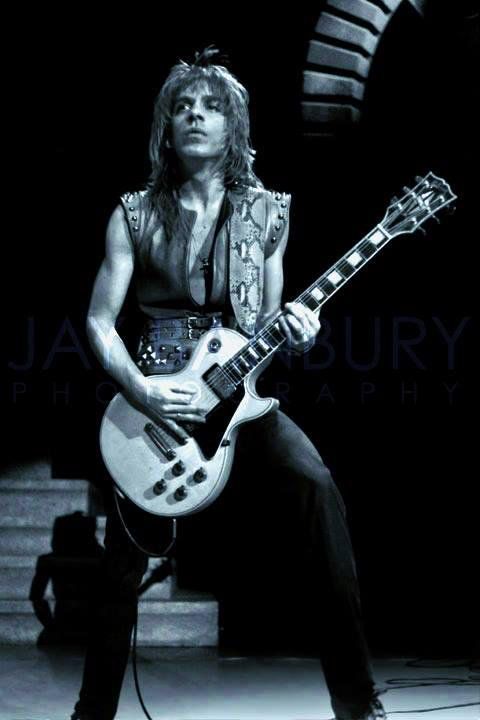
Once you realize that Randy's white Concorde was designed by him to run OOP in the middle position, his 'Diary' tone becomes crystal clear...
Max Norman was back onboard for 1981’s Diary of a Madman, which Ozzy cites as his personal favorite among his records. Our interview, which took place on August 4, 1982, focused on the techniques Max used to capture Randy’s sound on those Ozzy Osbourne albums.
***
When did you first meet Randy Rhoads?
When we decided to do the first album in England, I met him at a couple of rehearsals up in London, at a place called EZ Hire. That would be about two weeks before we started to record the first album, Blizzard of Ozz.
What was it like working with him?
Great! We had a great time, a real good time.
 How long did it take to record Blizzard of Ozz?
The recording took just over a month, as I remember.
What was the usual order for recording a song? How were the tracks laid down first to last?
We would do the whole thing, including a guide [track], with all four people there playing in the same room. As long as we had a good bass and drum track, we would take it from there.
So you’d lay down the drums, bass, and rhythm guitar simultaneously?
Yeah. Vocals too.
And then the guitars were overdubbed?
Yeah. Same thing for both albums.
How did you record Randy’s parts?
Both of the albums were done at Ridge Farm. There’s a fairly live room downstairs underneath the control room, which we put him in and shut the doors. Well, he wasn’t in there, but the Marshall amp was in there. There was a close mike and a distant mike down there. So all of the original rhythm tracks were done like that. We replaced a lot of them a bit later on, because we opened those doors and turned the Marshall out toward the studio and put even more mikes out in the studio, so we got a much bigger sound from it. In fact, we went back and backtracked on some of them.
How many tracks would you use for the rhythm guitar?
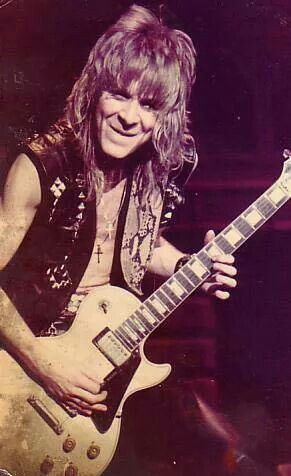
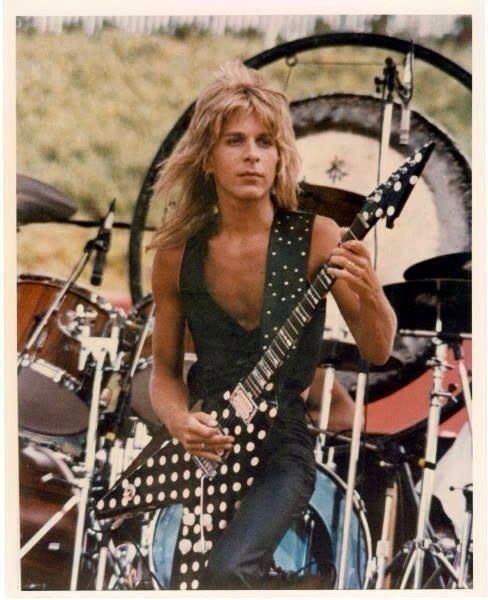
It depends. Some of those tracks have a lot of parts there. Let’s see: “You Can’t Kill Rock and Roll,” for instance. On that sort of slow-tempo thing, there’d be quite a few rhythm tracks there, apart from playing parts. There’d be a couple of power chord tracks, maybe one steel-string acoustic, and probably two or three other guitars playing parts. Very few D.I. [direct input] guitars on the tracks – mostly through the amp, turned down to get a clean sound. It was all done through a Marshall. He had a polka-dot Charvel that we used – pretty much all the guitar tracks were done with that guitar. Plus he had a creamy white Les Paul. We used that too. That was pretty good, pretty chunky.
(Robert's Notes: The Charvel was wired for Out-Of-Phase as well)
Did Randy do much overdubbing?
Yeah, quite a bit. We spent a lot of time in the control room, he and I, just sitting up there going through the songs one by one. He had a lot of ideas. He had a lot of arrangements together. We’d take half an hour to get a sound, and then put those downs. We spent a lot of time doing dubs, in fact. The great thing about it was he had the parts so together that when it came out, it didn’t sound like there were that many there. Each part seemed to jigsaw into each other real well.
Did Randy have a way of psyching himself up in the studio?
Not essentially. He was very nervous in the studio – always very nervous, I thought. He was extremely careful about what he’d play. If there was one thing out, he would go back and do that again, which is pretty good policy, really, because a lot of those tracks – especially the lead guitar tracks – are triple-tracked, in fact. So he would play them three times. He would play the whole solo three times.
Did he prefer playing at a certain time of the day?
We used to start around 2:00 or 3:00. He’d be pretty tired by the end. I mean, if it’s just one guy in there overdubbing, it’s quite a long time to be in there dubbing like 12 hours or something. We didn’t use to play real late. He was not an early-morning guy.
Did Randy run his guitar into his effects board and then into his Marshall?
Yeah, yeah. Pretty much all of the time.
Did he use the same pedalboard he used onstage?
Yeah, exactly the same one.
Do you happen to know what was in it?
No, I don’t.
Were any of Randy’s solos on either of the albums first takes?
Yeah, some of them were. In fact, a lot of the outro solos were first take – you know, the things going out on long fades. As I remember, most of those were pretty much first takes. A lot of the other ones were quite well written beforehand. He would work on them for a long time to get them right.
He didn’t write them out longhand.
Oh, no. He’d write them in his head.
Randy has co-author credit for most of the tunes. What did he actually write?
I’d say he was pretty instrumental in writing a lot of the actual key rhythms. He was also almost totally responsible for the overdub sections. For instance, “Revelation (Mother Earth)” – most of the musical backing on that is Randy’s. I think it’s his chord pattern, pretty much most of his ideas to fill up the overdubs, to fill up the track and everything. He did a great deal on nearly all of those numbers.
What was the difference between Randy’s live and studio playing?
The first obvious thing is he was playing in what I would call a three-piece band at that stage. I mean, there was a keyboard player, but he was kept very much in the background. In a three-piece band, obviously the guitar player’s got to work real hard on the rhythm. So the guy’s gotta work hard. He was very good at that, and that’s the thing that wouldn’t be obvious in the studio particularly. Onstage he would be playing both – he’d be hitting the leads, and he’d pull the lead one note short to be able to get into the next section for the rhythm. When I saw him live, the difference was he’d be more dynamic insofar as he’d be leaping between two or three different parts to try and cover them all, which he seemed to do pretty good. Actually, it amazed me that he managed to make it sound like there were at least two guys onstage, because there were a lot of guitars on those albums.
How was the “Crazy Train” solo recorded to get such a clear, piercing sound?
This is one of them that was triple tracked. If you listen to that track real close, you’ll hear there’s one main guitar around the center, as I remember, and there are two other guitars playing exactly the same thing, panned to the left and right, but back somewhat. And actually what happens is you don’t hear them – you just hear it as one guitar. He was the best guy at overdubbing solos and tracking them that I’ve ever seen. I mean, he used to blow me away. So on a lot of those things, when you hear a guitar that really comes out, that’s because there are three of them there. And it’s not like an ADT – he’s actually playing them three times, which means you get a very stable image. It really does sit there, rather than shift left or right, depending on where the delay is. That’s really the reason for that. Plus it’s a Charvel – they have an extraordinary top end.
***
When did you first meet Randy Rhoads?
When we decided to do the first album in England, I met him at a couple of rehearsals up in London, at a place called EZ Hire. That would be about two weeks before we started to record the first album, Blizzard of Ozz.
What was it like working with him?
Great! We had a great time, a real good time.
 How long did it take to record Blizzard of Ozz?
The recording took just over a month, as I remember.
What was the usual order for recording a song? How were the tracks laid down first to last?
We would do the whole thing, including a guide [track], with all four people there playing in the same room. As long as we had a good bass and drum track, we would take it from there.
So you’d lay down the drums, bass, and rhythm guitar simultaneously?
Yeah. Vocals too.
And then the guitars were overdubbed?
Yeah. Same thing for both albums.
How did you record Randy’s parts?
Both of the albums were done at Ridge Farm. There’s a fairly live room downstairs underneath the control room, which we put him in and shut the doors. Well, he wasn’t in there, but the Marshall amp was in there. There was a close mike and a distant mike down there. So all of the original rhythm tracks were done like that. We replaced a lot of them a bit later on, because we opened those doors and turned the Marshall out toward the studio and put even more mikes out in the studio, so we got a much bigger sound from it. In fact, we went back and backtracked on some of them.
How many tracks would you use for the rhythm guitar?
It depends. Some of those tracks have a lot of parts there. Let’s see: “You Can’t Kill Rock and Roll,” for instance. On that sort of slow-tempo thing, there’d be quite a few rhythm tracks there, apart from playing parts. There’d be a couple of power chord tracks, maybe one steel-string acoustic, and probably two or three other guitars playing parts. Very few D.I. [direct input] guitars on the tracks – mostly through the amp, turned down to get a clean sound. It was all done through a Marshall. He had a polka-dot Charvel that we used – pretty much all the guitar tracks were done with that guitar. Plus he had a creamy white Les Paul. We used that too. That was pretty good, pretty chunky.
(Robert's Notes: The Charvel was wired for Out-Of-Phase as well)
Did Randy do much overdubbing?
Yeah, quite a bit. We spent a lot of time in the control room, he and I, just sitting up there going through the songs one by one. He had a lot of ideas. He had a lot of arrangements together. We’d take half an hour to get a sound, and then put those downs. We spent a lot of time doing dubs, in fact. The great thing about it was he had the parts so together that when it came out, it didn’t sound like there were that many there. Each part seemed to jigsaw into each other real well.
Did Randy have a way of psyching himself up in the studio?
Not essentially. He was very nervous in the studio – always very nervous, I thought. He was extremely careful about what he’d play. If there was one thing out, he would go back and do that again, which is pretty good policy, really, because a lot of those tracks – especially the lead guitar tracks – are triple-tracked, in fact. So he would play them three times. He would play the whole solo three times.
Did he prefer playing at a certain time of the day?
We used to start around 2:00 or 3:00. He’d be pretty tired by the end. I mean, if it’s just one guy in there overdubbing, it’s quite a long time to be in there dubbing like 12 hours or something. We didn’t use to play real late. He was not an early-morning guy.
Did Randy run his guitar into his effects board and then into his Marshall?
Yeah, yeah. Pretty much all of the time.
Did he use the same pedalboard he used onstage?
Yeah, exactly the same one.
Do you happen to know what was in it?
No, I don’t.
Were any of Randy’s solos on either of the albums first takes?
Yeah, some of them were. In fact, a lot of the outro solos were first take – you know, the things going out on long fades. As I remember, most of those were pretty much first takes. A lot of the other ones were quite well written beforehand. He would work on them for a long time to get them right.
He didn’t write them out longhand.
Oh, no. He’d write them in his head.
Randy has co-author credit for most of the tunes. What did he actually write?
I’d say he was pretty instrumental in writing a lot of the actual key rhythms. He was also almost totally responsible for the overdub sections. For instance, “Revelation (Mother Earth)” – most of the musical backing on that is Randy’s. I think it’s his chord pattern, pretty much most of his ideas to fill up the overdubs, to fill up the track and everything. He did a great deal on nearly all of those numbers.
What was the difference between Randy’s live and studio playing?
The first obvious thing is he was playing in what I would call a three-piece band at that stage. I mean, there was a keyboard player, but he was kept very much in the background. In a three-piece band, obviously the guitar player’s got to work real hard on the rhythm. So the guy’s gotta work hard. He was very good at that, and that’s the thing that wouldn’t be obvious in the studio particularly. Onstage he would be playing both – he’d be hitting the leads, and he’d pull the lead one note short to be able to get into the next section for the rhythm. When I saw him live, the difference was he’d be more dynamic insofar as he’d be leaping between two or three different parts to try and cover them all, which he seemed to do pretty good. Actually, it amazed me that he managed to make it sound like there were at least two guys onstage, because there were a lot of guitars on those albums.
How was the “Crazy Train” solo recorded to get such a clear, piercing sound?
This is one of them that was triple tracked. If you listen to that track real close, you’ll hear there’s one main guitar around the center, as I remember, and there are two other guitars playing exactly the same thing, panned to the left and right, but back somewhat. And actually what happens is you don’t hear them – you just hear it as one guitar. He was the best guy at overdubbing solos and tracking them that I’ve ever seen. I mean, he used to blow me away. So on a lot of those things, when you hear a guitar that really comes out, that’s because there are three of them there. And it’s not like an ADT – he’s actually playing them three times, which means you get a very stable image. It really does sit there, rather than shift left or right, depending on where the delay is. That’s really the reason for that. Plus it’s a Charvel – they have an extraordinary top end.
Last edited:
PART DEUX:
On “I Don’t Know,” how many takes did he have for the solo?
That was all doubled, that guitar. I think most of that was pretty much one take. We patched it up a little, and he went back and redid it once he had it down. See, the thing is, he would rip one down, and there would be a couple of little mistakes there. So instead of going back and patching those, he would go back and do the whole thing again once he knew what he was doing. He was extraordinary. He would know exactly what he played. I was really blown away by a lot of the stuff that he did. He’d play something, and I’d say, “Well, you want to try again?,” not really meaning it, and he’d go, “Yeah, I’ll do again.” And he’d play the same thing, but a little bit better! He was a very astute player like that.
Are you familiar with what effect he’d plug into?
On that album, the thing I used a great deal was an AMS 1580, which is a very clean British digital delay with a VCO [voltage-controlled oscillator] on it, so you can slightly flange and stuff like that. I used that for a lot of things. It’s got a real good sound.
Can you think of any cuts where the AMS 1580 stands out?
If you listen to those rhythms on “Crazy Train,” you’ll hear there’s a real grind to them. That particular sound comes from the AMS. It’s almost like a flange, but not quite. It does these strange grindy things if you get it at the right setting. Plus, you can get this kind of hollow, tubey effect too – that’s the same kind of deal.
Was that effect used on “Goodbye to Romance”?
There’s a lot of guitar parts on “Goodbye to Romance.” I think there are six parts in the background. I don’t know – possibly. I can’t remember, to be honest with you.
How did “Dee” make it on the album?
Randy wanted to do that. That’s a song he wrote for his mother. That was with an acoustic guitar. I can’t remember what kind of acoustic he used – maybe a Martin.
Did you mike the acoustic guitar the same way every time?
Yeah, I believe I did. I had him sitting out in the middle of the floor in the studio, and I miked him with an AKG 451 at some distance – about three or four feet. We did it at night, when everything was real quiet. I believe he doubled that – with a steel-string and a gut-string. He played it twice, and he just synched up to the original one. It’s very difficult to tell, because the guy was a master at doing those kind of deals. He loved it in the studio, to mess around with those things.
Was Randy a perfectionist?
Pretty close! It would take a long time for us to get some of these things down, simply because he wanted to get just one little twiddle right. I’d say he was a perfectionist kind of guy, yeah.
The rhythm track of “Suicide Solution” seems to have more presence and edge, more sustain on the guitar. Was that done by high volume?
I believe there are four rhythm guitars on that, which actually helps quite a lot. They have to be very close, though. It gets very messy if you just keep whacking them on there. I’ve got a feeling I put something on there – probably a bit of AMS, just to brighten the whole thing.
At the very end of that song, he gets a lot of feedback with vibrato.
Uh huh – that’s what it was!
Was Randy using a 100-watt Marshall stack?
Yeah, a straight 100, a real nice sound, actually. Both cabinets plugged in and stacked up too. We tried it a number of different ways. I prefer the Marshalls with both cabinets, and stacked. They have a somewhat different sound than if there’s just one sitting on the floor.
Did you have the amp’s back against the wall?
No, it was in a lower room which has concrete walls, in fact. It was about three feet away from the back wall. The sliding doors open to the rest of the studio, which is on a slightly higher level, so the sound would funnel out of the concrete chamber into the rest of the studio, which is an old 16th-century barn, in fact. So I’d have a close mike, a Shure SM-58, down on the Marshall in the concrete room, and then an AKG 451 mike just outside of the room as it’s hitting the stairs, and then a couple more Shure SM-87s out in the room there.
On “I Don’t Know,” how many takes did he have for the solo?
That was all doubled, that guitar. I think most of that was pretty much one take. We patched it up a little, and he went back and redid it once he had it down. See, the thing is, he would rip one down, and there would be a couple of little mistakes there. So instead of going back and patching those, he would go back and do the whole thing again once he knew what he was doing. He was extraordinary. He would know exactly what he played. I was really blown away by a lot of the stuff that he did. He’d play something, and I’d say, “Well, you want to try again?,” not really meaning it, and he’d go, “Yeah, I’ll do again.” And he’d play the same thing, but a little bit better! He was a very astute player like that.
Are you familiar with what effect he’d plug into?
On that album, the thing I used a great deal was an AMS 1580, which is a very clean British digital delay with a VCO [voltage-controlled oscillator] on it, so you can slightly flange and stuff like that. I used that for a lot of things. It’s got a real good sound.
Can you think of any cuts where the AMS 1580 stands out?
If you listen to those rhythms on “Crazy Train,” you’ll hear there’s a real grind to them. That particular sound comes from the AMS. It’s almost like a flange, but not quite. It does these strange grindy things if you get it at the right setting. Plus, you can get this kind of hollow, tubey effect too – that’s the same kind of deal.
Was that effect used on “Goodbye to Romance”?
There’s a lot of guitar parts on “Goodbye to Romance.” I think there are six parts in the background. I don’t know – possibly. I can’t remember, to be honest with you.
How did “Dee” make it on the album?
Randy wanted to do that. That’s a song he wrote for his mother. That was with an acoustic guitar. I can’t remember what kind of acoustic he used – maybe a Martin.
Did you mike the acoustic guitar the same way every time?
Yeah, I believe I did. I had him sitting out in the middle of the floor in the studio, and I miked him with an AKG 451 at some distance – about three or four feet. We did it at night, when everything was real quiet. I believe he doubled that – with a steel-string and a gut-string. He played it twice, and he just synched up to the original one. It’s very difficult to tell, because the guy was a master at doing those kind of deals. He loved it in the studio, to mess around with those things.
Was Randy a perfectionist?
Pretty close! It would take a long time for us to get some of these things down, simply because he wanted to get just one little twiddle right. I’d say he was a perfectionist kind of guy, yeah.
The rhythm track of “Suicide Solution” seems to have more presence and edge, more sustain on the guitar. Was that done by high volume?
I believe there are four rhythm guitars on that, which actually helps quite a lot. They have to be very close, though. It gets very messy if you just keep whacking them on there. I’ve got a feeling I put something on there – probably a bit of AMS, just to brighten the whole thing.
At the very end of that song, he gets a lot of feedback with vibrato.
Uh huh – that’s what it was!
Was Randy using a 100-watt Marshall stack?
Yeah, a straight 100, a real nice sound, actually. Both cabinets plugged in and stacked up too. We tried it a number of different ways. I prefer the Marshalls with both cabinets, and stacked. They have a somewhat different sound than if there’s just one sitting on the floor.
Did you have the amp’s back against the wall?
No, it was in a lower room which has concrete walls, in fact. It was about three feet away from the back wall. The sliding doors open to the rest of the studio, which is on a slightly higher level, so the sound would funnel out of the concrete chamber into the rest of the studio, which is an old 16th-century barn, in fact. So I’d have a close mike, a Shure SM-58, down on the Marshall in the concrete room, and then an AKG 451 mike just outside of the room as it’s hitting the stairs, and then a couple more Shure SM-87s out in the room there.
Last edited:
PART TROIS:
How would he set the controls on the Marshall?
That’s a difficult question. Pretty much flat-out, I think. [Laughs.] I’m sure the volume was flat-out, because Marshalls don’t really work unless they’re flat-out anyway. But it wasn’t a new Marshall with a preamp; it was one of the older ones without the preamp and just the straight gain.
Can you recall if you used any unusual recording techniques for “Mr. Crowley,” “No Bone Movies,” “Revelation (Mother Earth),” or “Steal Away”?
Not off-hand. Some of the parts were pretty remarkable, and his playing was pretty remarkable. I haven’t heard them for a little while.
In “No Bone Movies,” there’s a strange effect on his tone.
Yeah! I can’t remember what was done on that track. We did that track real quick.
(Robert's Notes: Ha!!! I know!!!)
The solo at the end of “Revelation (Mother Earth)” is very powerful.
Yeah, that’s a good solo. He sat down and worked that out for quite a while. A lot of those solos were, in fact, perfected over a few days. We’d fire a few, listen to them, and he’d say, “Oh, yeah, okay. I see what’s going on.” Then he’d go away, and I’d make a loop up for him. Then he’d sit there and run the loop around maybe twenty times, and then just forget about it for a day. Then he’d come back and try another one.
So he’d try to do the final solo in one pass.
Oh, yeah. By the time we got close to them, he would play the whole thing straight through. And then he’d say, “Oh, I missed that little bit – let’s go back and try another one.”
Did he multi-track “Steal Away the Night”?
The rhythm is a double-track, for sure. The solo is double-tracked.

How did your role change from the first album to Diary of a Madman?
Pretty much the same. I had a little more influence, I guess, on the second one. The first one was a bit untogether in a lot of different ways, because Ozzy was trying to get things back together again, so he had a lot of things to do. He was doing a lot of running around, trying to get deals and so on. So that first one kind of fell together. The second one we had a lot more organized.
Did you change the recording strategy?
Yeah. In fact, for the first album, the drums were downstairs in that concrete room for some of the tracks. I didn’t do that on the second one – I put them in the main body of the studio with a lot more distance mikes on them. I think the drum sound improved on the second one. The first drum sound wasn’t as big as I would have liked.
There was a European tour between the first and second albums. Had Randy changed over that time?
He played better. He was just getting better all the time. I mean, he was poop-hot on the second album. The improvements were really noticeable. Stuff that would have taken longer to do didn’t take so long anymore, plus he had a lot more idea of what arrangements he wanted to do.
“Over the Mountain” has a lot more presence. Was that recorded differently?
No, all the backing tracks were recorded the same way. There’s a lot of different things we did on the guitars. We got into very curious extremes with recording some of the guitars. The basic setup was always the same, but we did a lot of stuff in the control room to change the sound around and get different kinds of feels.
You mean change the actual tonal quality of the sound?
Yeah, the tonality of the sound. Sometimes I would run him through a little compressor on the board before going to the amp, and stuff like that. I would help the EQ on his guitar by putting it through the board first, and then send it down to the amp downstairs. But generally the miking setup and the speaker setup were the same.
Was the “Flying High Again” solo multi-tracked?
This is the one where he goes [sings the triplets] and changes key? Yeah, that was triple-tracked, probably, playing the same part each time.
Do you know what effect was on it?
AMS, again.
“You Can’t Kill Rock and Roll” ends with some massive guitar sounds.
Yeah, that was one where he said, “Just roll it around to me, and I’ll whack some stuff on the end there.” That was pretty much a one-take, the main lead guitar going out there. Plus we put on some big, heavy-duty power chords towards the end there.
What’s going on in the beginning of “Believer,” right before the lick starts up?
Oh, I remember that. That’s guitar work, just messing around before the track comes in. We just got to like it, so we left it on there. There’s a few little bits and bobs like that. There’s little accidents that happen and you think, “Oh, that sounds great. We’ll leave that on there.”
To me, the rhythm guitar in “Little Dolls” sounds a bit like Van Halen.
Hmm. Hmm. Yeah.
The solo is mixed in the background too.
Yeah, I think that was one of the tracks we had a little bit of trouble getting to work very well. As for the solo being back, it may well be that we only put one track on that. Like I say, a lot of the reasons for Randy’s particular guitar sound is the fact that he triple-tracked a lot of it, and that just made it huge. So I believe “Little Dolls” may have been one of the ones where we didn’t do that, and it may have suffered somewhat.
At the beginning of “Tonight,” was Randy doing volume swells with the knob on his guitar?
Yes, he was.
Near the very end he gets into that jam where he flicks his pickup selector switch, like Hendrix used to do.
Yeah.
How long did that jam go on after the fade?
Oh, quite a long time. I think it was about another two minutes or something going on there. Some of the tracks were pretty long, and we had to do some early fades on them. Tantalizing stuff, you know. You hear it going out, and you think, “Oh, I wish it didn’t go out quite there!” But the timing. The first album was quite a long one – in fact, they’re both quite long. So we had to fade some things out to be able to get it on vinyl.
What does “S.A.T.O.” mean? (Robert's Note: It Means Sharon Arden Thelma Osbourne)
Uh, uh, I can’t tell you that. [Laughs.] Ask Ozzy – he’ll tell you what that is.
Was the acoustic double-tracked in “Diary of a Madman”?
Yeah. That was another one where we did one steel-string acoustic and also a nylon-string acoustic.
The transition from the steel-string to the electric is very smooth.
Yeah, yeah. There’s a lot of guitars there. We did work a lot on those textures. This is one of the things where he was a real master. I learned a lot of that off him – these guitar textures that we managed to get. Amazing. A lot of guitars in the right place. That was really a lot of the rhythmic magic going on there.
Are there tracks that weren’t released on the two albums?
No. Everything that we have is out. The only other material that’s available are some live shows from last year, which I’ve been doing a little bit of work on. Can’t say what’s gonna happen to those at the moment.
When is the last time you saw Randy?
The last time I saw him was in England. Didn’t they do an English tour after the second album was made? I think I saw him at Hammersmith. I just missed him in Los Angeles. I was there a day before he was due back off the tour, before the accident. I had to leave to go to New York the day before, unfortunately.
Could you fill me in on your background?
I’m 29. I started working down at Ridge Farm in England around the beginning of 1980. Before that I was a road engineer. Did a lot of touring with a sound company for about five years. I worked with a lot of bands – I did Little Feat, Todd Rundgren, Abba, a lot of different bands. I was also the Tubes’ engineer for two years, on their live shows. Oh, a lot of people – I can’t remember them all. I worked for TFA Electrosound. I had gone down to Ridge Farm to install all the equipment, actually. I put all that stuff in, and then started to work there. I don’t actually work there anymore. Now I’m kind of freelance. I just finished an album for A&M for Y&T – Yesterday & Today. They’re from San Francisco, and they’ve got a very good guitar player, called Dave Meniketti. I did the Bad Company album that came out two days ago. I seem to get quite a lot of work in the U.S. I’m working in L.A. now, doing a video soundtrack for Ozzy.
Epilog
Max Norman went on to produce Ozzy Osbourne’s Bark at the Moon, the live Tribute album featuring Randy Rhoads, and Speak of the Devil, as well as projects for Loudness, Megadeth, Lynch Mob, and many other bands.
How would he set the controls on the Marshall?
That’s a difficult question. Pretty much flat-out, I think. [Laughs.] I’m sure the volume was flat-out, because Marshalls don’t really work unless they’re flat-out anyway. But it wasn’t a new Marshall with a preamp; it was one of the older ones without the preamp and just the straight gain.
Can you recall if you used any unusual recording techniques for “Mr. Crowley,” “No Bone Movies,” “Revelation (Mother Earth),” or “Steal Away”?
Not off-hand. Some of the parts were pretty remarkable, and his playing was pretty remarkable. I haven’t heard them for a little while.
In “No Bone Movies,” there’s a strange effect on his tone.
Yeah! I can’t remember what was done on that track. We did that track real quick.
(Robert's Notes: Ha!!! I know!!!)
The solo at the end of “Revelation (Mother Earth)” is very powerful.
Yeah, that’s a good solo. He sat down and worked that out for quite a while. A lot of those solos were, in fact, perfected over a few days. We’d fire a few, listen to them, and he’d say, “Oh, yeah, okay. I see what’s going on.” Then he’d go away, and I’d make a loop up for him. Then he’d sit there and run the loop around maybe twenty times, and then just forget about it for a day. Then he’d come back and try another one.
So he’d try to do the final solo in one pass.
Oh, yeah. By the time we got close to them, he would play the whole thing straight through. And then he’d say, “Oh, I missed that little bit – let’s go back and try another one.”
Did he multi-track “Steal Away the Night”?
The rhythm is a double-track, for sure. The solo is double-tracked.

How did your role change from the first album to Diary of a Madman?
Pretty much the same. I had a little more influence, I guess, on the second one. The first one was a bit untogether in a lot of different ways, because Ozzy was trying to get things back together again, so he had a lot of things to do. He was doing a lot of running around, trying to get deals and so on. So that first one kind of fell together. The second one we had a lot more organized.
Did you change the recording strategy?
Yeah. In fact, for the first album, the drums were downstairs in that concrete room for some of the tracks. I didn’t do that on the second one – I put them in the main body of the studio with a lot more distance mikes on them. I think the drum sound improved on the second one. The first drum sound wasn’t as big as I would have liked.
There was a European tour between the first and second albums. Had Randy changed over that time?
He played better. He was just getting better all the time. I mean, he was poop-hot on the second album. The improvements were really noticeable. Stuff that would have taken longer to do didn’t take so long anymore, plus he had a lot more idea of what arrangements he wanted to do.
“Over the Mountain” has a lot more presence. Was that recorded differently?
No, all the backing tracks were recorded the same way. There’s a lot of different things we did on the guitars. We got into very curious extremes with recording some of the guitars. The basic setup was always the same, but we did a lot of stuff in the control room to change the sound around and get different kinds of feels.
You mean change the actual tonal quality of the sound?
Yeah, the tonality of the sound. Sometimes I would run him through a little compressor on the board before going to the amp, and stuff like that. I would help the EQ on his guitar by putting it through the board first, and then send it down to the amp downstairs. But generally the miking setup and the speaker setup were the same.
Was the “Flying High Again” solo multi-tracked?
This is the one where he goes [sings the triplets] and changes key? Yeah, that was triple-tracked, probably, playing the same part each time.
Do you know what effect was on it?
AMS, again.
“You Can’t Kill Rock and Roll” ends with some massive guitar sounds.
Yeah, that was one where he said, “Just roll it around to me, and I’ll whack some stuff on the end there.” That was pretty much a one-take, the main lead guitar going out there. Plus we put on some big, heavy-duty power chords towards the end there.
What’s going on in the beginning of “Believer,” right before the lick starts up?
Oh, I remember that. That’s guitar work, just messing around before the track comes in. We just got to like it, so we left it on there. There’s a few little bits and bobs like that. There’s little accidents that happen and you think, “Oh, that sounds great. We’ll leave that on there.”
To me, the rhythm guitar in “Little Dolls” sounds a bit like Van Halen.
Hmm. Hmm. Yeah.
The solo is mixed in the background too.
Yeah, I think that was one of the tracks we had a little bit of trouble getting to work very well. As for the solo being back, it may well be that we only put one track on that. Like I say, a lot of the reasons for Randy’s particular guitar sound is the fact that he triple-tracked a lot of it, and that just made it huge. So I believe “Little Dolls” may have been one of the ones where we didn’t do that, and it may have suffered somewhat.
At the beginning of “Tonight,” was Randy doing volume swells with the knob on his guitar?
Yes, he was.
Near the very end he gets into that jam where he flicks his pickup selector switch, like Hendrix used to do.
Yeah.
How long did that jam go on after the fade?
Oh, quite a long time. I think it was about another two minutes or something going on there. Some of the tracks were pretty long, and we had to do some early fades on them. Tantalizing stuff, you know. You hear it going out, and you think, “Oh, I wish it didn’t go out quite there!” But the timing. The first album was quite a long one – in fact, they’re both quite long. So we had to fade some things out to be able to get it on vinyl.
What does “S.A.T.O.” mean? (Robert's Note: It Means Sharon Arden Thelma Osbourne)
Uh, uh, I can’t tell you that. [Laughs.] Ask Ozzy – he’ll tell you what that is.
Was the acoustic double-tracked in “Diary of a Madman”?
Yeah. That was another one where we did one steel-string acoustic and also a nylon-string acoustic.
The transition from the steel-string to the electric is very smooth.
Yeah, yeah. There’s a lot of guitars there. We did work a lot on those textures. This is one of the things where he was a real master. I learned a lot of that off him – these guitar textures that we managed to get. Amazing. A lot of guitars in the right place. That was really a lot of the rhythmic magic going on there.
Are there tracks that weren’t released on the two albums?
No. Everything that we have is out. The only other material that’s available are some live shows from last year, which I’ve been doing a little bit of work on. Can’t say what’s gonna happen to those at the moment.
When is the last time you saw Randy?
The last time I saw him was in England. Didn’t they do an English tour after the second album was made? I think I saw him at Hammersmith. I just missed him in Los Angeles. I was there a day before he was due back off the tour, before the accident. I had to leave to go to New York the day before, unfortunately.
Could you fill me in on your background?
I’m 29. I started working down at Ridge Farm in England around the beginning of 1980. Before that I was a road engineer. Did a lot of touring with a sound company for about five years. I worked with a lot of bands – I did Little Feat, Todd Rundgren, Abba, a lot of different bands. I was also the Tubes’ engineer for two years, on their live shows. Oh, a lot of people – I can’t remember them all. I worked for TFA Electrosound. I had gone down to Ridge Farm to install all the equipment, actually. I put all that stuff in, and then started to work there. I don’t actually work there anymore. Now I’m kind of freelance. I just finished an album for A&M for Y&T – Yesterday & Today. They’re from San Francisco, and they’ve got a very good guitar player, called Dave Meniketti. I did the Bad Company album that came out two days ago. I seem to get quite a lot of work in the U.S. I’m working in L.A. now, doing a video soundtrack for Ozzy.
Epilog
Max Norman went on to produce Ozzy Osbourne’s Bark at the Moon, the live Tribute album featuring Randy Rhoads, and Speak of the Devil, as well as projects for Loudness, Megadeth, Lynch Mob, and many other bands.
Last edited:

Robert, would you like to credit the source of the article/interview that you just copy/pasted above?