


Wore a Graph Tech Tusq XL on YelloStrat in a little over a month of daily divebombing and nightly gigs. I started with .020" first fret height on my Stratocaster and within a month, the 'd' and 'g' were almost touching the first fret.
Warmoth cuts the slots with CNC to a "theoretic" string spacing, which is totally wrong. The strings do not align with the tuners.
Note the misalignment of the 'g' and 'd' in particular on a custom made, $400 Warmoth neck:
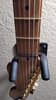
The misalignment caused the strings to actually wear the sides of the slots out:
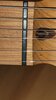
Note the ragged edge of nut material on the treble side of the low 'E' string slot:

When I emailed Graph Tech with photos and a description of the issue, they advised that their Tusq XL nut was not designed for daily,/nightly use and they recommended a harder material.
Bone is popular, but Leo started using it because he could get bone free from the meat processing plants, not because it's a great material.
Yes, bone works and it's not too tough to work, but I think brass is superior in every respect.
I chose a .125" x .250" x 12" brass blank from Grainger (part number 1PTN1) for $3.98 and made my own.
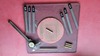
Now, you absolutely CANNOT create any theoretic or mathematical string spacing. Tuner placement will never be the same between two different necks.
The biggest variation in tuner placement is found on Gibsons, but other guitars have variations too.
So, after roughing out the nut to fit the slot, I profile the top with a 12" radius block.
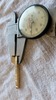
In the case of my Warmoth neck, the nut slot was actually .117" and not the .125" that they claim in their catalog. This required hand-fitting with #400 paper on a piece of 1/4" plate glass:
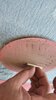
Next issue...the nut slot on the Warmoth neck is at least twice as deep as a stock Fender, so even a replacement 1-3/4" Stratocaster-style nut isn't tall enough to clear the first fret!!!!
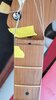
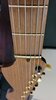
After getting a decent press-fit, I laid out the strings by eye. Every string is a different distance apart when they align with the tuners:

Slots were cut .004" over string diameter with Stewie-Mac files and polished with a Dremel and Jeweler's Rougue.

The end result is perfect straight string pull through the nut and perfect return to pitch after 11 semitone divebombing.
Hope this helps...
Warmoth cuts the slots with CNC to a "theoretic" string spacing, which is totally wrong. The strings do not align with the tuners.
Note the misalignment of the 'g' and 'd' in particular on a custom made, $400 Warmoth neck:
The misalignment caused the strings to actually wear the sides of the slots out:
Note the ragged edge of nut material on the treble side of the low 'E' string slot:
When I emailed Graph Tech with photos and a description of the issue, they advised that their Tusq XL nut was not designed for daily,/nightly use and they recommended a harder material.
Bone is popular, but Leo started using it because he could get bone free from the meat processing plants, not because it's a great material.
Yes, bone works and it's not too tough to work, but I think brass is superior in every respect.
I chose a .125" x .250" x 12" brass blank from Grainger (part number 1PTN1) for $3.98 and made my own.
Now, you absolutely CANNOT create any theoretic or mathematical string spacing. Tuner placement will never be the same between two different necks.
The biggest variation in tuner placement is found on Gibsons, but other guitars have variations too.
So, after roughing out the nut to fit the slot, I profile the top with a 12" radius block.
In the case of my Warmoth neck, the nut slot was actually .117" and not the .125" that they claim in their catalog. This required hand-fitting with #400 paper on a piece of 1/4" plate glass:
Next issue...the nut slot on the Warmoth neck is at least twice as deep as a stock Fender, so even a replacement 1-3/4" Stratocaster-style nut isn't tall enough to clear the first fret!!!!
After getting a decent press-fit, I laid out the strings by eye. Every string is a different distance apart when they align with the tuners:
Slots were cut .004" over string diameter with Stewie-Mac files and polished with a Dremel and Jeweler's Rougue.
The end result is perfect straight string pull through the nut and perfect return to pitch after 11 semitone divebombing.
Hope this helps...
