Moutai

Amp Mad Scientist

Ambassador of Heresy
Country flag
1596937681115.png1596937837022.png

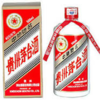
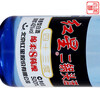
Maotai or Moutai is a brand of baijiu, a distilled Chinese liquor (spirit), made in the town of Maotai in China's Guizhou province. Produced by the state-owned Kweichow Moutai Company, the beverage is distilled from fermented sorghum and now comes in several different varieties.

Its taste is tough to describe. Imagine rotten cabbage, ethyl alcohol, and paint thinner, blended and strained. It smells like ammonia; the Wikipedia page for Maotai notes its "solvent and barnyard aromas." The taste lingers long after swallowing, shadowing the rest of the meal like a culinary revenant.
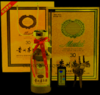
1596937897808.png 30 year aged, $1900.00


"Maotai became the first Chinese liquor to be produced in large-scale production, with an annual output of 170 tons.[2] In 2007, more than 6,800 tons of Maotai were sold.[3] Maotai is named after the town of the same name near Zunyi in Renhuai, Guizhou Province, where liquor distillery has a very long history. The Maotai of today originated during the Qing Dynasty and first won international fame when winning a gold medal[4] at the 1915 Panama-Pacific Exposition in San Francisco.

Maotai was named a national liquor in 1951, two years after the founding of People's Republic of China. Maotai also claimed two gold medals separately at the Paris International Exposition in 1985 and 1986.[5] Maotai has won 14 international awards and 20 domestic awards since the Chinese Revolution.[6]

Maotai has been used on official occasions in feasts with foreign heads of state and distinguished guests visiting China. It is the only alcoholic beverage presented as an official gift by Chinese embassies in foreign countries and regions. It received wide exposure in China and abroad when Zhou Enlai used the liquor to entertain Richard Nixon during the state banquet for the U.S. presidential visit to China in 1972.[7] Zhou told Nixon that Maotai had been famous since it won recognition at the San Francisco World's Fair in 1915, and that during the Long March, "Maotai was used by us to cure all kinds of diseases and wounds." Nixon replied, "let me make a toast with this panacea."[8] When Deng Xiaoping visited the United States in 1979, Henry Kissinger told him "I think if we drink enough Moutai we can solve anything."[7]

Maotai became both the drink of choice for greeting foreign dignitaries and the bribe of choice to high officials. Counterfeiters moved in to meet the new demand, and other distilleries copied the methods of the state-owned enterprise.[7]

Maotai currently sells over 200 tons of Maotai to over 100 countries and regions across the world.[5]

In 2018, Maotai saw its output reach about 70,200 tons, with sales revenues reaching 73.6 billion yuan (about 10,5 billion dollars) and net profit 35.2 billion yuan (about 5 billion dollars)."
 
I believe the name "Moutai" translates to something like:
"Chairman Mao's Cocktail."

I know you're joking but it's a different "mao".

茅 台 máotái is the name of the village where it's made (maybe "thatch place"?)

The surname of the chairman is 毛 máo (same pronounciation though)

I don't drink baijiu or anything else over 2,5% anymore but when I did, I never had Maotai, or none of the "savoury taste" baijius, for that matter. Was warned about them often enough :)

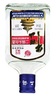
My absolute favourite was some peachy tasting stuff that I was given by a friend that was maybe from Taiwan (the jiu, that is). Of the stuff I bought myself the best was the blue 43% hongxing (red star) erguotou. It was almost like something you could buy from the West, the vomit-inducing taste of fermented sorghum was very subtle in it.

TB22A1ud6nD8KJjSspbXXbbEXXa_!!1691322913.jpg_560x560q90.jpg

...but I could drink pretty much any erguotou, usually went for the cheaper red stars or "niulanshan":

Untitled.jpg

The strange thing is that the cheaper the price, the stronger it usually is. I think you could get 200ml bottles of 60% stuff for like 20 cents. China is a dangerous place for a non-picky drinker :)

Maybe I should pick up my Mandarin studies again... I used to be of the opinion that despite the government, it's still useful to know a bit of the language spoken by 1/6th of the world's population. But man is it hard to be enthusiastic about the prospects of using it anywhere again... Been working on my German instead lately.
 
My great grandfather Jesse Schoaler taught me to make corn whiskey when I stayed with them during the summer of 1980.

I've made a few batches since...the last in 2012...and if made right, it tastes good.

My recipe is simple. Use cracked corn chicken feed from the livestock supply store. Throw it in a pot of boiling water
Scoop off all impurities, which will float up to the top.

Stir in the granulated sugar and honey in prescribed amounts.

Allow mixture to cool to about 75°F then add the yeast.

This mixture is called "mash" and over the next two weeks, it will "boil" or bubble vigorously as the mash ferments. The first day the bubbling stops, the mash is ready to cook.

The mash is is poured in - liquid and corn and silt - into the pot and brought slowly to 100°F. From here, the temperature is increased gradually.

At 147°F, poisoonous Methanol will boil and the temp is left there for several minutes. All liquid collected from the cooling tube is discarded.

At about 172°F, the Ethanol will begin to boil and it is collected and set aside. When the liquid that comes out is no longer flammable, that batch of mash is used up.

The boiled-out corn is washed and grandma would make sour mash cornbread from it.

Repeat until all mash is used up. Then, pour in all liquids collected and repeat the distilling process, only this time, all liquid is collected. This produces a very high and concentrated liquor.

Grandpa Schoaler could shake the bottle and estimate the "proof" by how fast the bubbles disapated. I used a hydrometer.

The old way was to add water to cut it down to 90 proof. Grandpa liked to add a boiled, fermented apple cider to add color and flavor.

Its truly a lost art...
 
I know you're joking but it's a different "mao".

茅 台 máotái is the name of the village where it's made (maybe "thatch place"?)

The surname of the chairman is 毛 máo (same pronounciation though)

I don't drink baijiu or anything else over 2,5% anymore but when I did, I never had Maotai, or none of the "savoury taste" baijius, for that matter. Was warned about them often enough :)

My absolute favourite was some peachy tasting stuff that I was given by a friend that was maybe from Taiwan (the jiu, that is). Of the stuff I bought myself the best was the blue 43% hongxing (red star) erguotou. It was almost like something you could buy from the West, the vomit-inducing taste of fermented sorghum was very subtle in it.

View attachment 49475

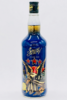
...but I could drink pretty much any erguotou, usually went for the cheaper red stars or "niulanshan":

View attachment 49476

The strange thing is that the cheaper the price, the stronger it usually is. I think you could get 200ml bottles of 60% stuff for like 20 cents. China is a dangerous place for a non-picky drinker :)

Maybe I should pick up my Mandarin studies again... I used to be of the opinion that despite the government, it's still useful to know a bit of the language spoken by 1/6th of the world's population. But man is it hard to be enthusiastic about the prospects of using it anywhere again... Been working on my German instead lately.

茅 台 máotái is the name of the village where it's made

It translates to something like: "lighter fluid production center..." :celebrate: " Its taste is tough to describe. Imagine rotten cabbage, ethyl alcohol, and paint thinner, blended and strained. It smells like ammonia..."
 
Back
Top