Ok, fellows...
I'm at a place in my music journey where I am really happy with all my gear. However, I wouldn't mind being able to downsize my pedalboard a little. This thread relates to that desire to eliminate some pedals from my 34" board (TS-9/RV6/CE5) and maybe even reduce the board down to 24" in length. Many times, I think outloud here and I enjoy our discussions and learn a lot, so I wanted to open this up to discussion.
I'm not 100% sure that I could keep one of these relics from the 1990's running, but there is no denying the sound you can get from them. @DonO has the 80watt 2x12 version of this head, known as the 8280 Bi-Chorus Stereo Combo. I was blown away by how much gain the amp produced without ever being fizzy or thin "AM radio" sounding. The chorus is something that even a JC-120 doesn't deliver and you can select two different chorus voicings - one of the clean and one for the gain channels. Based on that experience, I decided to start doing some research.
The 8200 is a 100 watt Valvestate head designed to run anything over 4Ω impedance. This makes a lot of sense and opens up all kinds of speaker options. They are not easy to find in a condition where they have not been butchered. In fact, they are downright scarce.
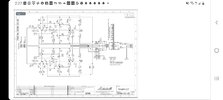
The problem that seems to surface from time to time is burnt R2/R5 & R6 Resistors, which is almost always traced to a failed MC1458P op amp chip. These are widely available from Texas Instruments for around $1.00.
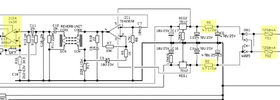
The second issue is when only one channel of the amplifier has output. This is most often caused by a failed TR12 MOSFET (2SK1058) which costs less than $10.00 new (www.onlinecomponents.com) and is available from a wide variety of suppliers. The Mosfet is also paired with a .33 ohm, 5 watt resistor, available from www.parts-express.com.
I'm no amp tech, and I would NEVER purchase one of these amps with a known problem. There are a lot of them out there on the market that either don't work at all or only partially function. I've successfully replaced "crab style" jacks on the PCB of my Valvestate VS265, so I am confident that I could keep one of these amps running, should I be fortunate enough to find one.
The 8200 is different from the 8100 and VS100 which have no chorus features whatsoever.
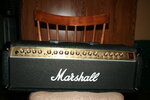
I would ask you guys to keep an eye peeled if you should happen to run across a "cream puff" one of these in your daily travels, or conversations with your mates.
While the 8200 would be my preference, a super clean 8280 would also work, but shipping will be much safer and much less costly on a simple head as compared to a heavy (48 pounds for the 8280) combo amp.
I appreciate your time and attention.
- Rob
I'm at a place in my music journey where I am really happy with all my gear. However, I wouldn't mind being able to downsize my pedalboard a little. This thread relates to that desire to eliminate some pedals from my 34" board (TS-9/RV6/CE5) and maybe even reduce the board down to 24" in length. Many times, I think outloud here and I enjoy our discussions and learn a lot, so I wanted to open this up to discussion.
I'm not 100% sure that I could keep one of these relics from the 1990's running, but there is no denying the sound you can get from them. @DonO has the 80watt 2x12 version of this head, known as the 8280 Bi-Chorus Stereo Combo. I was blown away by how much gain the amp produced without ever being fizzy or thin "AM radio" sounding. The chorus is something that even a JC-120 doesn't deliver and you can select two different chorus voicings - one of the clean and one for the gain channels. Based on that experience, I decided to start doing some research.
The 8200 is a 100 watt Valvestate head designed to run anything over 4Ω impedance. This makes a lot of sense and opens up all kinds of speaker options. They are not easy to find in a condition where they have not been butchered. In fact, they are downright scarce.
The problem that seems to surface from time to time is burnt R2/R5 & R6 Resistors, which is almost always traced to a failed MC1458P op amp chip. These are widely available from Texas Instruments for around $1.00.
The second issue is when only one channel of the amplifier has output. This is most often caused by a failed TR12 MOSFET (2SK1058) which costs less than $10.00 new (www.onlinecomponents.com) and is available from a wide variety of suppliers. The Mosfet is also paired with a .33 ohm, 5 watt resistor, available from www.parts-express.com.
I'm no amp tech, and I would NEVER purchase one of these amps with a known problem. There are a lot of them out there on the market that either don't work at all or only partially function. I've successfully replaced "crab style" jacks on the PCB of my Valvestate VS265, so I am confident that I could keep one of these amps running, should I be fortunate enough to find one.
The 8200 is different from the 8100 and VS100 which have no chorus features whatsoever.
I would ask you guys to keep an eye peeled if you should happen to run across a "cream puff" one of these in your daily travels, or conversations with your mates.
While the 8200 would be my preference, a super clean 8280 would also work, but shipping will be much safer and much less costly on a simple head as compared to a heavy (48 pounds for the 8280) combo amp.
I appreciate your time and attention.
- Rob