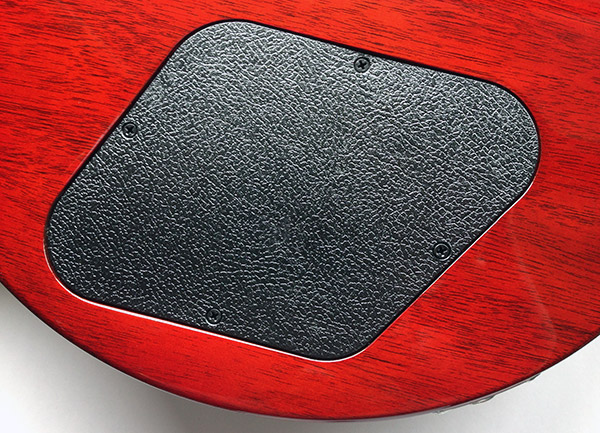
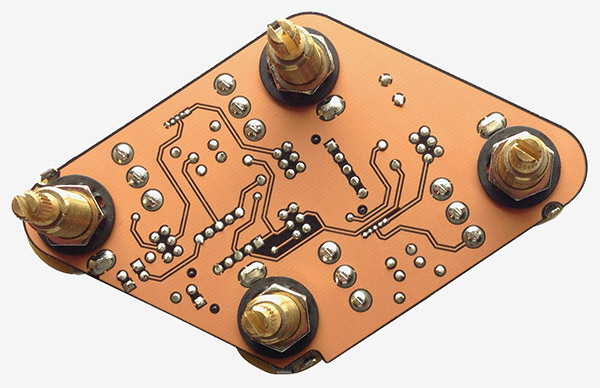
I have found the PCB-equipped guitars to be very quiet. What I think happens most of the time is people get a new Gibson and the paint charge hasn't dissipated and so things like touching the control cavity cover or running your finger across it while plugged in get trasnferred to the electronics. I know it can be annoying but it will go away. I have had new Gibsons take only a month or two to lose the charge or as long as a year but they all lose it eventually.
Did you check out the photos on that link??? They are actually using a snap-on style cover over the board...
High gain amps. Electrical interference. Passive pickups. Fluorescent lights. Dimmers...
Sometimes, all of these seem determined to make their way into your guitar. Humbuckers are a huge help, but a guitar’s electronics include more than pickups. You need a shield against all those noise-driven attackers, and that’s what guitar shielding is all about. Over the years, Gibson has developed a variety of ways to enhance shielding, as appropriate for different guitars.
Conductive paint has been the “old standby” for shielding guitar electronics. While it provides an adequate short-term solution, copper paint loses some of its shielding ability over time because the wood on which it’s painted expands and contracts. Interference loves to seek out those little cracks, penetrate the shielding, and do its mischief—of course, usually in the middle of your big solo.
Gibson’s engineers figured there had to be a better way to shield guitars. So after extensive research, late night pizza dinners, and liberal amounts of coffee, they came up with changes that increase shielding effectiveness dramatically while also minimizing problems from static electricity buildup.
A major improvement comes from the stainless steel-infused control pocket and pickup switch plates that are on virtually all Gibson USA 2016 guitars. Because the polycarbonate material is conductive, these plates provide shielding that unlike paint, remains rock-solid over time. Furthermore, it’s much more difficult to have static buildup. If you’ve walked across a rug on a winter day and touched something metal, you know that’s one way to discharge static electricity. Conductive material provides a continuous discharge path for static electricity, so it can’t build up to significant amounts.
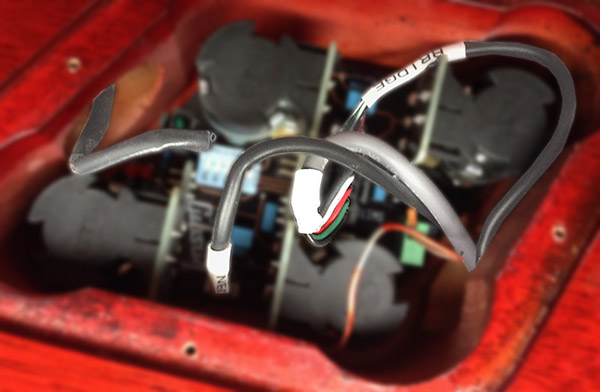
However, Gibson’s shielding advances don’t end there. For guitars with a control pocket assembly with Quick Connect boards (all core models except the Firebird V, Explorer, Firebird V, Les Paul CM, and SG Special—these are handwired), because the control pocket assembly mounts all the guitar’s components to a circuit board, a grounded layer of copper that covers all exposed areas of the board itself offers additional shielding. This solid copper is far more effective than paint.
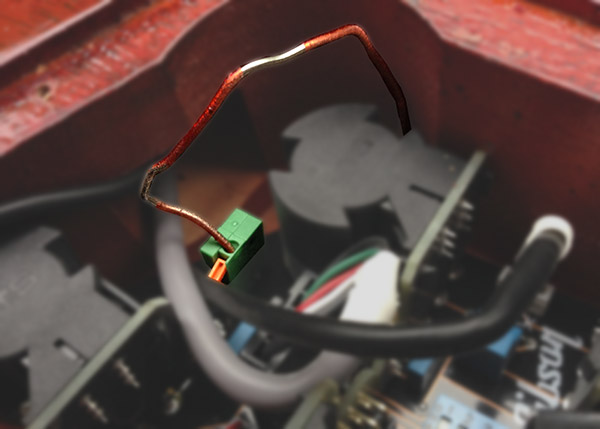
What’s more, on all guitars the pickup cables, output jack cable, and pickup switch cable are all shielded. However, note that instead of choosing the inexpensive kind of shielded cable with wrapped foil, Gibson uses cable where the shield is a woven braid of small wires that completely enclose the inner conductor. So even the hand-wired guitars have extensive shielding.
The pickup switch in the high-performance models also offers improved shielding because in addition to a wire that grounds the switch casing, the switch’s smaller profile means more of it is covered by shielding.
Finally, with all Gibson guitars the tailpiece, bridge, and strings ground to the electronics through a thick, solid piece of wire.
Sure, copper paint is one option. But to deliver pure tone for today’s guitarists, Gibson’s multi-shield approach delivers far better noise rejection. Not only does it make a measurable difference, but by lowering the noise, it’s like taking a layer of dust off your sound.