Fix All things Auto Electrical-Lessons I've learned/ Share your how to's

chilipeppermaniac

Ambassador of Decibels
Country flag
Anyway, as a great number of my vehicles and lawn tractors suffer from diminished performance of their starting and charging systems, I thought I would pass along some wonderful and clear demonstrations on how a car Starting system is supposed to work, and how to figure out the parts that are working properly vs the reasons it does not. As some of these demonstrators have pointed out. If you have a known good power source, ( Battery) you can then quickly diagnose where the failure lies. In most case, it is traceable to wiring issues ( typically corrosion and or bad connections or grounds)

Here is a little Science and Math which demonstrate how a battery with enough volts and no obstructions will enable the starting system to function as it should, vs. one where the engine will either fail to turn over, will go click from the solenoid, or turn but do so too slowly. The bottom line is, Does your system have a free flowing of the electrical voltage throughout, or does it not? In other words, is there voltage drop? If so, how and where to find it.


OK, Not all of you know this about me, BUT ever since my first experiences with anything with wheels (around 5-6 years old),, I have had to get out a tool to make use of it. Mom and dad bought my sis and me a bicycle with training wheels. It was brand new, but within a short time I had wrecked enough times in our alley to not need the training wheels. But my sister still needed them. So, I taught myself how to take the training wheels off for me and put em back on for her.

Anyway, Ever since then, I was exposed to mechanical things but also electronics and even plumbing. ( faulty toilets) When I was 5, my dad basically gave our '56 Chevy 4 door to mom's brother in Ohio and then bought a New '69 Buick Skylark. It had reliability issues from the day he drove it off the lot. Having experienced numerous tow trips for repairs, I saw how dad basically knew 0 and was useless. Because of this, I vowed to learn how to fix my own cars and basically anything so as to not be useless or at the mercy of someone else.

Here is another you tuber who discusses Voltage drop as well as other related issues on his pages.

 
Anyway, as a great number of my vehicles and lawn tractors suffer from diminished performance of their starting and charging systems, I thought I would pass along some wonderful and clear demonstrations on how a car Starting system is supposed to work, and how to figure out the parts that are working properly vs the reasons it does not. As some of these demonstrators have pointed out. If you have a known good power source, ( Battery) you can then quickly diagnose where the failure lies. In most case, it is traceable to wiring issues ( typically corrosion and or bad connections or grounds)

Here is a little Science and Math which demonstrate how a battery with enough volts and no obstructions will enable the starting system to function as it should, vs. one where the engine will either fail to turn over, will go click from the solenoid, or turn but do so too slowly. The bottom line is, Does your system have a free flowing of the electrical voltage throughout, or does it not? In other words, is there voltage drop? If so, how and where to find it.


OK, Not all of you know this about me, BUT ever since my first experiences with anything with wheels (around 5-6 years old),, I have had to get out a tool to make use of it. Mom and dad bought my sis and me a bicycle with training wheels. It was brand new, but within a short time I had wrecked enough times in our alley to not need the training wheels. But my sister still needed them. So, I taught myself how to take the training wheels off for me and put em back on for her.

Anyway, Ever since then, I was exposed to mechanical things but also electronics and even plumbing. ( faulty toilets) When I was 5, my dad basically gave our '56 Chevy 4 door to mom's brother in Ohio and then bought a New '69 Buick Skylark. It had reliability issues from the day he drove it off the lot. Having experienced numerous tow trips for repairs, I saw how dad basically knew 0 and was useless. Because of this, I vowed to learn how to fix my own cars and basically anything so as to not be useless or at the mercy of someone else.

Here is another you tuber who discusses Voltage drop as well as other related issues on his pages.


Fixing your own car is priceless.
Most mechanics know zero about electrical anyway...
 
Ampmad, I worked as a service writer in a Porsche/Audi dealer back in 1987-88. We had Old school Mechanics from the 60's-70's era cars like VW trained ones, and then we had parts replacers, and then we had young but sharp diagnosticians and ones good with their tools ( made big money off the flat rate system)

I always liked it when my customers cars would go to the older guys and or the good diagnosticians. Funny and true story, my old 1972 dATSUN 510 died on me a couple blocks from the shop on the way home. We brought it into the shop, and maybe the next day or 2 later after most of the guys and I looked it over in the shop> I laughed because the one OLDER fella who sometimes got the most razzing for being like a dinosaur, was the one who found the source of my problem. HAHA it was so easy too. MY one and only set of points has fused the 2 contacts together. Installed new points and likely the condensor got me back n running like a champ.
 
OK, So, here is a new to me BUG a Boo.............. Or as I call things that are modern car Bull SHIP. "Over Engineered JUNK"

MY latest gripe about cars is the now apparently mandated TPMS or Tire Pressure monitoring systems that require expensive valve receivers on each rim to communicate with the car's computer. Not only are they more expensive to replace than the good old fashioned rubber/metal style, but the designed to fail part is they have watch type batteries in them that go dead after 6-10 years. In addition to this lovely, cost the customer EXTRA money feature, my failure issue turned out to be a super DUMB one. I went to add air to the tires at the Air Pump at our local convenience store the other evening. I got 2 filled and was just getting to my 3rd one. As I put the chuck on the stem, the chuck popped off and I felt something in my fingers. The tip of the valve with like 4-5 threads on it sheared off. The remaining part of stem with about 5 or 6 threads was left on the rim with the valve core exposed like it would leak if the wind blew.

Thankfully, the tire held air long enough to fill the 4th tire and make it home for a few days to see if it would hold air enough to drive to a tire shop.

I am also lucky to have a tire equipment and parts supply house near me that has been in business since the 1920's. I say this because the tire repair shop said my unit was a 1 piece non replaceable stem style. The tire shop had the TPMS sensors in stock for $100-$140 per unit. NO THANKS. So, instead of being able to swap in a $5.50 stem that my parts house said should work, I was faced with a return trip to the supply house because I didn't buy their $43 complete TPMS on Tuesday.

OEM from Hyundai for a 2013 Elantra = TRW.

Replacement unit with Replaceable Stems, = DILL's Redi-Sensor

Now to see if the oddball sensor will sync up and make the light go off. or if somehow I will need to get the stupid OVER Engineered JUNK reprogrammed or buck up for 3 more DILL's to have a matching set etc.

JOY JOY..
 
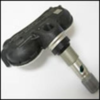
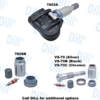
Here is a sample from TPMS Direct.com for the TRW. One can see the difference in how the stems mount between it and the DILL's I will show

TRW
1625856078052.png


DILLS Redi Sensor

1625856185468.png
 
TPMS sucks. Around here it's twice as infuriating, since everyone has two sets of wheels (summer and winter), so you have double the amount of sensors. And the features made into cars to switch between the sensor sets are a half-assed afterthought at best... You have to be some distance away from the set that's not in use to see if the reset / sensor switch actually worked or if the goddamn light will start blinking again in a few hundred yards... And let's say you re-set the pressure in April, then there is like 2 psi of pressure change due to the temperature rising towards the summer and the thing will go off again, and you have to try to find how to re-set it again in the manual since you've forgotten...

I've seen quite a few false alarms from them... Yet when my mum's Merc A Class had a tire explode, the TPMS didn't notice a thing and was completely happy about it??
 
Back
Top